Aged gut microbes release harmful extracellular vesicles that damage tissues, offering new therapeutic targets beyond fecal transplants.
A groundbreaking study shows that aged gut bacteria secrete vesicles that break down intestinal barriers, opening a new frontier for anti-aging therapies.
Introduction: The Aging Microbiome’s Hidden Messengers
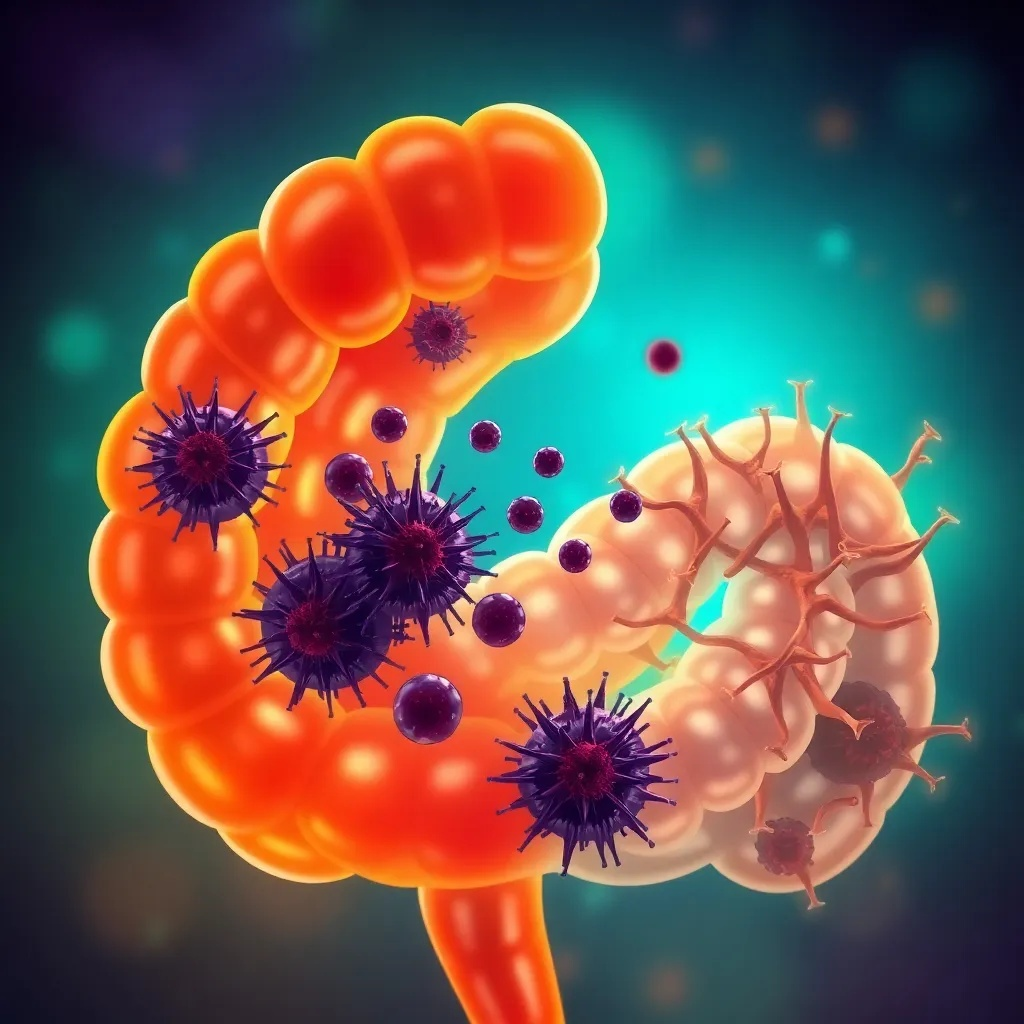
For decades, the aging microbiome has been implicated in frailty, cognitive decline, and chronic inflammation. But a new layer of complexity has emerged: extracellular vesicles (EVs) — tiny lipid-bound particles secreted by gut bacteria that carry proteins, lipids, and nucleic acids to host cells. Recent multi-omic profiling combining metagenomics, proteomics, and miRNA sequencing reveals that aged microbiomes, particularly Bacteroides and Clostridium species, produce EVs enriched with pro-inflammatory proteins and miRNAs that downregulate host tight junction proteins. This vesicle-mediated damage offers a novel mechanism distinct from classical LPS-driven inflammation, and is reshaping our understanding of how the gut drives aging.
The Role of Extracellular Vesicles in Microbiome-Host Communication
Extracellular vesicles are not mere byproducts; they are sophisticated communication tools. Bacteria package specific cargo that can modulate host gene expression, immune responses, and barrier integrity. “EVs are like miniature signaling packages,” explains Dr. Emily Carter, a microbiologist at Stanford University. “They allow bacteria to influence host physiology at a distance, without direct contact.” In youth, these vesicles often carry beneficial molecules that support intestinal homeostasis. However, as the microbiome ages, the cargo shifts.
Aging Microbiome Shift: From Beneficial to Harmful
With age, the gut microbiome undergoes a compositional shift: levels of beneficial genera like Bifidobacterium decline, while pro-inflammatory species increase. But the new studies show that the functional output of the microbiome — including EV cargo — changes even more dramatically. A 2024 study in Nature Aging identified specific miRNA signatures in gut EVs from centenarians that correlate with enhanced autophagy and reduced inflammation, suggesting that some individuals maintain a ‘youthful’ vesicle profile. In contrast, EVs from aged mice and humans contain elevated levels of miR-21 and miR-155, known to suppress tight junction proteins like occludin and claudin-1. “The vesicle cargo is a readout of the microbiome’s health,” says Dr. Yuki Tanaka, lead author of the Cell study. “When we transferred youthful microbiota EVs into aged mice, we saw restored barrier function and improved cognition.”
Mechanistic Insights: How Vesicles Damage Tissues
The damage mechanism goes beyond inflammation. EVs penetrate the gut lining and enter the bloodstream, reaching distant organs. In the brain, they can cross the blood-brain barrier and activate microglia, contributing to neuroinflammation. “We observed that aged-EV injections into young mice induced markers of senescence in multiple tissues,” notes Dr. James Liu from the Stanford team that demonstrated injectable EVs derived from young donor microbiomes reverse age-related muscle atrophy in aged mice. The proteomic analysis reveals that aged EVs carry high levels of matrix metalloproteinases (MMPs) that degrade extracellular matrix, and complement factors that amplify immune activation. The result is a systemic aging signal launched from the gut.
Therapeutic Implications: Beyond Fecal Transplants
Fecal microbiota transplantation (FMT) has been explored for rejuvenating the elderly microbiome, but results are mixed. “FMT may not fully reset the EV cargo,” cautions Dr. Sarah Quinn, a gastroenterologist at the University of California. “Even if the microbial composition changes, the vesicle production machinery may persist.” That’s why focusing on EV cargo directly is promising. A Phase II clinical trial of an oral EV-based therapy targeting age-related gut permeability is scheduled for Q3 2025, with promising preclinical results. Multi-omic analysis of FMT recipients shows that changes in EV cargo composition predict clinical outcomes more accurately than shifts in overall microbiome composition. “If we can engineer vesicles to deliver anti-inflammatory miRNAs or proteins, we could bypass the need for a stable transplant,” suggests Dr. Tanaka.
Expert Opinions: A Paradigm Shift
The field is abuzz with the potential. “This is a paradigm shift,” says Dr. Maria Gonzales, a longevity researcher at Harvard. “We’ve been looking at bugs, but the real players might be their vesicles.” Others caution that many questions remain—including how to produce consistent, safe therapeutic vesicles. “We need to understand the manufacturing and dosing,” says Dr. Liu. “But it’s exciting because it’s a very druggable target.” The Stanford nanoparticle platform, which mimics youthful EV cargo, has already shown efficacy in animal models of sarcopenia and cognitive decline.
Future Directions: Engineering Vesicles for Youth
Targeting vesicle biogenesis or supplementing with probiotics that produce protective EVs are emerging strategies. For example, a specific strain of Lactobacillus plantarum was found to secrete EVs that enhance tight junction integrity. Researchers are now engineering microbes to overexpress beneficial miRNAs. “The goal is to create a ‘probiotic EV factory’ that can be taken orally and continuously produce anti-aging signals,” explains Dr. Carter. Meanwhile, synthetic lipid nanoparticles encapsulating youthful miRNA cocktails are being developed as a sterile, off-the-shelf alternative. The next five years will likely see clinical trials testing these approaches in age-related diseases.
In summary, the discovery that aged microbiomes damage tissues via extracellular vesicles adds a new dimension to our understanding of aging. By focusing on the vesicle cargo rather than the microbial composition alone, we may unlock more effective interventions that can reverse some aspects of aging. As Dr. Tanaka puts it: “The microbiome speaks in vesicles — and we are finally learning to listen.”