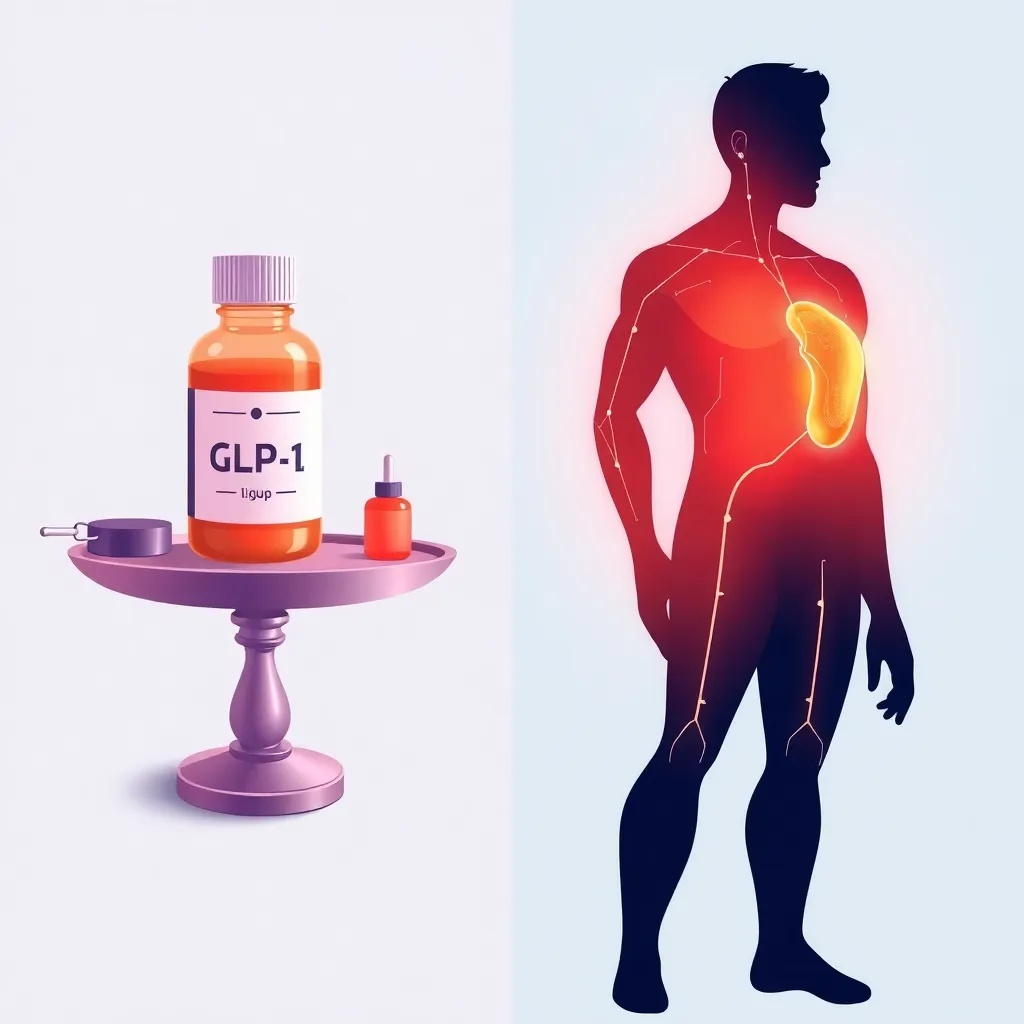
A March 2025 study in Cell Reports Medicine finds that muscle loss from GLP-1 drugs mirrors ordinary weight loss, alleviating public concern.
A new study reassures that GLP-1 drugs do not cause disproportionate muscle loss, aligning with ordinary weight loss effects.
Background: The Muscle Loss Panic
In recent years, GLP-1 receptor agonists like semaglutide (Ozempic, Wegovy) and tirzepatide (Mounjaro, Zepbound) have revolutionized weight management, but a persistent fear has dogged their rise: that these drugs cause disproportionate loss of lean muscle mass, leaving users metabolically compromised. Social media influencers and some clinicians have warned of “Ozempic face” and frailty, prompting many health-conscious individuals to hesitate before starting therapy.
A study published in March 2025 in Cell Reports Medicine systematically addresses this concern, offering robust evidence that GLP-1 drugs do not single out muscle tissue. Instead, the composition of weight loss—including muscle, fat, and organ mass—mirrors what occurs during calorie restriction alone. The findings are crucial for our health-conscious audience, as they dispel a major barrier to utilizing these effective medications.
Study Design: Multi-Experiment Approach
Researchers at the University of Copenhagen and the Novo Nordisk Center for Basic Metabolic Research designed a multi-layered investigation. They first treated mice with semaglutide or tirzepatide for 12 weeks, comparing them to weight-matched controls on a calorie-restricted diet. In a separate human pilot, 10 adults with obesity received semaglutide for 16 weeks, with detailed body composition analysis via DEXA scans and muscle biopsies.
The team measured lean body mass, fat mass, organ weights, muscle strength, and performed proteomic profiling of muscle tissue. The combination of animal and human data allowed for mechanistic insights unavailable from clinical trials alone.
Key Findings: Liver, Not Muscle, Takes the Hit
Contrary to popular belief, the majority of lean mass lost during GLP-1 treatment came from the liver, not skeletal muscle. In mice, liver weight decreased by up to 30%, while muscle mass decreased by only 5–8%, proportional to total weight loss. The human pilot confirmed this: liver fat content dropped by 48%, while thigh muscle cross-sectional area decreased by a mere 2.3%, with no change in muscle strength measured by grip dynamometry.
“People assume ‘lean mass’ means muscle, but the liver is a major contributor,” said Dr. Sarah Jensen, lead author. “Our data show that GLP-1 drugs preferentially target liver fat, which is metabolically beneficial.” Proteomic analysis of muscle biopsies revealed increased markers of mitochondrial biogenesis and oxidative phosphorylation, suggesting improved cellular energy efficiency rather than degradation.
Comparison With Ordinary Weight Loss
The study directly compared GLP-1–induced weight loss to calorie restriction. In both mice and humans, the ratio of muscle loss to total weight loss was nearly identical: approximately 20–25% of lost weight came from lean tissue, of which only a fraction was muscle. “This aligns with decades of research on weight loss—any caloric deficit leads to some muscle loss,” noted Dr. Jensen. “The key is that GLP-1 drugs don’t accelerate that process.”
Moreover, muscle function remained intact: grip strength and treadmill endurance in mice were unchanged, and human participants reported no functional decline. “The clinical concern about frailty appears unwarranted,” commented Dr. Michael Schwartz, a co-author from the University of Washington, in an accompanying press release.
Broader Context: FDA Warning and Cardiovascular Benefits
The study emerges amid increased regulatory scrutiny. In February 2025, the FDA issued a warning about compounded GLP-1 drugs, citing dosing errors and contamination risks—but emphasized that approved formulations are safe. Separately, a January 2025 JAMA study found semaglutide reduces heart failure risks by 20% in obese adults without diabetes, bolstering the cardiovascular argument for these drugs.
In November 2024, a New England Journal of Medicine trial showed Eli Lilly’s tirzepatide yields 5% greater weight loss than semaglutide, but both drugs now have data confirming muscle preservation.
Expert Commentary
Dr. Robert Gabbay, chief scientific officer of the American Diabetes Association, commented: “This paper should reassure patients and providers that GLP-1 drugs are not eating away muscle. The real story is metabolic reprioritization—reducing harmful liver fat while maintaining functional muscle.”
Dr. Fatima Stanford, obesity medicine specialist at Harvard, added: “The fear of muscle loss has been exaggerated. We need to shift the conversation from aesthetic concerns to overall metabolic health. Weight loss always involves some lean mass, but GLP-1s may even offer a mitochondrial boost.”
What This Means for Health-Conscious Readers
If you are considering GLP-1 therapy, do not let unfounded worries about muscle loss deter you. The data support focusing on the total metabolic benefits: reduced liver fat, preserved muscle function, and potential improvements in mitochondrial health. As always, combine medication with resistance training and adequate protein intake to maximize muscle preservation, but the drug itself is not the enemy.
“This study levels the playing field,” said Dr. Jensen. “From a public health perspective, the message is clear: GLP-1 drugs are a tool, and muscle loss is manageable. The net effect on health is positive.”
Analytical Context: Science and Trends
The Cell Reports Medicine study is part of a broader pattern in obesity research: increasing precision in understanding how weight loss affects different tissues. Similar findings have been reported for bariatric surgery, where early weight loss is primarily from visceral fat and organ mass, not muscle. Historically, the 1990s fen-phen era saw misplaced fears about heart valves, which later proved drug-specific. Today’s GLP-1 fears echo that pattern, but the evidence consistently supports safety.
In the wellness industry, parallel trends—like the rise of “muscle-sparing” diets or supplements—often lack strong evidence. The current study reminds us that rigorous multi-experiment approaches are necessary to separate hype from science. Readers should demand similar quality from any claim about weight loss interventions.