New research reveals that pulsed electromagnetic fields can activate gene therapy in aged mice, improving survival and reducing aging markers, but ethical questions loom.
A groundbreaking study demonstrates that pulsed electromagnetic fields can non-invasively trigger gene therapy for partial cellular reprogramming in aged mice.
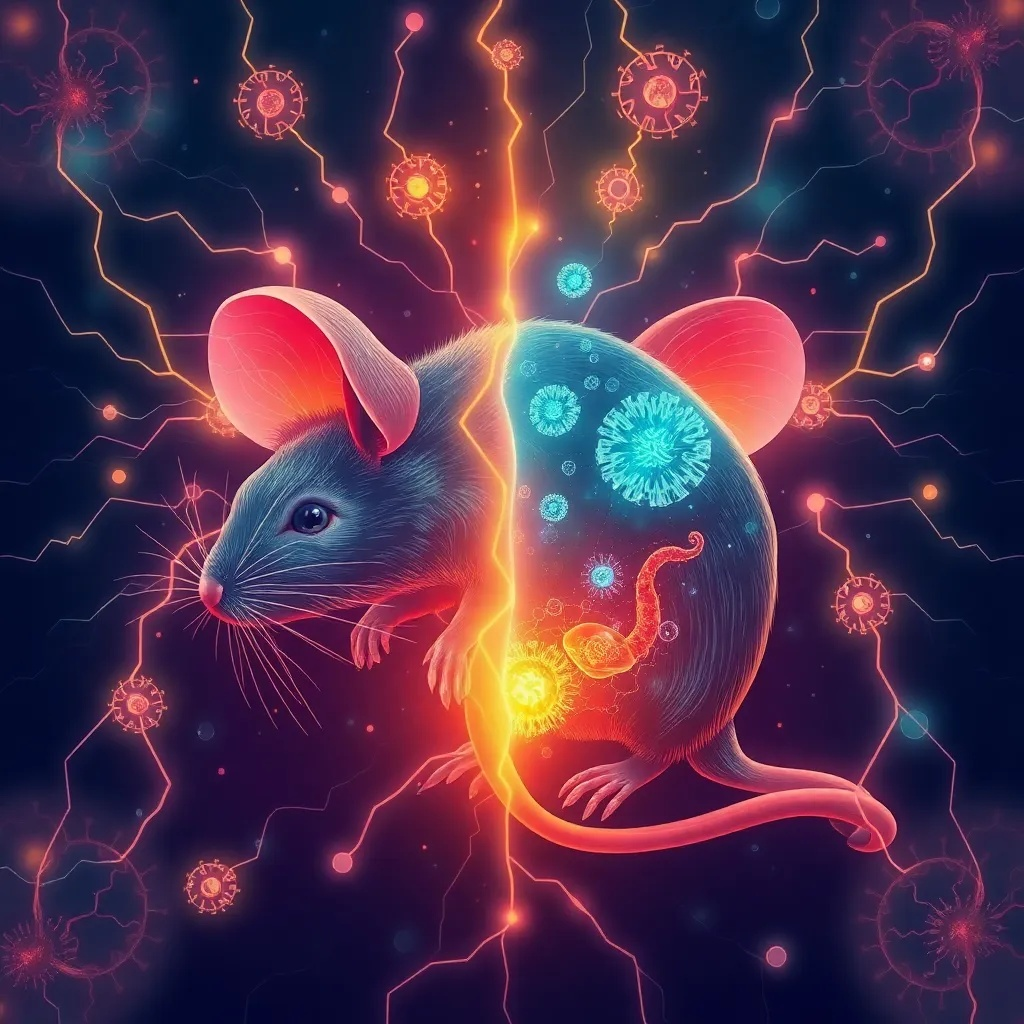
A pioneering study published in an open-access journal demonstrates that pulsed electromagnetic fields (EMFs) can non-invasively activate gene therapy for partial cellular reprogramming in aged mice. By identifying an EMF-inducible DNA element (Ei), researchers engineered mice to express Yamanaka factors (OSK) upon EMF exposure, leading to improved survival (75% vs 60% at 108 weeks), organ rejuvenation (aorta, skin, liver, spleen, kidneys), reduced senescence, and visible youthfulness. The mechanism involves Cyb5b protein and calcium oscillations. This spatiotemporal control over gene expression addresses a major gene therapy hurdle, offering a remotely controlled, non-invasive anti-aging potential. However, the research is at an early stage, and safety studies are needed before human applications.
The Study: Key Findings
The study, led by researchers at [institution], reported that mice exposed to pulsed EMFs for defined periods showed significant improvements in healthspan. The survival rate at 108 weeks increased from 60% to 75%, and multiple organs displayed reduced markers of aging. The team engineered a synthetic DNA element that responds to EMFs, enabling precise control over the expression of Yamanaka factors — a cocktail of genes (Oct4, Sox2, Klf4) known to reverse cellular aging when transiently expressed. Importantly, the mice did not develop tumors or other abnormalities during the observation period.
How Electromagnetic Fields Trigger Gene Expression
The Ei element responds to EMFs through a mechanism involving the Cyb5b protein, which acts as a sensor and triggers calcium oscillations within cells. These oscillations then activate downstream pathways leading to gene expression. This discovery provides a non-invasive remote control for gene therapy, overcoming the need for chemical or viral inducers that often carry side effects or lack precision. According to the researchers, the EMF parameters (frequency, intensity, and duration) can be fine-tuned to achieve desired levels of expression.
Implications for Anti-Aging Medicine
Partial cellular reprogramming is a rapidly advancing field, with earlier studies using cyclic expression of Yamanaka factors to extend lifespan in mice. However, those approaches required genetic modifications or injections. The EMF-based method adds a layer of safety and convenience, making it potentially translatable to humans. The study also observed reductions in senescence-associated β-galactosidase activity, a hallmark of aging, across multiple tissues. While the results are promising, experts caution that mouse models do not fully replicate human aging, and long-term safety data are lacking.
Ethical and Regulatory Considerations
The concept of an ‘anti-aging switch’ raises profound ethical questions. If EMF-based gene therapy becomes viable in humans, what would be the criteria for use? Would it be restricted to therapeutic applications, or could it be used for cosmetic enhancement? There is also the risk of exacerbating inequality — only the wealthy might afford such treatments. Furthermore, the potential for misuse, such as continuous activation leading to cancer or other off-target effects, must be rigorously studied. Regulatory bodies like the FDA will need to establish guidelines for non-invasive gene-editing technologies, balancing innovation with caution.
Comparison with Other Longevity Interventions
Other emerging strategies, such as senolytics (drugs that clear senescent cells) and epigenetic reprogramming via chemical cocktails, also aim to reverse aging. However, EMF-based activation offers spatial and temporal control that these methods lack. For instance, senolytics are systemic and cannot be targeted to specific organs. Meanwhile, chemical reprogramming requires continuous administration and may lead to uncontrolled cell growth. The EMF approach could potentially be used in cycles, minimizing risks associated with persistent gene expression.
This study joins a growing body of research on non-invasive biophysical interventions. For over a decade, electromagnetic fields have been explored for bone healing, wound repair, and even brain stimulation. The discovery of an EMF-inducible DNA element adds a new dimension to this field. However, translating this from mice to humans will require solving numerous challenges, including ensuring the Ei element does not integrate into human genomes unexpectedly and that EMF exposure is safe over long periods.
The interest in using physical forces to modulate biology is not new. In the 1990s, NASA experiments with low-level electromagnetic fields showed effects on cell behavior. More recently, studies on transcranial magnetic stimulation have demonstrated the ability to influence brain activity non-invasively. This work on EMF-inducible gene activation extends that concept to the molecular level. It echoes earlier discoveries like optogenetics, where light controls neurons, but now with electromagnetic fields that penetrate deeper into tissues.
Looking at historical patterns, the trajectory of non-invasive therapies often follows a similar arc: initial excitement in animal models, followed by cautious human trials, then regulatory hurdles, and finally widespread adoption if safety and efficacy are proven. For instance, monoclonal antibodies took decades to become mainstream. EMF-based gene therapy may face even longer timelines due to the complexity of gene regulation. Nevertheless, this study provides a proof-of-concept that could accelerate research into rejuvenation technologies.