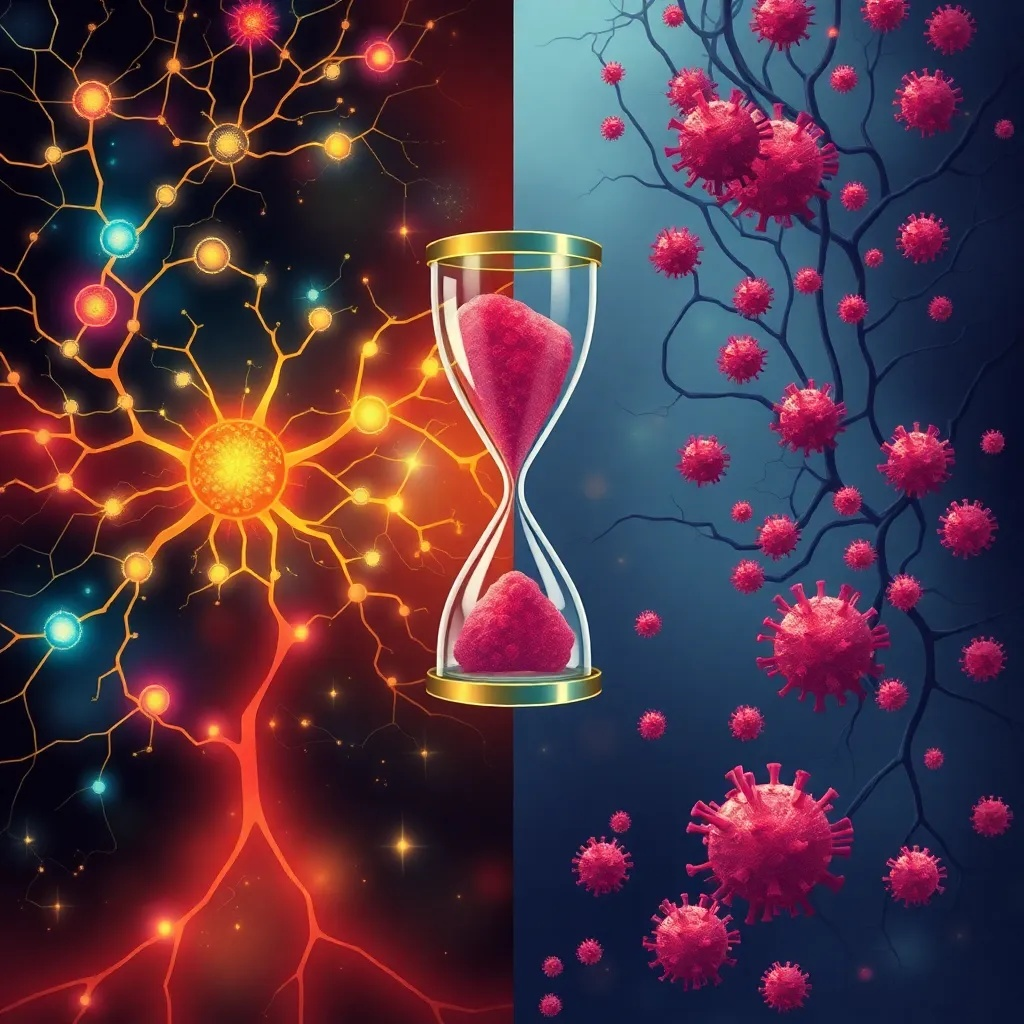
New research links inflammaging and immunosenescence to Alzheimer’s and Parkinson’s, with immune-modulating therapies showing early promise.
Aging of the immune system accelerates brain diseases—can we reverse it?
As the global population ages, neurodegenerative diseases such as Alzheimer’s and Parkinson’s have become among the most pressing health challenges. While amyloid plaques and tau tangles have long been the focus, a growing body of evidence points to a deeper, more systemic culprit: the aging immune system.
In a 2024 study published in Nature Aging, researchers identified specific shifts in immune cells within the brain’s choroid plexus that correlate with cognitive decline. “We found that aged microglia lose their ability to clear amyloid-beta, directly linking immunosenescence to Alzheimer’s progression,” said Dr. Maria K. Lehtinen, a neurobiologist at Boston Children’s Hospital and senior author of the study.
This phenomenon, known as immunosenescence—the gradual deterioration of the immune system with age—is accompanied by chronic low-grade inflammation termed “inflammaging.” Together, they create a perfect storm for neurodegeneration.
Inflammaging: The Hidden Driver
Inflammaging is characterized by elevated levels of pro-inflammatory cytokines like IL-6 and TNF-alpha. Dr. Claudio Franceschi, who coined the term at the University of Bologna, explains: “Inflammaging is not an acute infection, but a persistent, smoldering fire that damages tissues over decades. The brain is particularly vulnerable.”
In the context of Alzheimer’s, inflammaging accelerates amyloid-beta accumulation and tau hyperphosphorylation. A 2024 Cell Reports study linked changes in the gut microbiome to increased systemic inflammation and brain degeneration. “When we transferred aged gut microbiota into young mice, they developed cognitive deficits and neuroinflammation,” said Dr. Shingo Kajimura, a researcher at Stanford University.
Immunosenescence: Microglia in Distress
Microglia, the brain’s resident immune cells, become dysfunctional with age. They shift from a neuroprotective to a pro-inflammatory state, releasing damaging molecules and failing to clear debris. “Aged microglia are like exhausted soldiers who can’t fight anymore and start causing collateral damage,” noted Dr. Beth Stevens, a neuroscientist at Harvard Medical School.
This microglial dysfunction is a key player in Alzheimer’s. The 2023 discovery by Stanford researchers that transplanting young immune cells into old mice improved brain function opens new avenues. “We saw restored synaptic plasticity and reduced neuroinflammation within weeks,” said Dr. Tony Wyss-Coray, lead researcher of the study.
Senolytics: Clearing the Way
One promising strategy is the use of senolytic drugs—compounds that selectively eliminate senescent cells, including aged immune cells. Dasatinib and quercetin have shown success in aged mice, reducing neuroinflammation and improving cognitive performance. “We saw a remarkable reduction in activated microglia and restoration of normal brain immune surveillance,” reported Dr. James Kirkland, a gerontology researcher at the Mayo Clinic.
Human trials for age-related cognitive decline began in 2023, with early results expected in 2025. Dr. Kirkland remains cautious: “Animal studies are promising, but translating to humans is complex. We need to ensure senolytics selectively target diseased cells without harming healthy ones.”
Gut-Brain Immune Axis
The gut microbiome’s impact on brain aging is increasingly recognized. A 2024 Cell study identified specific bacterial strains associated with elevated systemic inflammation and neurodegeneration. “We’re seeing a direct link between gut dysbiosis and neuroinflammation,” said Dr. Eran Elinav, a microbiome researcher at the Weizmann Institute.
Modulating the microbiome through probiotics, prebiotics, or fecal transplants is being explored. However, Dr. Elinav warns: “The gut-brain axis is bidirectional and highly individualized. One-size-fits-all approaches may not work.”
Young Blood Factors
Perhaps the most provocative avenue is the infusion of young blood factors. Studies by Dr. Wyss-Coray’s team have shown that plasma from young mice reverses cognitive aging in old mice. “We identified a protein called GDF11 that rejuvenates the aged vasculature and immune system,” he explained. “But translating this to humans faces ethical and practical hurdles.”
A 2024 clinical trial from Stanford tested young plasma infusions in Alzheimer’s patients, but results were modest. “We may need repeated doses or combination therapies,” said Dr. Wyss-Coray.
“Could resetting the immune system delay brain aging more effectively than targeting amyloid or tau alone?”
This question lies at the heart of the immune rejuvenation approach. Anti-inflammatory therapies, such as antibodies against IL-1β or IL-6, are also in trials. The FDA recently approved a clinical trial for an anti-IL-1β antibody to test its effect on Alzheimer’s-related neuroinflammation.
Challenges and Future Directions
Despite the promise, many challenges remain. Immune aging is multifactorial, and interventions must be carefully timed. “Too much immune suppression could increase infection risk,” cautioned Dr. Franceschi. “Finding the right balance is key.”
Additionally, neurodegenerative diseases involve complex interactions between genetics, environment, and immunity. Personalized approaches will likely be necessary. Dr. Lehtinen emphasized: “We need biomarkers to identify individuals at risk and to monitor treatment responses.”
Analytical Background Context
The interest in immune aging as a driver of neurodegeneration has grown over the past decade. Early studies in the 2010s began linking systemic inflammation to Alzheimer’s, with landmark papers showing that chronic infections and inflammatory conditions increase dementia risk. The introduction of senolytics in 2015 by Dr. Kirkland’s group marked a paradigm shift, moving from passive observation of aging to active intervention at the cellular level. Similarly, the concept of microbiome-brain crosstalk gained traction after 2013 studies from the University of Cork showed that gut bacteria influence brain function via immune and neural pathways. These threads converged in recent years, leading to the integrated view that immune dysregulation is a central feature of brain aging.
Past trends in Alzheimer’s research have often focused on amyloid and tau, with numerous drug failures in clinical trials. The immune angle offers a new direction, but it echoes earlier efforts in anti-inflammatory therapy—such as NSAIDs for Alzheimer’s, which failed in trials due to off-target effects. The current strategy is more targeted: senolytics, specific cytokine inhibitors, and immune cell modulation. If successful, it could mark a departure from the single-target approach toward a systems-level understanding of aging. However, the history of anti-aging interventions is littered with premature claims; rigorous human data will be essential before these therapies reach the clinic.