
Plasma p-tau217 can predict Alzheimer’s decades early, but lack of protocols raises ethical concerns. Lifestyle interventions may bridge the gap. A blood test can now forecast Alzheimer’s ...
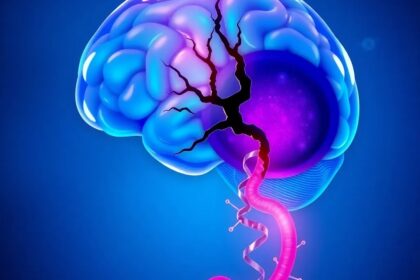
A study in Nature Communications (2025) shows gut-derived imidazole propionate breaks the blood-brain barrier and promotes tau phosphorylation, linking microbiome to Alzheimer’s. A newly discove...
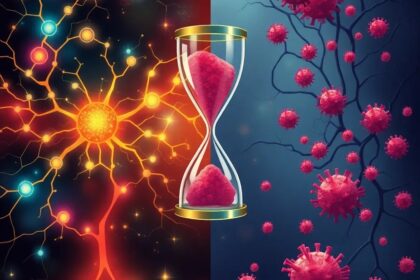
New research links inflammaging and immunosenescence to Alzheimer’s and Parkinson’s, with immune-modulating therapies showing early promise. Aging of the immune system accelerates brain di...
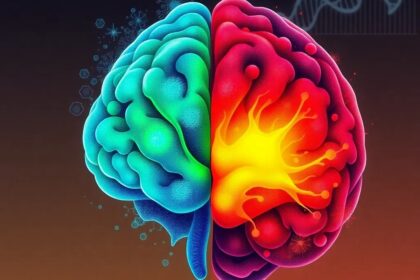
Recent studies reveal that immune aging, or ‘inflammaging,’ is a modifiable risk factor for neurodegenerative diseases, with new biomarkers and senolytic drugs offering hope for early inte...

New study reveals distinct immature neuron signatures in resilient Alzheimer’s brains, opening avenues for regenerative therapies. Recent research identifies a unique transcriptional profile in ...

New actigraphy data shows naps over 1 hour are associated with 33% higher mortality and increased Alzheimer’s pathology, but causation remains unclear. Excessive daytime napping may signal under...

Recent research reveals APOE4 increases hippocampal neuron excitability before Alzheimer’s symptoms, offering early detection via interictal spikes and potential interventions targeting Nell2 pr...

Zhang et al. (2026) discovered that α-eleostearic acid and its methyl ester act as novel senolytic agents by inducing ferroptosis in senescent cells, achieving over 80% clearance with minimal toxicit...
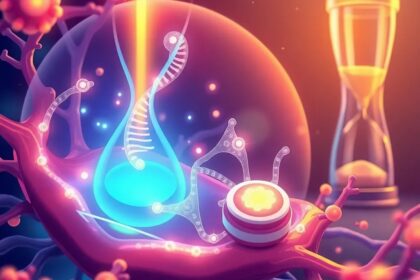
Emerging research shows that enhancing mRNA surveillance mechanisms like nonsense-mediated decay can reduce neurodegeneration, with innovative therapies targeting tau aggregation offering new hope. Re...

A new study reveals ANKRD1 gene therapy improves memory in aged mice by enhancing neurogenesis, signaling potential for anti-aging treatments targeting brain health. ANKRD1 gene therapy boosts memory ...