A new study in Aging Cell uncovers a bidirectional feedback loop between intestinal aging and gut microbiome changes, accelerating systemic inflammation.
A study in Aging Cell reveals how age-related immune decline and gut barrier weakening create a downward spiral with harmful gut bacteria.
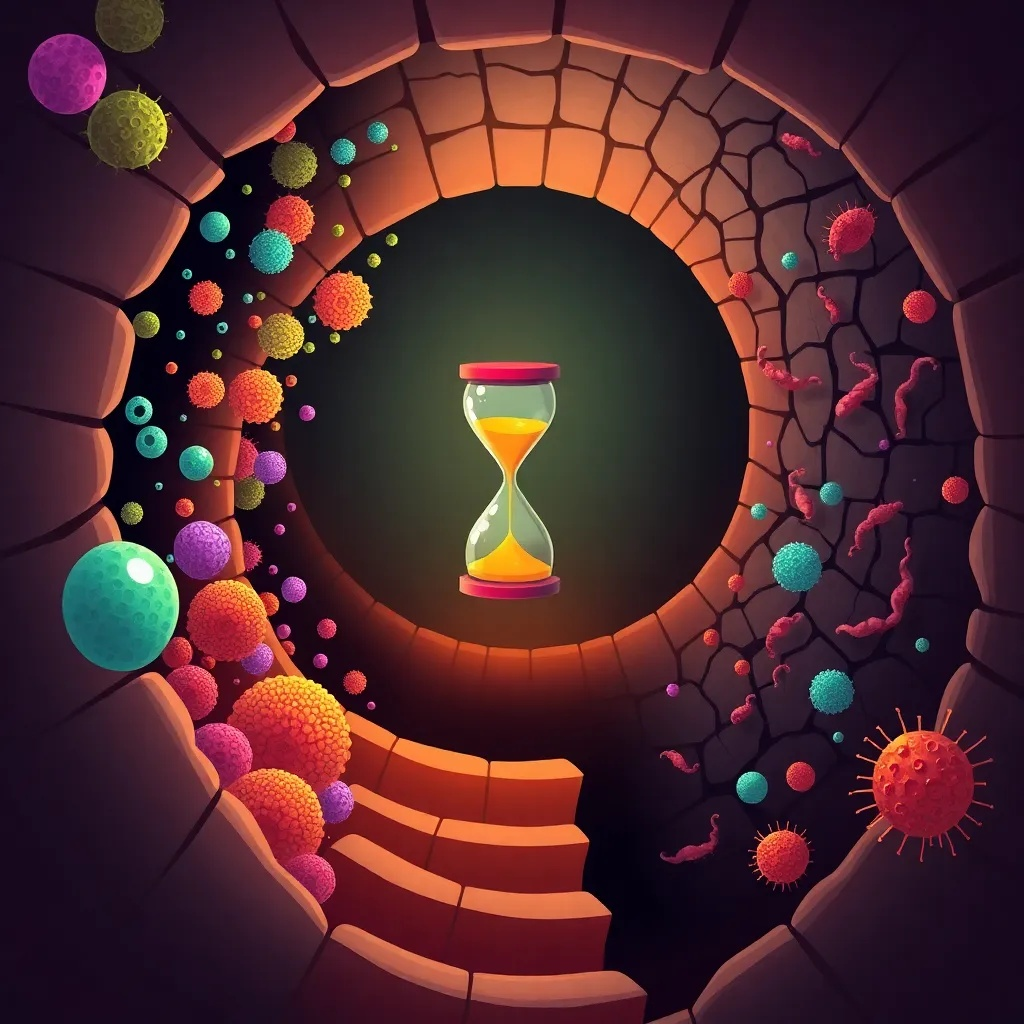
A recent study published in Aging Cell has illuminated a complex bidirectional relationship between intestinal aging and gut microbiome dysbiosis, describing a ‘downward spiral’ that exacerbates systemic inflammation and age-related decline. The research, conducted on murine models, demonstrates how age-dependent deterioration of immune function and intestinal barrier integrity fosters the proliferation of pathogenic bacteria, which in turn accelerates host aging.
The Intestinal Aging Phenotype
As organisms age, the gastrointestinal tract undergoes significant changes. The study highlights two key drivers: reduced secretory immunoglobulin A (IgA) and increased senescence-associated secretory phenotype (SASP). IgA is crucial for maintaining a healthy microbial balance by neutralizing pathogens and promoting beneficial bacteria. With age, IgA production declines, weakening the first line of immune defense. Concurrently, senescent cells accumulate and secrete pro-inflammatory cytokines, chemokines, and matrix metalloproteinases—collectively known as SASP. This creates a chronically inflamed environment that compromises gut barrier integrity.
Dysbiosis and the Proliferation of Pathobionts
Using 16S rRNA sequencing, the researchers compared the gut microbiomes of young and aged mice. They observed a significant shift in microbial composition: beneficial genera like Lactobacillus and Bifidobacterium declined, while pro-inflammatory bacteria such as Desulfovibrio and Candidatus Saccharimonas expanded. Desulfovibrio produces hydrogen sulfide, which can damage intestinal epithelial cells and increase permeability. Candidatus Saccharimonas has been associated with inflammatory bowel disease and metabolic dysfunction in previous studies. The study’s key finding is that these microbial changes are not merely consequences of aging but actively contribute to a feedback loop: the aged gut environment selects for harmful bacteria, and those bacteria further degrade barrier function and promote senescence, creating a self-reinforcing cycle.
The Downward Spiral: A Mechanistic Model
The authors propose a mechanistic model: age-related decline in IgA and increased SASP lead to impaired barrier integrity, allowing bacterial products like lipopolysaccharide (LPS) to translocate into the circulation. This triggers systemic low-grade inflammation, or ‘inflammaging,’ which in turn promotes cellular senescence and immune dysfunction. The altered immune milieu then favors the growth of pathobionts, perpetuating the cycle. This aligns with the ‘inflammaging’ hypothesis, first proposed by Franceschi et al., which posits chronic inflammation as a driver of aging. The current study provides a specific gut-centric mechanism linking dysbiosis to inflammaging.
Translational Limitations and Human Relevance
It is critical to note that this study was conducted in mice. While mouse models offer invaluable mechanistic insights, the specific bacterial species and immune responses may differ in humans. For instance, Desulfovibrio is present in the human gut but at lower abundances, and its role in aging is not fully established. Nevertheless, the conceptual framework of a gut-aging feedback loop is supported by emerging human data. A 2024 study in Nature Aging identified specific gut microbes associated with inflammaging in a cohort of older adults, corroborating the ‘downward spiral’ hypothesis. Additionally, clinical trials of senolytic drugs, such as dasatinib plus quercetin, have shown promise in reducing SASP and improving markers of gut barrier function in older adults.
Therapeutic Implications: Breaking the Cycle
The study opens up several intervention strategies. First, restoring intestinal barrier integrity could be a target. Compounds like zinc, L-glutamine, and dietary fiber have been shown to strengthen tight junctions. Second, senolytic drugs that selectively eliminate senescent cells may reduce SASP and break the cycle. Phase II trials of senolytics are underway for various age-related conditions, and their impact on gut health is being explored. Third, targeted probiotics or prebiotics could restore beneficial bacteria. Notably, Akkermansia muciniphila has garnered attention for its ability to reinforce the mucus layer and reduce inflammation. A recent murine study demonstrated that supplementation with A. muciniphila restored mucus thickness in aged mice, suggesting a potential therapeutic avenue. Lastly, dietary interventions rich in polyphenols and butyrate-producing fibers are increasingly recommended for elderly populations to support microbial ecology.
The Gut-Aging Axis in Broader Context
The gut-aging feedback loop is not an isolated phenomenon. Similar bidirectional interactions have been described in neurodegeneration (the gut-brain axis) and sarcopenia (the gut-muscle axis). For example, age-related cognitive decline has been linked to gut dysbiosis and increased intestinal permeability, allowing neurotoxic metabolites to enter the brain. Likewise, systemic inflammation from a leaky gut may accelerate muscle wasting. Thus, interventions aimed at the gut-aging axis could have pleiotropic benefits across multiple organ systems. The study in Aging Cell adds mechanistic weight to the growing consensus that the gut microbiome is a critical determinant of healthspan.
The interest in the gut-aging axis has been growing since the early 2000s when the concept of ‘inflammaging’ was first introduced. In recent years, advances in metagenomics and metabolomics have allowed researchers to map specific microbial signatures of aging. For instance, a 2020 study in Nature Medicine identified a core set of gut microbes that correlate with frailty and cognitive decline in older adults. The current study builds on this foundation by providing a causal mechanism in mice. As the field moves toward human trials, the potential to develop microbiome-based anti-aging therapies becomes more tangible. Clinical guidelines today already emphasize dietary fiber and polyphenol intake for elderly populations, but future recommendations may include senolytics and personalized probiotics. The challenge will be to translate the complexity of the murine gut ecology into human interventions that are both safe and effective. Nevertheless, the concept of breaking the feedback loop offers a promising strategy to counteract age-related decline and improve healthspan.