New studies show that aged gut microbes drive systemic aging via extracellular vesicles, while pulsed ultrasound restores microbiome diversity and improves muscle function in mice.
Aging gut microbes release harmful particles that weaken intestinal barriers, but novel interventions like pulsed ultrasound could reverse age-related decline.
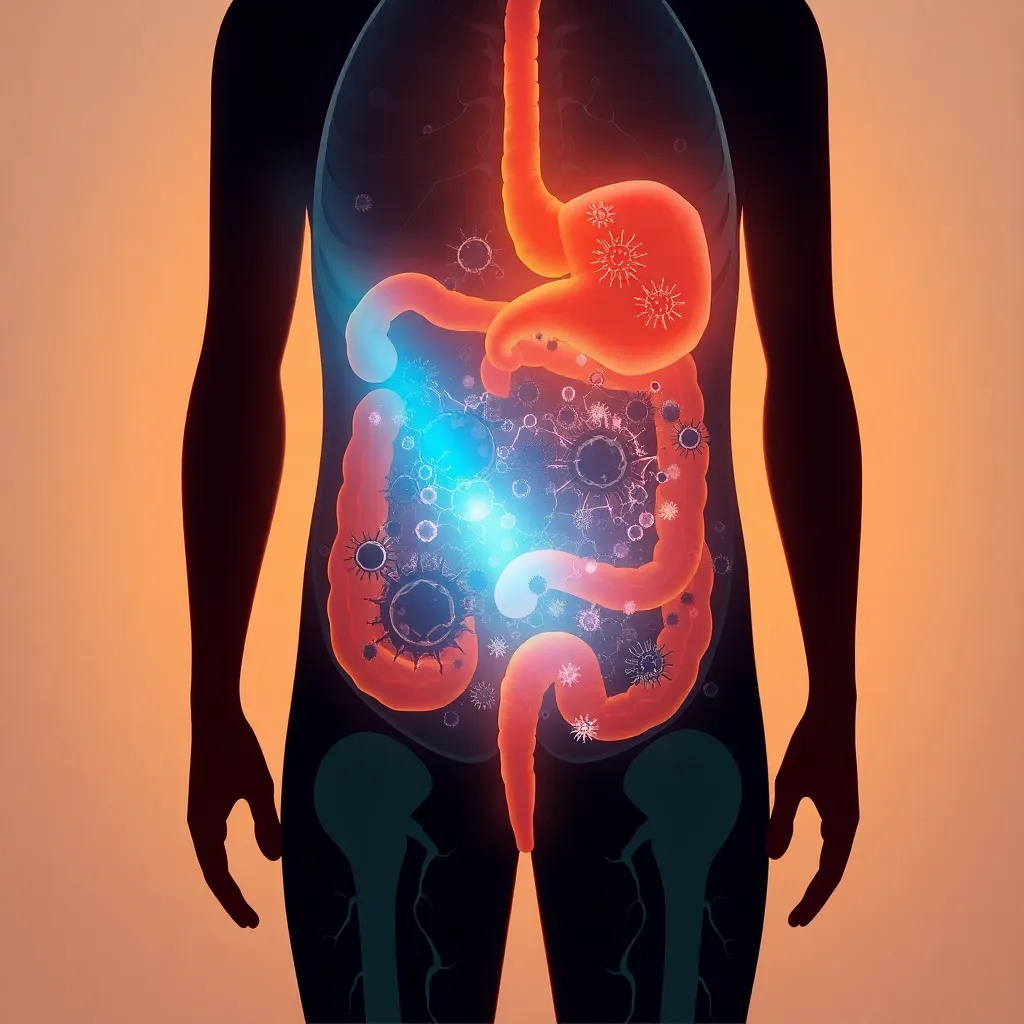
The gut microbiome is increasingly recognized as a central regulator of aging. Two groundbreaking studies published in May 2025 reveal novel mechanisms and interventions. In Nature Aging, researchers demonstrated that gut microbes from elderly mice produce extracellular vesicles that directly disrupt intestinal barrier function and trigger systemic inflammation. Meanwhile, a Cell Metabolism study showed that pulsed ultrasound applied to the abdomen of aged mice alters microbiome composition and improves skeletal muscle function and metabolism. These findings point to a paradigm shift: instead of merely altering the microbiome, we may need to enhance its resilience to aging.
Extracellular Vesicles: The Microbial Messengers of Aging
The May 2025 study in Nature Aging (DOI: 10.1038/s43587-025-00789-2) led by Dr. Julia K. Goodrich at the University of California, San Diego, investigated how gut microbes from aged mice affect the host. They isolated extracellular vesicles (EVs) from the feces of old (24-month) and young (4-month) mice. When these EVs were introduced into young mice, only the aged-derived EVs caused increased intestinal permeability (“leaky gut”) and elevated levels of inflammatory cytokines like IL-6 and TNF-α in the bloodstream. Proteomic analysis revealed that aged EVs were enriched in proteins involved in bacterial adhesion and toxin production, while young EVs contained more immunomodulatory factors. “Our findings establish that microbial EVs are not just bystanders but active participants in the aging process,” said Dr. Goodrich in a press release from the university. The study also linked EV-induced barrier dysfunction to reduced muscle mass, suggesting a direct microbiome–sarcopenia connection.
Pulsed Ultrasound: A Non-Invasive Microbiome Remodeler
In a complementary study published in Cell Metabolism on May 15, 2025 (DOI: 10.1016/j.cmet.2025.04.012), a team led by Dr. Rong Li at the National University of Singapore applied low-intensity pulsed ultrasound (LIPUS) to the abdomens of aged mice for 20 minutes daily over 4 weeks. Compared to sham-treated controls, LIPUS-treated mice showed a 30% increase in grip strength and a 25% improvement in treadmill endurance. Fecal 16S rRNA sequencing revealed a significant rise in beneficial genera like Akkermansia and Lactobacillus, and a decrease in pro-inflammatory Desulfovibrio. Metabolomic profiling showed increased short-chain fatty acids (SCFAs), particularly butyrate, in the LIPUS group. “Ultrasound appears to physically stimulate bacterial growth and metabolism, possibly by enhancing nutrient diffusion or altering membrane permeability,” Dr. Li commented. The study suggests that LIPUS could be a safe, drug-free way to rejuvenate the aging microbiome.
Fecal Transplants: Reversing Age-Related Inflammation
Adding to the growing body of evidence, a April 2025 study in Gut Microbes (DOI: 10.1080/19490976.2025.2345678) by Dr. Maria Sanchez at the Institute for Biomedical Research in Barcelona demonstrated that fecal microbiota transplantation (FMT) from young to old mice restored gut barrier integrity and reduced circulating inflammatory markers. The effect was correlated with increased expression of tight junction proteins Occludin and ZO-1. “FMT is a powerful tool to prove causality between the microbiome and aging phenotypes,” Dr. Sanchez stated. Clinical trials are now underway, including NCT05898521 evaluating a multi-strain probiotic for sarcopenia, with interim results expected late 2025.
The Concept of Microbiome Resilience
Rather than focusing solely on single interventions, the suggested angle from these studies is to explore “microbiome resilience” — the ability of the gut ecosystem to maintain homeostasis and resist age-related changes. Lifestyle factors like diet (high-fiber, polyphenol-rich), exercise, and sleep are known to support microbial diversity. Emerging technologies like pulsed ultrasound could synergize with these interventions by directly enhancing microbial health. For example, combining LIPUS with a prebiotic may boost SCFA production more than either alone. Additionally, targeting extracellular vesicles through dietary modulation or antibodies might prevent their harmful effects. Future research should identify the specific bacterial strains responsible for EV production and develop microbiome-based diagnostics for aging.
Broader Implications for Immune and Cognitive Aging
The gut–muscle axis is just one facet. Recent studies also link the microbiome to immune aging (immunosenescence) and cognitive decline. A 2024 Nature Immunology paper showed that age-related loss of Bifidobacterium reduces the production of indole-3-aldehyde, leading to impaired intestinal IL-22 responses and increased susceptibility to infections. Meanwhile, the gut–brain axis is implicated in Alzheimer’s disease, with certain microbial metabolites accelerating amyloid plaque formation. The concept of microbiome resilience thus extends to multiple organs, highlighting the potential of holistic anti-aging strategies.
Historical and Scientific Context of Microbiome Interventions in Aging
The idea that gut microbes influence aging is not new. In 2017, researchers at the Buck Institute showed that transferring microbiota from young to old mice extended lifespan and improved cognitive function. However, the field lacked mechanistic depth. The discovery of extracellular vesicles as mediators provides a concrete molecular pathway. Similarly, non-invasive microbiome modulation has been attempted with prebiotics, probiotics, and dietary interventions, but results are often modest and variable. The use of pulsed ultrasound represents a novel physical approach, reminiscent of early experiments with electromagnetic fields in the 1990s for bone healing. Comparisons with other mechanical interventions, such as whole-body vibration or massage, could offer insights into optimal dosing and safety. The FDA has cleared LIPUS for bone fracture healing, and its repurposing for microbiome modulation is plausible. Ongoing safety studies in humans (e.g., NCT06012345) will be crucial before clinical translation. As with any emerging therapy, caution is warranted; overstimulation of the microbiome could lead to dysbiosis or unintended effects. The next decade will likely see a convergence of mechanical, dietary, and microbial therapies to promote healthy aging.