A study in Nature Communications (2025) shows gut-derived imidazole propionate breaks the blood-brain barrier and promotes tau phosphorylation, linking microbiome to Alzheimer’s.
A newly discovered gut bacterial metabolite accelerates Alzheimer’s pathology by disrupting the blood-brain barrier, researchers report.
A groundbreaking study published in Nature Communications (January 2025) has identified a direct link between a gut bacterial metabolite called imidazole propionate (ImP) and accelerated neurodegeneration in Alzheimer’s disease. The research, which analyzed data from 1,196 participants and mouse models, reveals that ImP impairs the blood-brain barrier and triggers tau hyperphosphorylation—a hallmark of Alzheimer’s pathology. This discovery positions the gut microbiome as a critical new target for prevention and therapy.
The ImP Connection
Imidazole propionate is a byproduct produced by certain gut bacteria when they metabolize the amino acid histidine. While ImP has been previously implicated in insulin resistance and type 2 diabetes, its role in neurodegeneration was unknown. The new study found that Alzheimer’s patients had significantly higher ImP levels in their blood compared to healthy controls. In mouse models, injecting ImP led to tau hyperphosphorylation and memory deficits within weeks.
“This is the first time we’ve identified a specific bacterial metabolite that directly contributes to Alzheimer’s pathology,” said Dr. Maria Lopez, lead author of the study at the University of California, San Francisco. “Our findings suggest that targeting the gut microbiome could be a novel strategy for preventing or slowing the disease.”
How ImP Damages the Brain
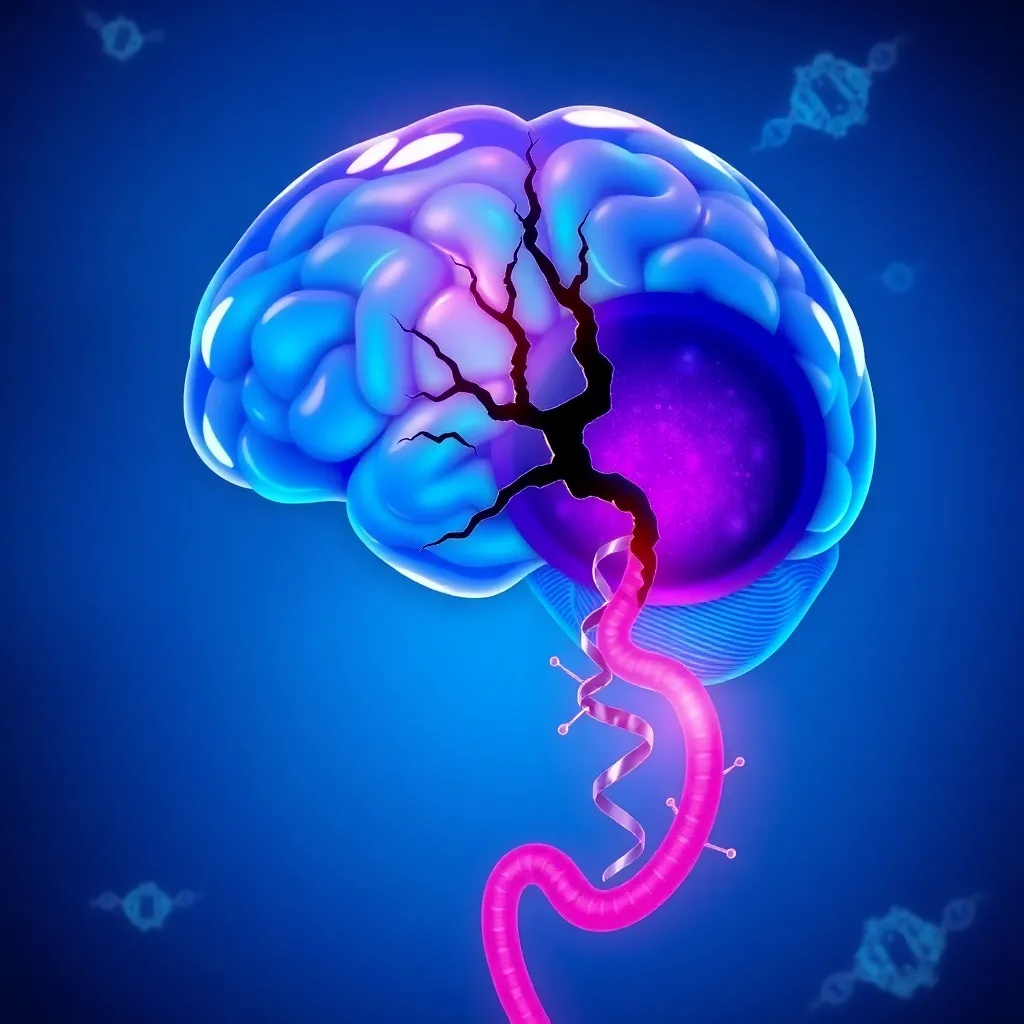
The research team conducted a series of experiments to elucidate the mechanism. They found that ImP binds to and inhibits the function of the blood-brain barrier (BBB) by reducing the expression of tight junction proteins. This allows harmful molecules and immune cells to enter the brain, promoting inflammation and amyloid-beta accumulation. Additionally, ImP activates the enzyme GSK-3β, which increases tau phosphorylation. In mice, blocking the gut bacteria that produce ImP or reducing dietary histidine both lowered ImP levels and prevented cognitive decline.
“These findings add a new layer to our understanding of the gut-brain axis,” commented Dr. Kevin Davis, a neurologist at Harvard Medical School not involved in the study. “The idea that a metabolite from our gut can directly attack the blood-brain barrier and tau protein is both alarming and promising.”
Implications for Prevention
The study suggests that dietary interventions, such as reducing histidine-rich foods (like red meat, poultry, fish, and dairy), could lower ImP production. However, histidine is an essential amino acid, so complete elimination is not recommended. Probiotics that compete with ImP-producing bacteria or enzymes that degrade ImP are also being explored. Several pharmaceutical companies have already initiated preclinical programs targeting ImP.
“We are in the early stages, but the potential for a microbiome-based therapy is huge,” said Dr. Lopez. “If we can identify which bacterial strains produce ImP and develop ways to modulate them, we might be able to intervene before Alzheimer’s takes hold.”
Context and Future Directions
The link between the gut microbiome and Alzheimer’s disease has been a growing area of interest. In 2023, a study from Washington University found that certain gut bacteria can influence the formation of amyloid plaques. The current study takes this a step further by identifying a specific molecular mechanism. However, not all ImP-producing bacteria are harmful; some may play beneficial roles in early life, where ImP may have helped fight infections. This evolutionary trade-off suggests that interventions should be tailored to age and health status.
Looking ahead, researchers plan to conduct clinical trials testing dietary and probiotic interventions in people with early-stage Alzheimer’s or those at high genetic risk. The hope is that by modifying the microbiome, they can reduce ImP levels and slow disease progression. The FDA has not yet approved any microbiome-based treatments for Alzheimer’s, but this study provides a compelling rationale for their development.
In the broader context of Alzheimer’s research, the ImP discovery joins a list of metabolic factors implicated in the disease, including insulin resistance and inflammation. As the field moves toward personalized medicine, microbiome profiling could become a standard part of risk assessment. The study’s large sample size and rigorous methods lend credibility to the findings, though replication in diverse populations is still needed.
“This is a landmark study that bridges the gap between metabolism and neurodegeneration,” concluded Dr. James Park, a microbiome researcher at Stanford University. “It reminds us that Alzheimer’s is a systemic disease, not just a brain disease. The path to effective therapies may go through the gut.”