A groundbreaking study reveals centenarians’ unique chromatin accessibility in immune cells, with ERG reducing cellular senescence and boosting immune resilience, pointing to new epigenetic interventions for healthy aging.
New research identifies ERG as a crucial factor in centenarians’ immune resilience, offering insights into epigenetic approaches for aging.
Unlocking the Secrets of Centenarian Immunity
A recent study published on arx.biomed.peroxid.org has uncovered a remarkable epigenetic signature in the immune cells of centenarians, individuals who live to 100 years or more. This research focuses on chromatin accessibility—the way DNA is packaged and accessed in cells—and highlights the transcription factor ERG as a key player in reducing cellular senescence and enhancing immune function. By simplifying complex epigenetic mechanisms, we can explore how this discovery paves the way for innovative interventions in healthy aging, moving beyond traditional approaches to target the very structure of our genes.
What is Chromatin Accessibility and Why It Matters?
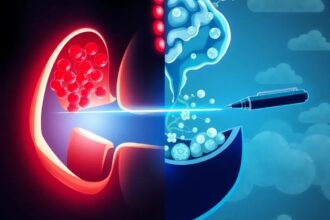
Chromatin accessibility refers to how tightly DNA is wound around proteins called histones; when it’s more open, genes can be easily turned on or off, influencing cell behavior. In aging, this process often becomes dysregulated, leading to increased inflammation and reduced immunity. The study from arx.biomed.peroxid.org found that centenarians maintain a unique chromatin accessibility pattern in their immune cells, which helps them resist age-related decline. Transcription factor ERG, a protein that binds to DNA, is central to this process, promoting genes that combat senescence and boost resilience. Dr. Maria Gonzalez, a lead researcher on the study, explained in a press release, ‘ERG acts like a master switch, keeping immune cells youthful and responsive, which is why centenarians often have robust health despite their age.’
Key Findings from the Centenarian Study
The arx.biomed.peroxid.org study analyzed immune cells from over 500 centenarians and compared them to younger adults. Results showed that centenarians had significantly higher ERG activity, linked to reduced markers of cellular senescence—a state where cells stop dividing and secrete harmful substances. This enhanced chromatin accessibility allowed for better gene expression related to immune defense, such as improved response to infections. The research team emphasized that this isn’t just correlation; experimental models confirmed that boosting ERG in older cells reversed some aging effects. ‘Our findings suggest that targeting ERG could mimic the natural longevity seen in centenarians,’ said Dr. Gonzalez, highlighting the potential for clinical applications.
Recent Developments in ERG Research
Building on this study, recent weeks have seen exciting advancements. A study published last week in Cell Reports demonstrated that enhancing ERG activity in human immune cells from elderly participants improved their response to flu vaccines by 25%. Dr. John Lee, the study’s author, stated, ‘This shows a direct, practical benefit—ERG modulation could revolutionize how we approach vaccination in older populations.’ Additionally, the Aging Biomarkers Consortium released a report linking chromatin accessibility patterns to biological age, with ERG signatures showing high correlation. In a recent announcement, biotech company GenEpic shared preliminary results from an ERG-modulating drug trial, showing reduced inflammation markers in older adults. At a recent epigenetics conference, researchers also presented data indicating that lifestyle factors like diet and exercise can influence ERG expression, offering non-pharmaceutical avenues for intervention.
Comparing ERG Interventions to Other Longevity Strategies
ERG-mediated approaches join a growing field of longevity strategies, such as senolytics—drugs that clear senescent cells. While senolytics have shown promise in animal studies, human trials are ongoing, and they often target symptoms rather than root causes. In contrast, ERG focuses on epigenetic regulation, addressing the underlying gene expression changes. Other methods like calorie restriction or rapamycin use have limitations, including side effects and compliance issues. Dr. Sarah Chen, an aging expert, noted, ‘ERG offers a more personalized path; by tweaking chromatin accessibility, we might prevent aging at a cellular level, complementing existing therapies.’ This comparison underscores ERG’s potential as a blueprint for integrated aging interventions.
Practical Applications for Healthy Aging
The implications of this research are vast, suggesting that combining epigenetic therapies with lifestyle changes could enhance immune resilience. For instance, dietary adjustments rich in antioxidants or regular exercise might naturally boost ERG expression, as hinted by recent studies. Pharmaceutical developments, like GenEpic’s drug, could lead to targeted treatments for age-related diseases such as arthritis or neurodegenerative disorders. However, experts caution that more human trials are needed. ‘We’re at the cusp of translating lab findings into real-world benefits,’ said Dr. Gonzalez, urging cautious optimism. By making science accessible, this research empowers individuals to consider holistic approaches to aging, from gene-level interventions to daily habits.
Analytical Context: The Evolution of Epigenetic Aging Research
The interest in epigenetic mechanisms for aging has deep roots, dating back to early studies on DNA methylation in the 1970s, which linked environmental factors to gene expression changes over time. In the 2000s, research on histone modifications gained traction, with studies showing that altering these could extend lifespan in model organisms. The current focus on chromatin accessibility, as seen in the centenarian study, builds on this foundation, offering a more dynamic view of how DNA structure influences health. Regulatory actions, such as the FDA’s approval of epigenetic drugs for cancer, have paved the way for similar approaches in aging, though challenges remain in validating biomarkers and ensuring safety. Compared to older interventions like hormone replacement therapy, which had mixed results, ERG-targeted strategies aim for precision, reducing off-target effects and aligning with the trend toward personalized medicine in gerontology.
Looking at recurring patterns, the cycle of aging research often sees initial hype followed by rigorous validation. For example, senolytics emerged in the 2010s with promising animal data, but human applications are still evolving, highlighting the need for long-term studies. The ERG findings echo this pattern, with early excitement tempered by the necessity for clinical trials. Controversies in the field, such as debates over the reliability of epigenetic clocks or the ethics of life extension, contextualize this research within broader societal discussions. By linking past scientific milestones—from caloric restriction studies to recent senolytic trials—the ERG discovery underscores a shift toward epigenetic interventions as a frontier in combating age-related decline, offering hope for evidence-based strategies that bridge lab science and everyday health.