Recent studies reveal that aligning meal times with circadian rhythms can slow biological aging and improve metabolic health, offering non-pharmaceutical strategies for longevity. New research highlig...
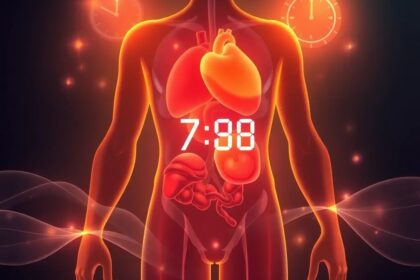
Recent studies show aligning meals with circadian rhythms slows biological aging in organs like the heart, with optimal last meals before 7 p.m. and personalized approaches crucial for health. New res...

Emerging studies show that aligning meals with circadian rhythms can reduce aging markers in organs like the heart and liver, offering practical strategies for longevity. Recent findings highlight how...

Recent NHANES analyses show that aligning meals with circadian rhythms, especially eating last meals early, reduces epigenetic age acceleration, with benefits varying by age and sex. New research from...

New clinical studies demonstrate time-restricted eating’s potential to slow Huntington’s progression through circadian optimization and enhanced autophagy, with major research institutions...

New research reveals how time-restricted eating improves metabolic health through gut microbiome modulation, with clinical benefits for diabetes and obesity management. Emerging science demonstrates T...

A 12-week clinical trial explores time-restricted eating’s potential to improve mitochondrial function and autophagy in early-stage Huntington’s disease patients. Groundbreaking research i...

A 12-week TRE intervention with 6-8h eating windows demonstrates potential benefits for HD patients by improving mitochondrial function and cognitive scores, though adherence challenges remain. Emergi...

A 12-week clinical trial investigates time-restricted eating’s safety and efficacy in early-stage Huntington’s disease, focusing on mitochondrial function and cognitive outcomes. Groundbre...
Recent studies highlight how intermittent fasting protocols like 16:8 and 5:2 can significantly reduce blood pressure by improving endothelial function and reducing oxidative stress. New research reve...