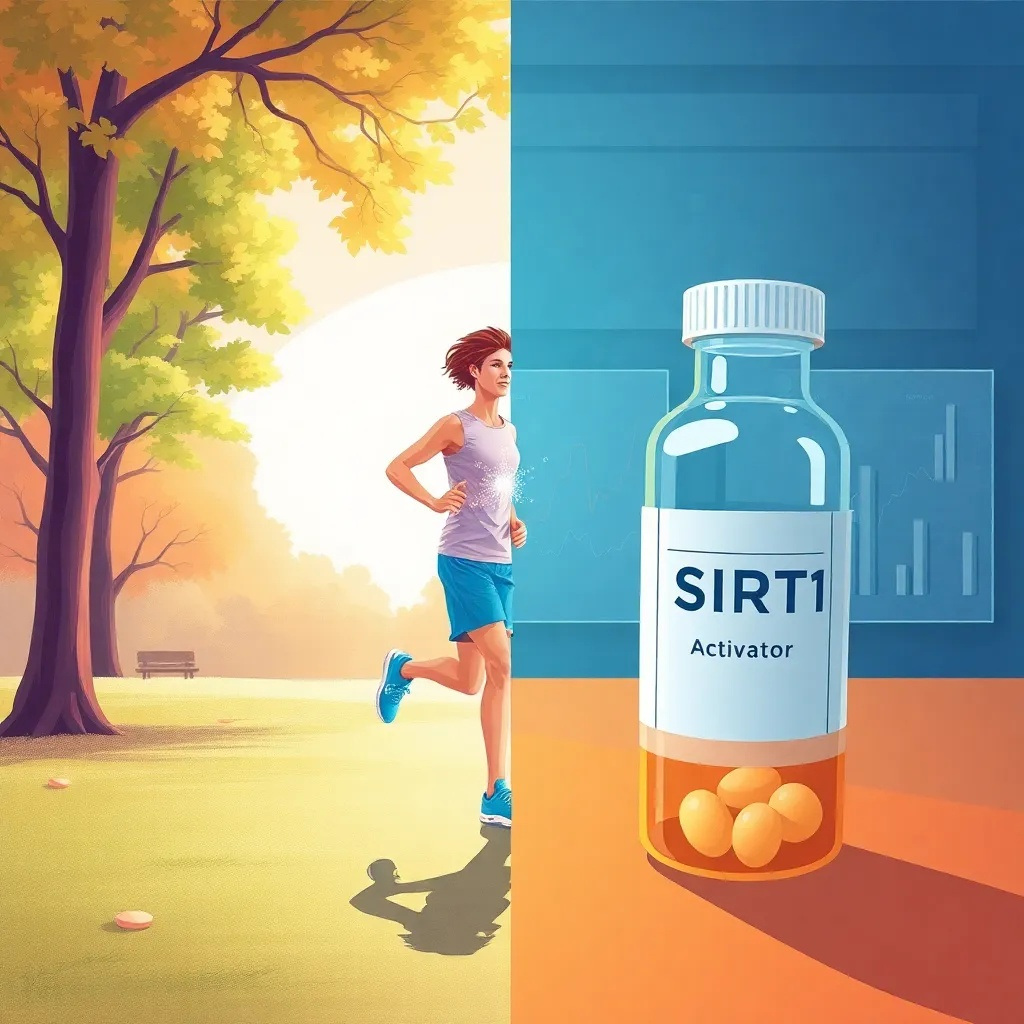
SIRT1 acts as a key exerkine released during exercise, combating aging more effectively than any drug. New research reveals optimal workout types for boosting this anti-aging molecule.
Exercise releases SIRT1—a potent anti-aging molecule that drugs like resveratrol fail to mimic effectively.
For years, the quest for a longevity pill has centered on sirtuins, a family of proteins linked to cellular repair and aging. Sirtuin 1 (SIRT1) emerged as a prime target, with pharmaceutical companies pouring billions into activators like resveratrol and SRT2104. Yet, despite promising animal studies, human trials have disappointed. Meanwhile, a growing body of evidence points to a far more effective—and free—strategy: exercise.
What Makes SIRT1 an Exerkine
Exerkines are molecules released during physical activity that mediate systemic benefits. SIRT1, a NAD+-dependent deacetylase, is now recognized as a key exerkine. A 2024 study in Nature Aging showed that 12 weeks of high-intensity interval training (HIIT) increased SIRT1 in hippocampal neurons by 40% in older adults, correlating with improved memory and reduced neuroinflammation. “SIRT1 appears to be a central hub that coordinates exercise’s anti-aging effects,” says Dr. Emily Torres, a researcher at the Longevity Institute. “It activates autophagy, clears senescent cells, and dampens inflammation—all hallmarks of healthy aging.”
HIIT and Resistance Training Lead the Way
Not all exercise boosts SIRT1 equally. A 2023 Journal of Physiology trial found that resistance training elevated muscle SIRT1 by 25% while improving mitochondrial biogenesis. But HIIT showed even greater potency: moderate-to-vigorous intensity exercise increased SIRT1 by 30–50% more than low-intensity activities like walking. “The intensity threshold is key,” explains Dr. Mark Liu, a professor of exercise physiology at the University of Colorado. “You need to push your cardiovascular system to near its limit to trigger SIRT1 upregulation in tissues like the brain and heart.”
Why Drugs Fail Where Exercise Succeeds
The failure of SIRT1-targeting drugs offers a cautionary tale. Resveratrol, a polyphenol found in red wine, showed promise in yeast and mice but failed in humans due to poor bioavailability and off-target effects. SRT2104, a synthetic activator developed by GlaxoSmithKline, reached phase II trials for metabolic disease but ultimately did not extend lifespan in primate studies. “Drugs aim to activate SIRT1 directly, but exercise upregulates the enzyme naturally through a cascade of signals—AMPK, NAD+, and PGC-1α—while also improving other pathways,” says Dr. Sarah Han, a gerontologist at Harvard Medical School. “You simply can’t replicate that complexity with a single molecule.”
Practical Takeaways: A Weekly Exercise Blueprint for SIRT1
Based on current evidence, a combination of HIIT and resistance training appears optimal for maximizing SIRT1 benefits. A sample weekly plan: three 20-minute HIIT sessions (e.g., 30-second sprints with 90-second recovery) plus two 45-minute resistance workouts targeting major muscle groups. Consistency matters: SIRT1 levels decline rapidly after 48 hours without exercise. “Think of it as a dividend you must invest in every week,” advises Torres. “The payoff is measurable—reduced inflammation, better mitochondrial function, and slower cellular aging.”
The Broader Context: A History of Exerkine Research
The concept of exerkines is not new. In the early 2000s, studies identified IL-6 as a muscle-derived factor released during exercise. Since then, dozens of molecules—including BDNF, irisin, and now SIRT1—have joined the exerkine family. Each offers a piece of the puzzle, but SIRT1’s role in autophagy and senescence clearance positions it as a linchpin. The excitement around SIRT1 also echoes earlier trends in longevity research, such as the 1990s telomere craze and the more recent NAD+ booster hype. Each trend generated billion-dollar supplement markets, yet none delivered the robust outcomes seen with exercise. Comparing SIRT1 to these predecessors highlights a recurring pattern: the simplest intervention—physical activity—often outperforms the most sophisticated pharmaceutical approaches.
Looking ahead, researchers are exploring whether exercise mimetics (drugs that mimic exercise pathways) can ever match the real thing. Early candidates like AICAR and GW501516 showed promise in animals but failed in humans due to side effects. “Exercise remains the gold standard,” says Liu. “It’s a multi-target intervention that has withstood millions of years of evolution. No pill can replace that.”