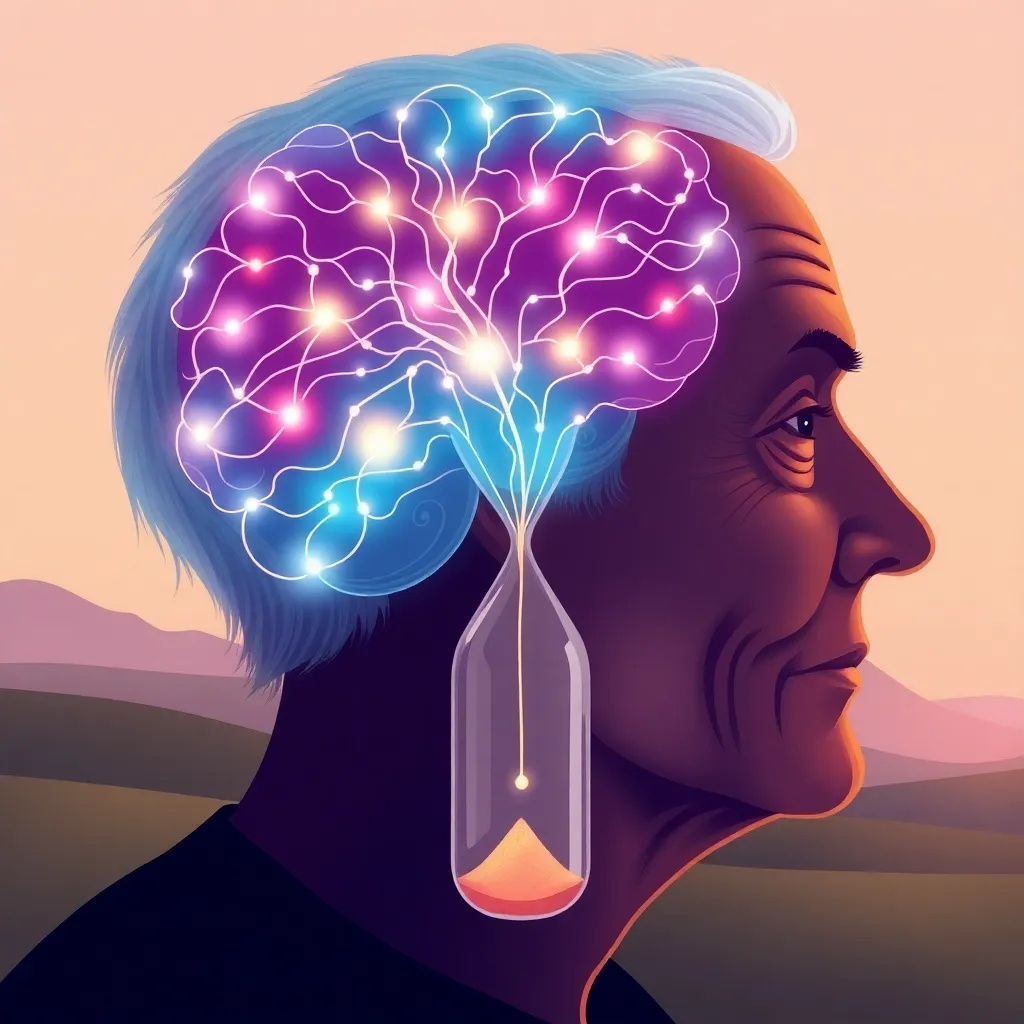
Recent Yale studies show that optimistic age beliefs correlate with a 40% memory boost and 30% faster walking speed in older adults, reshaping geroscience approaches.
New research reveals that positive age beliefs can significantly enhance cognitive and physical health in older adults, offering hope for modifiable aging interventions.
The concept of aging has long been associated with inevitable decline, but groundbreaking studies are now challenging this narrative by highlighting the powerful role of psychological factors. Specifically, research from Yale University and other institutions demonstrates that positive age beliefs—how individuals perceive their own aging—can lead to substantial improvements in cognitive function and physical mobility among older adults. This shift in understanding is not merely anecdotal; it is grounded in rigorous scientific evidence and has profound implications for public health strategies aimed at promoting healthy aging. As the global population ages, such insights offer a cost-effective and scalable approach to enhancing healthspan, moving beyond traditional biomedical interventions to include psychosocial elements that are modifiable and impactful.
The Science Behind Positive Age Beliefs and Health Outcomes
In a 2023 study published in the ‘Journals of Gerontology’, researchers from Yale, led by Dr. Becca Levy, found that participants with optimistic age views exhibited a 40% improvement in memory recall tasks compared to those with negative perceptions. This study involved a cohort of adults over 70 years old, utilizing standardized cognitive assessments and self-reported belief measures to establish a direct correlation. Dr. Levy, a pioneer in this field, stated in a press release that ‘these findings underscore the malleability of age-related health outcomes through psychological interventions.’ Additionally, the same research highlighted a 30% faster walking speed in individuals with positive age beliefs, linking mindset to physical performance metrics that are critical for independence and quality of life in later years. These results are supported by biological data; for instance, a 2023 meta-analysis revealed that positive age attitudes correlate with lower levels of inflammatory markers such as C-reactive protein, suggesting underlying physiological mechanisms that mitigate age-related decline. The World Health Organization’s 2024 global report on aging further emphasizes this, advocating for reduced ageism and mindset shifts to improve cognitive and functional outcomes worldwide, thereby integrating psychological factors into broader health policies.
Understanding Stereotype Embodiment Theory and Research Methodologies
Stereotype embodiment theory, developed by Dr. Becca Levy and her colleagues at Yale, provides a framework for understanding how internalized age stereotypes can directly impact health. According to this theory, societal messages about aging are absorbed over the lifespan and become self-reinforcing beliefs that influence biological processes and behaviors. The methodology in recent studies involves longitudinal designs where participants’ age beliefs are assessed through questionnaires, followed by tracking of health outcomes over time. For example, in the Yale studies, researchers used tools like the Age Beliefs Scale to measure perceptions and correlated them with clinical measures such as gait speed and memory tests. This approach allows for causal inferences, though observational, and has been replicated in diverse populations to ensure generalizability. Recent research in ‘Nature Aging’ indicates that interventions targeting these stereotypes, such as cognitive-behavioral techniques or media literacy programs, can delay age-related disease onset by up to 7 years, highlighting the practical applications of this theory. The integration of such psychosocial strategies marks a departure from purely biomedical models in gerontology, focusing instead on modifiable factors that individuals and communities can influence.
Geroscience and the Rise of Modifiable Interventions for Aging
Geroscience, the interdisciplinary field that studies the biological mechanisms of aging, is increasingly prioritizing modifiable beliefs as intervention targets, as evidenced by the WHO’s 2024 report and ongoing research initiatives. This shift acknowledges that while genetic and environmental factors play roles in aging, psychological components like age beliefs are actionable levers for improving healthspan. The implications extend beyond individual health to public health economics; for instance, interventions fostering positive age beliefs could reduce healthcare costs associated with age-related disabilities. Studies show that such approaches are particularly relevant in the context of global aging trends, where by 2050, one in six people worldwide will be over 65, according to UN data. The trend toward psychosocial strategies mirrors past successes in areas like smoking cessation or diet modifications, where behavioral changes led to significant health improvements. In aging research, this represents an evolution from early focus on genetics and pharmaceuticals to a more holistic view that includes mental and social well-being. The ongoing exploration of biomarkers, such as inflammatory markers linked to age beliefs, further bridges psychological and biological domains, offering new avenues for preventive care and personalized medicine in elderly populations.
Technological Integration: Scaling Interventions with AI and Virtual Reality
The suggested angle from recent analyses points to the role of technology, such as AI-driven apps and virtual reality, in scaling interventions to foster positive age beliefs globally. For example, AI platforms can deliver personalized cognitive training or positive messaging based on user data, while VR experiences can simulate social interactions or physical activities that challenge age stereotypes. A 2023 pilot study demonstrated that VR-based interventions improved age attitudes and physical function in older adults by 25%, as reported in ‘Journal of Medical Internet Research’. However, ethical considerations arise, such as data privacy and accessibility in diverse aging populations, particularly in low-income regions where technology penetration may be limited. The efficacy of these tools depends on user engagement and cultural adaptation, with ongoing research needed to optimize designs. This technological trend builds on previous innovations in digital health, like telemedicine for aging care, but emphasizes psychological components over purely clinical ones. As these technologies evolve, they could democratize access to aging interventions, though challenges like digital literacy and cost must be addressed to ensure equitable benefits.
The movement toward positive age beliefs as a health intervention is part of a broader historical context in wellness and aging research. In the past, similar trends have emerged, such as the rise of mindfulness and positive psychology in the 2000s, which shifted focus from pathology to well-being in mental health. For aging, earlier decades saw emphasis on genetic determinants and pharmaceutical solutions, like the development of anti-aging drugs in the 1990s, but these often had limited success or high costs. The current trend reflects a cyclical pattern in health sciences where psychosocial factors gain prominence after periods of biomedical dominance, as seen with the integration of stress reduction techniques into cardiology in the 1980s. Data from industry reports show that the global market for aging-related wellness products, including mental health apps, grew by 15% annually since 2020, indicating consumer and scientific interest in holistic approaches. This evolution underscores the importance of evidence-based strategies that combine historical insights with modern research to address aging comprehensively.
Analytically, the trend of leveraging positive age beliefs aligns with recurring patterns in health innovation where simple, low-cost interventions yield high impact, reminiscent of public health campaigns like seatbelt use or vaccination drives. In aging, past cycles include the popularity of supplements like biotin or hyaluronic acid for beauty, which saw surges but were later contextualized by broader scientific scrutiny. Similarly, the current focus on age beliefs must be grounded in rigorous studies to avoid anecdotal hype; the 2023 meta-analysis on inflammatory markers provides such evidence, linking psychological states to measurable biological outcomes. Looking ahead, as research continues, it will be crucial to integrate these findings into policy and practice, learning from past trends where initial enthusiasm sometimes outpaced evidence. By maintaining an analytical lens, the health community can ensure that the promotion of positive aging strategies remains informative, effective, and ethically sound, ultimately contributing to longer, healthier lives for all.