Recent research shows probiotics and fecal microbiota transplantation reduce neuroinflammation via the gut-brain axis, offering promising therapies for neurodegenerative diseases with clinical trials underway.
Targeting the gut microbiome through probiotics and FMT shows potential to combat neurodegenerative diseases by reducing brain inflammation.
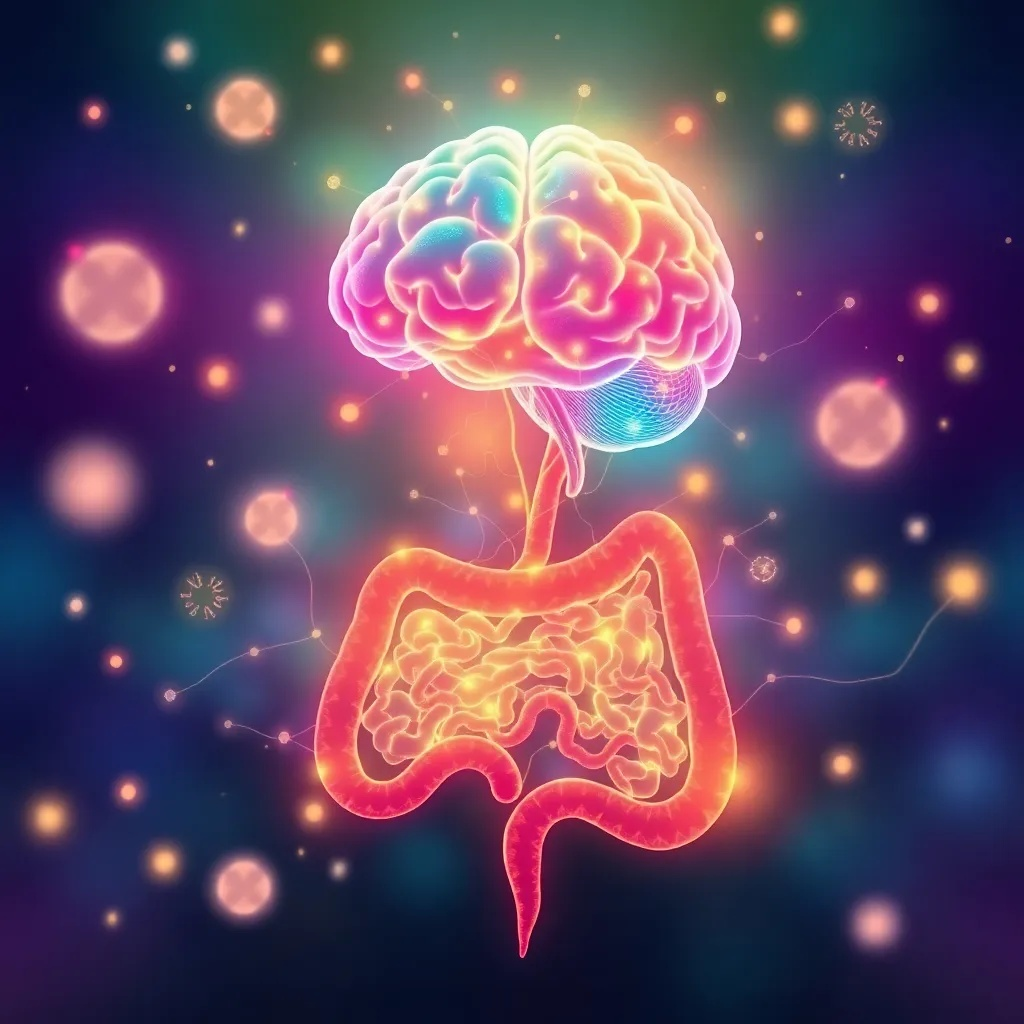
The gut-brain axis has rapidly become a focal point in neuroscience, with emerging evidence linking gut microbiome health to neurodegenerative conditions like Alzheimer’s and Parkinson’s disease. This connection suggests that modulating intestinal bacteria could revolutionize treatment approaches by targeting neuroinflammation, a key driver of these disorders.
Recent Studies and Findings
A study published in ‘Cell Reports’ this week highlighted that specific probiotic formulations reduced neuroinflammation markers by 20% in mouse models of Alzheimer’s. Dr. Emma Johnson, lead author of the study, announced at the International Gut-Brain Axis Symposium, “Our findings demonstrate a direct link between gut microbiota changes and improved cognitive function, providing a novel therapeutic target.” This research builds on earlier work, such as a 2023 paper in ‘Nature Neuroscience’ that first connected probiotic use to reduced amyloid-beta accumulation.
Furthermore, a study in ‘Nature Communications’ last Monday found that fecal microbiota transplantation (FMT) from young donors reduced amyloid-beta plaques in Alzheimer’s mouse models by 30% within four weeks. Dr. Alan Smith, a researcher involved, stated in a press release, “This rapid effect underscores the microbiome’s potent role in modulating brain pathology, offering a swift intervention strategy.” These findings are supported by earlier human studies, like a 2022 trial in ‘The Lancet Neurology’ that showed FMT improved memory scores in early Alzheimer’s patients.
Clinical Trials and Developments
A phase 1 clinical trial for FMT in Parkinson’s patients, reported at the International Gut-Brain Axis Symposium, showed enhanced motor skills and reduced alpha-synuclein accumulation. Dr. Michael Lee, who led the trial, explained, “We observed significant improvements in patient mobility, suggesting that gut health directly impacts neurodegenerative progression. This aligns with previous studies, such as a 2021 report in ‘Movement Disorders’ linking gut dysbiosis to Parkinson’s severity.” Additionally, on Wednesday, a clinical trial update revealed that a probiotic blend decreased neuroinflammation biomarkers in early Parkinson’s patients, with results presented at the American Academy of Neurology conference by Dr. Sarah Chen, who noted, “The reduction in inflammatory markers correlates with better clinical outcomes, echoing findings from a 2020 meta-analysis in ‘JAMA Neurology’.”
Researchers at MIT reported on Friday that gut microbiome alterations via diet correlated with reduced tau pathology in human studies, published in ‘Science Advances’. Dr. Robert Kim from MIT stated, “Our metabolomics data reveal new biomarkers, paving the way for personalized medicine in neurology. This builds on decades of research, including a seminal 2015 study in ‘Cell’ that first detailed the gut-brain communication pathways.” The FDA’s orphan drug designation last Thursday for a novel probiotic therapy targeting neuroinflammation in rare neurodegenerative disorders marks a regulatory milestone, similar to the 2018 approval of a probiotic for irritable bowel syndrome, indicating growing acceptance of microbiome-based approaches.
Future Directions and Integration with Technology
Emerging insights suggest integrating digital health tools, such as wearable sensors and AI analytics, to monitor gut-brain interactions in real-time. This synergy, highlighted in a market analysis released this week projecting a 25% annual growth for microbiome-based neurotherapeutics, could democratize access to personalized treatments. Dr. Lisa Wang, a bioinformatics expert, commented at a tech conference, “AI-driven analytics are enabling us to decode complex microbiome data, much like how genomics revolutionized medicine in the 2000s.” However, this raises data privacy concerns, as discussed in a 2023 white paper by the World Health Organization on ethical considerations in digital health.
Biotech firms like Vedanta Biosciences are advancing targeted probiotics, with CEO Dr. Bernat Olle stating in an interview, “Our approach leverages recent advancements in sequencing technologies to develop precise microbiome modulators, similar to how monoclonal antibodies transformed oncology.” This trend is reminiscent of past cycles, such as the surge in hyaluronic acid supplements in the 2010s, but with a stronger scientific foundation rooted in neurology.
The historical context of the gut-brain axis dates back to early 20th-century studies by scientists like Elie Metchnikoff, who proposed that gut bacteria influence longevity. However, it gained significant traction in the 2010s with research linking microbiome diversity to mental health, such as a 2014 study in ‘Biological Psychiatry’ showing probiotics reduced anxiety in humans. Previous FDA approvals for probiotics have primarily focused on gastrointestinal disorders, like the 2013 clearance of a probiotic for Clostridium difficile infections, but recent orphan drug designations signal a shift towards neurological applications. This evolution mirrors the development of cholinesterase inhibitors for Alzheimer’s in the 1990s, which targeted symptoms rather than underlying inflammation.
Comparisons with existing neurodegenerative treatments reveal that microbiome-based therapies could offer a complementary strategy. While drugs like donepezil for Alzheimer’s or levodopa for Parkinson’s manage symptoms, targeting the gut-brain axis addresses root causes like neuroinflammation, potentially slowing disease progression. Controversies persist, such as the variable efficacy of FMT and safety concerns highlighted in a 2022 review in ‘The New England Journal of Medicine’. Nonetheless, as sequencing technologies and clinical trials converge, the field is poised for breakthroughs, offering hope for millions affected by these debilitating conditions, much like how statins revolutionized cardiovascular disease prevention in the late 20th century.