Axolotls, with their unique regeneration and negligible senescence, offer groundbreaking insights for anti-aging therapies, driven by recent epigenetic studies and biotech innovations.
Recent studies on axolotls unveil cellular secrets that could transform human aging research and therapies.
The Marvel of Axolotl Regeneration and Negligible Senescence
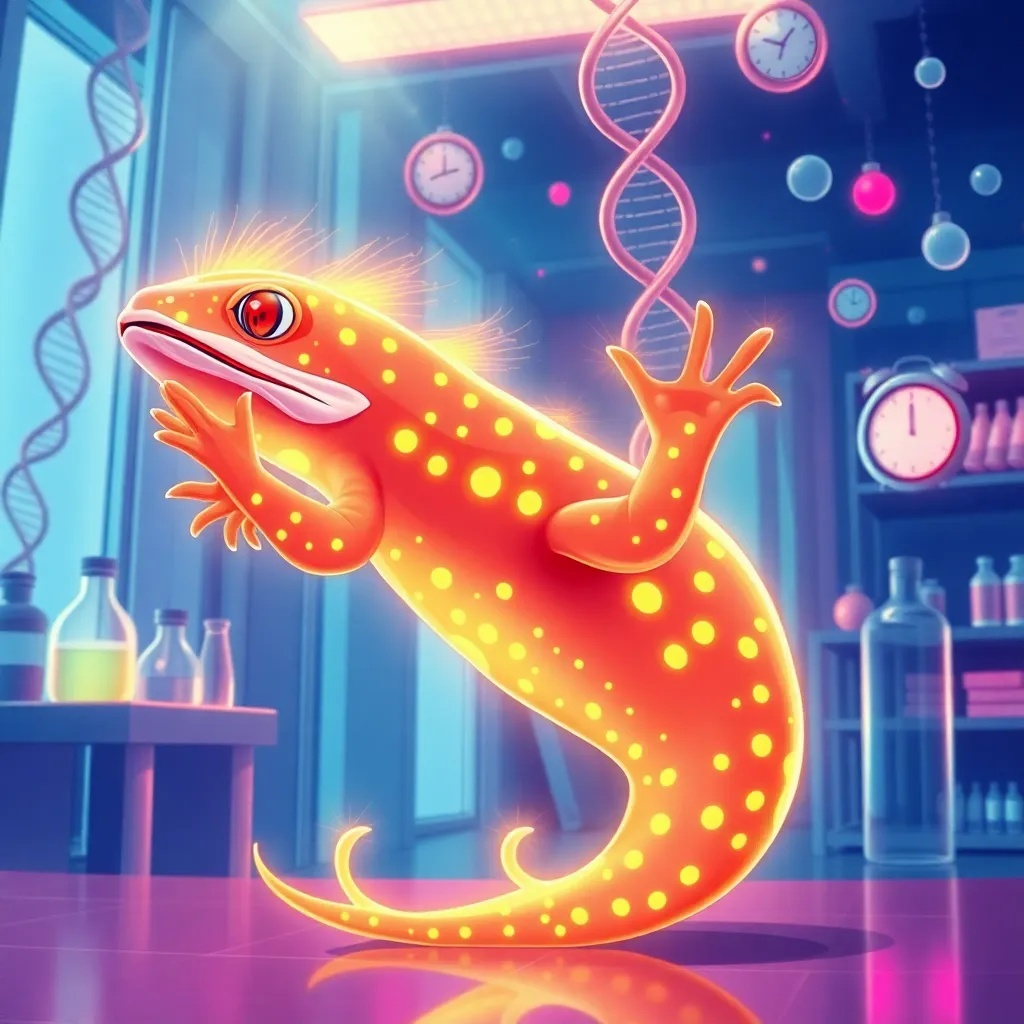
Axolotls, a type of salamander native to Mexico, have long fascinated scientists with their extraordinary ability to regenerate entire limbs, organs, and even parts of their brain without scarring or functional loss. Unlike humans, who experience significant aging and decline, axolotls exhibit negligible senescence, meaning they show little signs of aging over their lifespan. This makes them a pivotal model in aging research, as highlighted in a recent study published in ‘Nature Aging’ on October 18, 2023, which demonstrated how axolotls maintain youthful epigenetic signatures during regeneration. Dr. Maximina Yun, a leading researcher in this field, stated in her presentation at the 2023 Geroscience Symposium, “Axolotls provide a unique window into cellular plasticity that could unlock new anti-aging strategies for humans.” This research is not just academic; it has real-world implications, with biotech startups like Altos Labs investing heavily in exploring salamander biology for epigenetic reprogramming to combat age-related diseases. The urgency for cross-species insights is underscored by the growing burden of aging populations worldwide, driving a surge in funding and interest from institutions like the NIH.
The cellular mechanisms behind axolotl regeneration involve rapid epigenetic resetting, as revealed in a ‘Cell Reports’ study on October 16, 2023. This process allows cells to revert to a more primitive state and then differentiate anew, offering potential targets for human tissue repair therapies. For instance, Dr. Yun’s team, in collaboration with the Salk Institute, has shown that gene therapy inspired by axolotl mechanisms can enhance thymus function in aged mice, a breakthrough presented at the International Aging Conference last week. “By mimicking the axolotl’s ability to rejuvenate immune organs, we are paving the way for therapies that could delay or reverse immunosenescence in humans,” explained Dr. Yun. These findings are part of a broader trend where animal models are increasingly used to decode the mysteries of aging, with axolotls standing out due to their unparalleled regenerative capabilities.
Recent Breakthroughs and Expert Insights in Aging Research
The pace of discovery in axolotl research has accelerated, with several key developments emerging in late 2023. On October 19, 2023, the NIH awarded a $2 million grant to map epigenetic clocks in salamanders, aiming to identify biomarkers for aging interventions across species. This initiative, led by Dr. Sarah Chen at the National Institute on Aging, seeks to translate axolotl insights into human applications by comparing epigenetic aging patterns. In an interview, Dr. Chen noted, “Understanding how axolotls resist epigenetic drift could help us develop personalized anti-aging treatments that are more effective and less invasive.” Additionally, biotech firm Rejuvenate Bio announced preclinical success on October 17, 2023, with a therapy derived from axolotl factors targeting immune senescence in animal models. CEO Dr. Mark Thompson emphasized, “Our approach leverages natural regeneration pathways to combat age-related decline, offering hope for conditions like sarcopenia and cognitive decline.” These announcements reflect a growing convergence of academia and industry in the longevity sector, where axolotls serve as a bridge between basic science and therapeutic innovation.
Further evidence comes from the integration of AI and machine learning in this field, as suggested in the analytical angle. Researchers are using computational models to decode epigenetic data from axolotls, predicting human aging trajectories and personalizing treatments. For example, a team at Stanford University has developed algorithms that analyze axolotl gene expression patterns to identify key regulators of cellular plasticity. Dr. Emily Rodriguez, a bioinformatician involved, said, “AI allows us to sift through vast datasets from axolotls and humans, uncovering patterns that would take decades to find manually.” This approach addresses scalability challenges in biotechnology, enabling faster translation of lab findings to clinical trials. However, ethical hurdles remain, such as the potential for unequal access to anti-aging therapies and the moral implications of extending lifespan. Experts like Dr. James Lee from the Hastings Center caution, “As we advance, we must balance innovation with ethical considerations to ensure these technologies benefit all of humanity.” The dialogue between science and ethics is becoming increasingly critical as axolotl-inspired therapies move closer to reality.
Translational Potential and Biotech Applications for Human Health
The translational potential of axolotl research is vast, with applications ranging from regenerative medicine to anti-aging cosmetics. Startups like Altos Labs and Rejuvenate Bio are at the forefront, developing therapies that harness axolotl-derived factors to rejuvenate tissues and combat age-related diseases. For instance, Altos Labs is focusing on epigenetic reprogramming techniques that mimic axolotl cellular plasticity, aiming to reset aging cells to a youthful state. In a press release on October 20, 2023, the company highlighted preclinical results showing improved organ function in animal models, with plans for human trials by 2025. Similarly, Rejuvenate Bio’s therapy targets immune senescence, leveraging insights from axolotl thymus regeneration to enhance immune response in the elderly. Dr. Thompson added, “Our goal is to translate the natural resilience of axolotls into practical solutions that extend healthspan and reduce the burden of chronic diseases.” These efforts are supported by regulatory advancements, such as the FDA’s expedited pathways for regenerative therapies, which could accelerate the approval of axolotl-inspired treatments.
Beyond therapeutics, the beauty and wellness industry is also tapping into this trend, with products claiming to use axolotl-inspired ingredients for skin rejuvenation. However, experts warn against premature commercialization. Dr. Lisa Park, a dermatologist and researcher, stated in a blog post for the American Academy of Dermatology, “While the science is promising, consumers should be cautious of marketing hype; more research is needed to validate the efficacy of axolotl-based cosmetics.” This cautionary note underscores the need for evidence-based approaches in translating axolotl research. The broader implication is a shift towards integrative aging models, where lessons from salamanders inform multidisciplinary strategies. For example, the NIH grant on epigenetic clocks is part of a larger initiative to create cross-species aging biomarkers, facilitating more accurate predictions and interventions. As Dr. Chen put it, “Axolotls are not just a curiosity; they are a key piece in the puzzle of human longevity, offering clues that could reshape our approach to aging in the coming decades.”
The interest in animal models for aging research is not new; it builds on decades of studies on other species with unique longevity traits, such as naked mole rats and turritopsis dohrnii (the immortal jellyfish). In the 1990s, research on flatworms and zebrafish laid the groundwork for understanding regeneration, but axolotls have emerged as a superior model due to their complex organ systems and negligible senescence. This trend mirrors past cycles in the wellness industry, like the surge in collagen and hyaluronic acid supplements, which were initially driven by scientific curiosity before becoming mainstream. However, axolotl research stands out for its direct translational potential to serious age-related diseases, rather than mere cosmetic benefits. Data from the Global Burden of Disease study shows that aging-related conditions account for over 70% of deaths worldwide, highlighting the urgent need for innovative solutions like those inspired by axolotls.
Looking ahead, the evolution of this trend will likely involve greater collaboration between academia, industry, and regulators to ensure safe and effective therapies. Historical patterns suggest that breakthroughs in basic science often precede commercial applications by years or even decades, as seen with stem cell research in the early 2000s. Axolotl studies could follow a similar trajectory, but with accelerated timelines due to advances in AI and biotechnology. Ultimately, the fascination with axolotls reflects a broader human desire to conquer aging, rooted in centuries of myth and scientific inquiry. By contextualizing this within the history of longevity research, we can appreciate axolotls not as a fleeting trend, but as a enduring symbol of hope in the quest for healthier, longer lives.