A Nature Aging study found that centenarians harbor Clostridium scindens, which produces indole-3-acetic acid, restoring gut barrier integrity in aged mice and offering new targets for healthy aging therapies.
New research reveals how a microbe common in centenarians produces a metabolite that restores intestinal barrier function, offering new avenues for healthy aging.
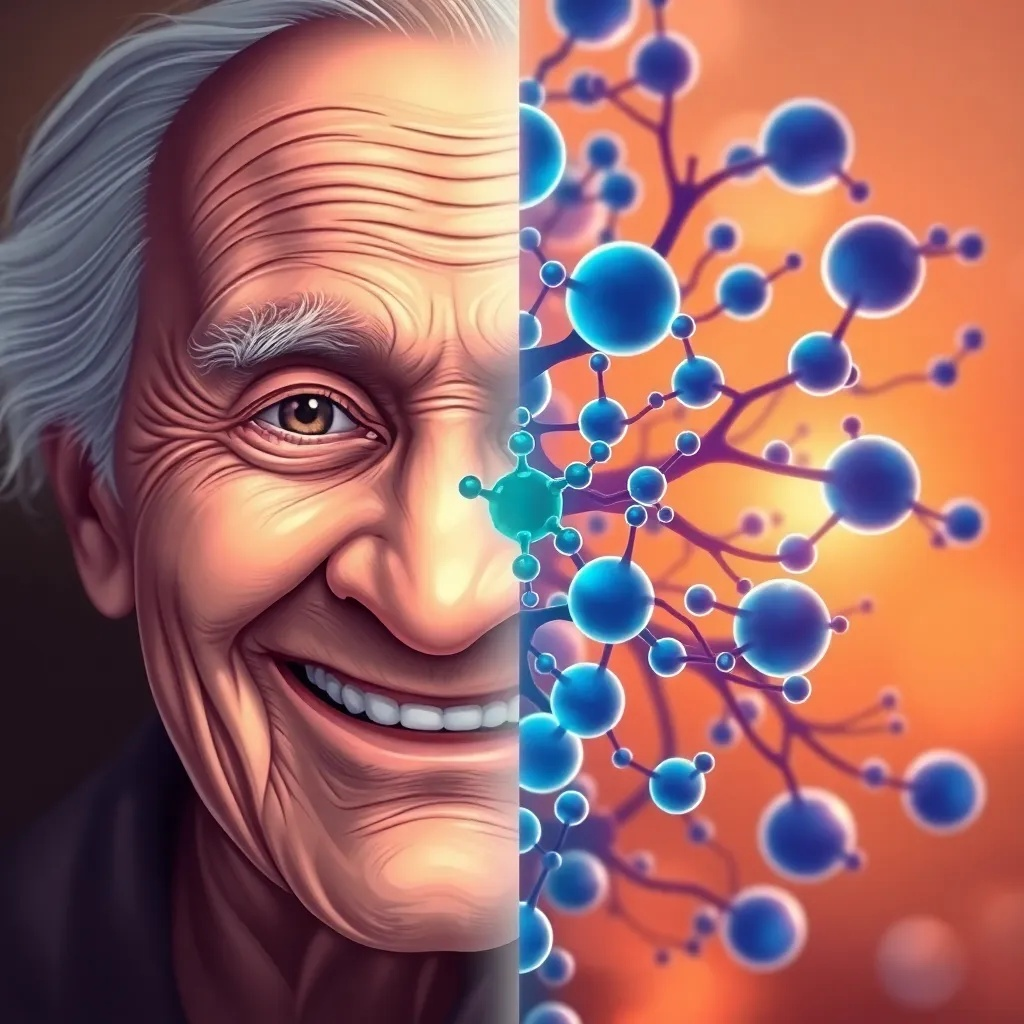
Every human body is a walking ecosystem. Trillions of bacteria call the gastrointestinal tract home, and together they form a community that shapes our metabolism, immunity, and even brain chemistry. With age, this community loses its diversity, and the delicate balance that once kept pathogens in check begins to erode. But some people seem to defy that rule. Centenarians, who live past 100, possess gut microbiomes that are remarkably different from those of their frailer peers. A 2023 study in Nature Aging has now identified a likely reason: these individuals harbor high levels of Clostridium scindens, a bacterium that produces a protective metabolite called indole-3-acetic acid (IAA). In animal models, IAA restored the intestinal barrier in aged mice, hinting that this simple molecule might be a key to healthy aging.
A landmark study links centenarian microbiomes to a key metabolite
The research, carried out by an international team from the University of Jyväskylä in Finland and Nanjing Medical University in China, analyzed fecal samples from 45 centenarians, 62 older adults over the age of 80, and 30 young volunteers. Using 16S rRNA gene sequencing and shotgun metagenomic analysis, they found that C. scindens was conspicuously more abundant in the centenarian group. To understand the functional impact of this microbe, the researchers colonized aged mice with C. scindens and also administered IAA orally to another group of aged mice. The results, published online in June 2023, showed that both interventions significantly reduced intestinal permeability, decreased markers of systemic inflammation, and restored the expression of tight junction proteins in the colon.
The choice of C. scindens was not accidental. Previous work had established that this species is an important biosynthetic niche for secondary bile acids and is often reduced in inflammatory bowel disease. But its role in aging had not been explored. The team studied tryptophan metabolism in the gut, because indole derivatives, including IAA, are generated by bacterial enzymes from dietary tryptophan. They found that C. scindens possesses the gene cluster responsible for converting tryptophan to IAA, and that fecal IAA concentrations correlated with the abundance of this bacterium across all participants. Levels of IAA were highest in centenarians, intermediate in older adults, and lowest in young controls. Notably, the increased IAA levels were independent of the participants’ dietary tryptophan intake, suggesting that microbial metabolism, not just diet, is the determining factor.
The discovery fits a broader narrative about the importance of microbial metabolites in aging. In recent years, scientists have found that short-chain fatty acids (SCFAs), produced by fermenting fiber, can modulate inflammation and maintain the integrity of the gut lining. But SCFAs are not the only players. The new data place IAA as a complementary molecule, one that acts through a different receptor and pathway. The two families of metabolites may even cooperate: IAA’s product, aryl hydrocarbon receptor (AhR), is known to regulate the differentiation of immune cells that communicate with the epithelium. By strengthening the barrier from the inside, IAA may prevent the translocation of bacterial components such as lipopolysaccharides (LPS) that trigger chronic inflammation—a state often called ‘inflamm-aging’.
How IAA restores the intestinal barrier: mechanism and evidence
The intestinal barrier is a single layer of epithelial cells held together by tight junctions. When these junctions become loose, the so-called ‘leaky gut’ permits bacterial fragments to escape into the bloodstream. IAA is a natural ligand of AhR, and upon binding, AhR translocates to the nucleus, where it activates genes encoding tight junction proteins such as claudins and occludin. It also influences the secretion of antimicrobial peptides and the functions of intraepithelial lymphocytes, which patrol the gut lining. In the aged mouse model, AhR expression in the colon was reduced, and IAA treatment partly restored it. The work builds on a 2021 study in Science Translational Medicine that showed indole-3-propionic acid, a similar microbial tryptophan metabolite, can improve gut barrier function and reduce inflammation in mice with metabolic syndrome.
The mouse experiments were meticulously designed. The team used germ-free mice which lack any microbiota, and also mice treated with antibiotics to deplete their indigenous gut flora. In both cases, replenishing C. scindens alone was sufficient to increase IAA levels and tighten the barrier. This is a critical finding because it demonstrates that this single species can occupy the niche and exert its effect even in a depleted ecosystem. However, the authors were careful to note that the effects were observed in the colon, not in the small intestine, and that the mice were of a specific genetic background. Larger, more physiological models will be needed to confirm the translational significance.
Emerging evidence links gut permeability to neuroinflammation and cognitive impairment. This suggests that IAA interventions could have benefits beyond the gut. A 2022 study from the University of California, Irvine, reported that increased intestinal permeability precedes the development of amyloid plaques in a mouse model of Alzheimer’s disease. If IAA can tighten the gut barrier, it might indirectly dampen brain inflammation. While this remains speculative, it underscores the systemic consequences of microbial metabolites and the potential for aging interventions to target multiple organ systems simultaneously.
Translating microbial networks into therapies: opportunities and hurdles
What does this mean for the average aging person? It suggests that augmenting the gut’s own IAA production could be a viable strategy to support intestinal health. But how? Three main paths are emerging. First, probiotics: introducing C. scindens as a live culture. This is complicated by the bacterium’s oxygen sensitivity—it is a strict anaerobe. Encapsulation technologies designed for anaerobes are improving, and several companies are studying C. scindens as a therapeutic for inflammation. Second, prebiotics: using dietary fibers or tryptophan-rich foods to boost the metabolic activity of existing C. scindens. Tryptophan is found in oats, eggs, milk, cheese, turkey, and sunflower seeds. A handful of small clinical trials have explored high-tryptophan diets for mood disorders, but none have specifically tracked IAA production. Third, postbiotics: administering IAA itself as a small-molecule drug or supplement. This is perhaps the most straightforward, but IAA can be unstable and may have off-target effects at high doses. The study did not report toxicological assessments, only that the dose used was tolerated by mice.
About the same time this study was released, the FDA approved Vowst, the first oral fecal microbiota product for recurrent Clostridioides difficile infection. The approval was viewed as a watershed for the microbiome field, opening the door for other live bacterial therapeutics. Yet aging is a far more complex indication. C. diff is an acute infection; aging is a chronic, multifaceted process. The regulatory path would require decades of follow-up, and no company has yet announced advanced clinical trials for IAA-based anti-aging products. The lack of fiscal incentives is one reason; aging is not considered a disease by most regulatory agencies, though the FDA has acknowledged the concept of ‘geroprotectors’ in some advisories.
The scientific community remains cautious. In an accompanying commentary in Nature Aging, microbiologist Elaine Hsiao of Stanford University noted that ‘the leap from a correlation in centenarians to a causal intervention in humans requires careful validation.’ She praised the mechanistic depth of the study but emphasized that the microbiome is a web of interactions. ‘We cannot simply add a single bacterium to a complex ecosystem and expect the same outcome in every person,’ she told the press. Other researchers have pointed out that the cohort of centenarians in the study was relatively small and geographically homogeneous, primarily East Asian. The results may not generalize to other populations with different dietary patterns and genetic backgrounds.
Nevertheless, the concept of keystone species in the microbiome is gaining traction. A keystone species is one that has a disproportionately large effect on its community relative to its abundance. In ecology, removing a keystone species can cause an ecosystem to collapse. In the gut, C. scindens may be just such a species, supporting the growth of beneficial bacteria by producing secondary bile acids, which have antimicrobial activities, and by generating IAA, which modulates host immunity. This perspective shifts the strategy for microbiome engineering away from massive fecal transplants toward targeted, small-molecule interventions. It also opens the door for ‘pharmacomicrobiomics,’ the study of how drugs and microbial metabolites interact.
C. scindens itself is not a newcomer; it was first isolated in 1980 from a human fecal sample and has been studied for its role in bile acid metabolism. But only with the advent of modern sequencing and metabolomics could its broader impact on host physiology be appreciated. The current trial landscape is sparse. As of early 2025, no clinical trials for IAA or C. scindens in aging are registered on ClinicalTrials.gov. However, several academic groups have announced plans to launch pilot studies. For instance, researchers at the Guangdong Provincial People’s Hospital are recruiting volunteers to test whether a high-tryptophan diet can elevate IAA levels in older adults. Such studies will provide the first data on whether this approach is feasible and safe.
The current wave of interest in gut-aging research is the renaissance of an old idea. Over a century ago, Nobel laureate Elie Metchnikoff proposed that fermented dairy products, such as yogurt, could promote longevity by altering the gut flora. His theory was largely dismissed due to lack of rigorous evidence. In the 2000s, the Human Microbiome Project transformed the field, providing tools to identify specific microbes without culture. As of 2024, the project has expanded to include aging cohorts, revealing that loss of microbial diversity tracks with frailty and the onset of age-related diseases like type 2 diabetes and Alzheimer’s. Yet diversity measures alone have failed to yield actionable interventions. Attempts to reverse aging by consuming broad-spectrum probiotics have produced inconsistent results, as exemplified by a 2018 randomized controlled trial in older adults that found no significant impact on inflammatory markers.
The debate now is whether to take a ‘reductionist’ path, focusing on individual metabolites, or a ‘holistic’ path, attempting to restore entire microbial ecosystems. The centenarian study supports both views: it identifies a key metabolite, but also underscores the complexity of the production pathway. IAA is not unique to C. scindens; a dozen other gut bacteria can produce it. Why are some producers more beneficial than others? The answer may lie in their location, growth dynamics, and synergy with other microbes. As researchers delve deeper, they are also considering the role of oscillations in metabolite levels over a 24-hour cycle, another layer of complexity. The promise is enormous, but the path to a prescription is long. A pragmatic first step may be a simple dietary recommendation, perhaps increasing tryptophan intake in combination with fiber, to encourage the endogenous production of IAA. Before that, clinical trials must establish the safety and efficacy of IAA supplements in humans. The fact that IAA is already an approved plant hormone in agriculture, available without a prescription, means it is not entirely foreign to the regulatory system. Yet ‘natural’ does not equate to ‘safe’ in the context of systemic exposure.
In the end, the microbiome is not just a collection of genes; it is a dynamic organ shaped by diet, environment, and age. The centenarian study provides a textbook example of how a single microbial species and its metabolite can influence the architecture of the intestinal wall. By understanding the rules of this chemical communication, we might eventually design interventions that not only extend life but also extend the period of healthy, disability-free existence. For now, the takeaway is that a healthy gut is a foundation for a healthy old age—and the bacteria that help us build that foundation deserve our close attention.