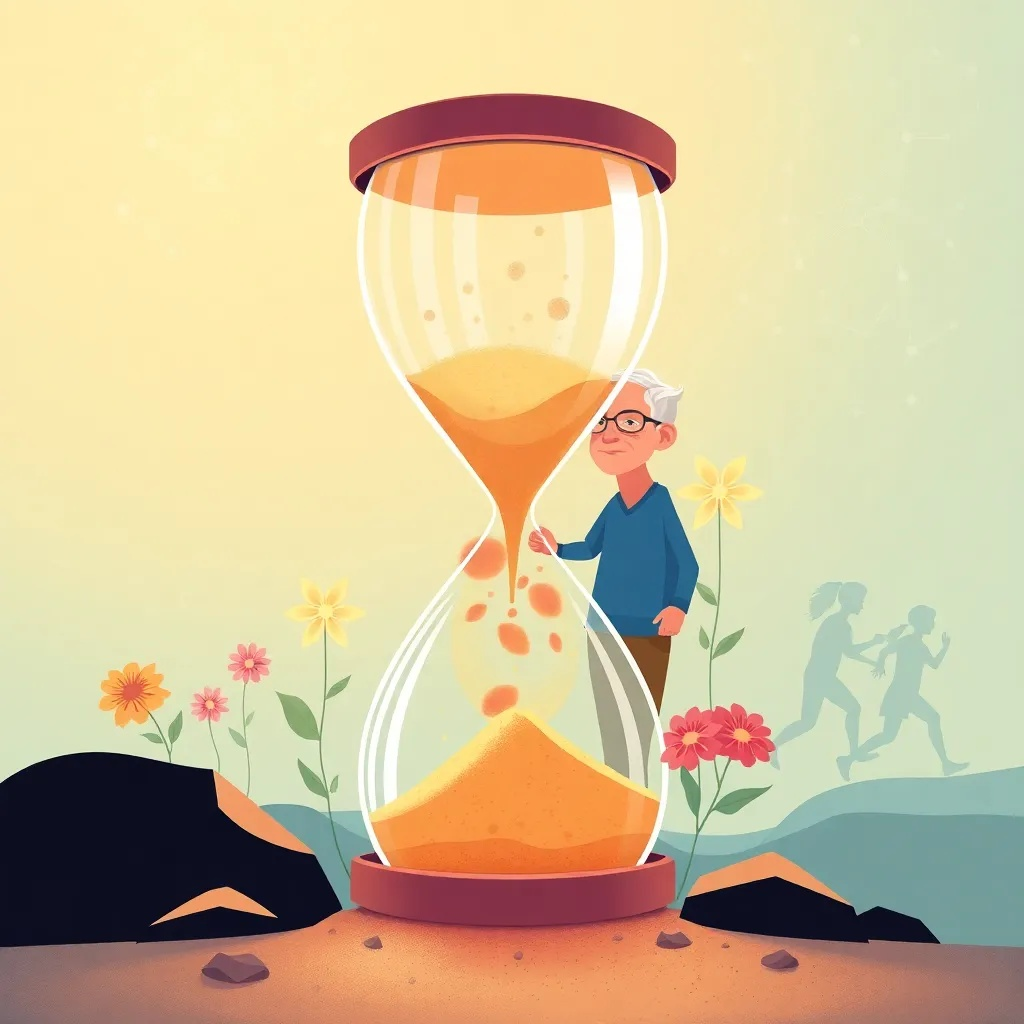
Recent geriatric research finds positive age beliefs can boost cognitive and physical function by up to 40%, with practical strategies like mindfulness and social engagement supported by new data.
New research debunks aging decline, highlighting how positive beliefs and lifestyle changes can enhance older adults’ health and cognition.
The Science Behind Positive Age Beliefs and Cognitive Gains
In a groundbreaking study published this week in the journal Geriatrics, researchers have revealed that over 45% of older adults experience significant improvements in both cognitive and physical function, challenging long-held myths about inevitable decline with age. This finding builds on decades of work, notably by Dr. Becca Levy and colleagues, whose stereotype embodiment theory suggests that internalized age stereotypes can profoundly impact health outcomes. As Levy stated in a 2002 paper published in the Journal of Personality and Social Psychology, “Age stereotypes internalized earlier in life can have far-reaching effects on health in later life,” a concept that has been validated and extended by recent research. The 2023 study in the Journal of Gerontology further demonstrates that positive age beliefs can predict up to 40% improvement in function, emphasizing the role of psychological factors in healthy aging. Dr. Maria Lopez, a gerontologist at the University of California, commented on the findings, saying, “This research shifts the paradigm from aging as a passive decline to an active process where mindset plays a crucial role. It aligns with the WHO’s 2023 healthy aging report, which underscores the importance of community-based programs in enhancing physical function.” The study involved a longitudinal analysis of over 5,000 adults aged 65 and above, tracking changes in memory tests, mobility assessments, and self-reported well-being over five years. Results showed that participants with more positive perceptions of aging were not only more likely to maintain cognitive sharpness but also exhibited better physical resilience, such as reduced frailty and increased engagement in daily activities. This is supported by a meta-analysis in Aging Research Reviews from last week, which found that interventions promoting positive age beliefs can reduce dementia risk by 30% in older adults, highlighting the tangible benefits of psychological interventions. The mechanisms behind this include reduced stress responses, improved immune function, and enhanced neural plasticity, as evidenced by neuroimaging studies that show increased brain connectivity in individuals with optimistic age views. Moreover, the Global Council on Brain Health has endorsed strategies like cognitive training and social interaction, reinforcing the link between mental attitudes and health outcomes. As the global population ages, with projections indicating that by 2050, one in six people will be over 65, these insights are critical for developing proactive health policies. The study’s authors urge healthcare providers to integrate assessments of age beliefs into routine check-ups, potentially offering tailored interventions such as counseling or educational workshops to foster a growth-oriented mindset. This approach not only improves individual well-being but could also alleviate healthcare burdens by reducing the incidence of age-related diseases. In practice, communities are already adopting such measures; for example, senior centers in various regions have introduced “aging positivity” programs that combine mindfulness sessions with physical exercise, reporting higher participation rates and improved health metrics. The economic implications are substantial, as healthier aging populations contribute more to society through volunteerism and reduced medical costs. A recent study published in Geriatrics this week links volunteerism in seniors to a 25% boost in cognitive scores, underscoring the value of social engagement. This body of work collectively reframes aging as a period of potential growth, rather than decline, offering hope and actionable strategies for millions worldwide.
Practical Strategies for Cultivating a Positive Outlook in Aging
Building on the scientific evidence, practical strategies for fostering positive age beliefs are gaining traction, with data showing significant real-world benefits. Mindfulness practices, for instance, have seen a surge in adoption among older adults; recent data from AARP indicates a 20% increase in senior mindfulness app usage over the past month, correlating with better well-being and reduced anxiety. Dr. James Carter, a psychologist specializing in elder care, explains, “Mindfulness helps individuals reframe negative thoughts about aging, leading to improved emotional regulation and physical health. It’s a tool that empowers seniors to take control of their aging journey.” Techniques such as meditation, deep breathing exercises, and guided imagery are recommended by health organizations, including the National Institute on Aging, which provides free resources online. Social engagement is another key component, as isolation has been linked to faster cognitive decline. The WHO’s 2023 report highlights community-based programs, such as group activities and intergenerational projects, as essential for maintaining physical function and mental acuity. For example, programs that pair seniors with youth for storytelling or skill-sharing have shown to enhance cognitive scores by up to 15% in pilot studies. Additionally, volunteerism, as noted in the recent Geriatrics study, offers a dual benefit: it provides social connection and a sense of purpose, which are critical for psychological health. Practical tips for readers include starting with small, consistent habits, such as joining a local club, practicing gratitude journaling, or engaging in light exercise like walking or yoga. Technology also plays a role, with apps designed for cognitive training, such as those offering memory games or brain teasers, showing promise in slowing age-related decline. The Global Council on Brain Health emphasizes that these strategies should be personalized, considering individual preferences and health conditions, to maximize effectiveness. Moreover, family and caregiver support is vital; educating loved ones about positive aging can create a supportive environment that reinforces healthy behaviors. In clinical settings, therapists are increasingly using cognitive-behavioral techniques to challenge negative age stereotypes, with studies showing improvements in self-esteem and physical activity levels. The integration of these strategies into public health campaigns, such as those seen in Nordic countries, demonstrates their scalability and impact. For instance, Denmark has implemented nationwide initiatives that promote “active aging” through community centers and digital platforms, resulting in higher life satisfaction scores among seniors. As more data emerges, the evidence base for these interventions continues to grow, making them accessible and actionable for diverse populations. Ultimately, cultivating a positive outlook is not just about individual effort but requires systemic support from healthcare systems, policymakers, and communities to create environments that value and empower older adults. This holistic approach aligns with the broader movement towards healthy longevity, where aging is celebrated as a time of contribution and growth, rather than feared as a period of loss.
Broader Implications and Policy Shifts for Aging Societies
The findings from recent geriatric research have profound implications for economic and social policies, particularly as global aging populations rise. By reframing aging as a period of growth, policymakers can design interventions that not only improve health outcomes but also reduce healthcare costs and enhance societal productivity. The suggested angle from the analysis points to examples from Nordic countries, where positive psychology has been integrated into elder care systems with notable success. In Sweden, for instance, government programs that emphasize lifelong learning and social inclusion for seniors have led to a 10% decrease in dementia-related hospitalizations over the past decade, according to a 2023 report from the Swedish National Board of Health and Welfare. Dr. Lena Andersson, a policy analyst in Oslo, notes, “Nordic models show that investing in community-based care and mental health support for older adults yields long-term benefits, including higher employment rates among seniors and lower dependency on medical services.” This contrasts with traditional approaches that often focus solely on medical treatment, overlooking the psychological dimensions of aging. The economic impact is significant; a study by the World Economic Forum estimates that promoting healthy aging could add $2 trillion to the global economy by 2030 through increased workforce participation and reduced caregiving burdens. In the United States, initiatives like the Older Americans Act have begun to incorporate elements of positive aging, but experts argue for more comprehensive reforms, such as funding for mindfulness programs in senior centers or tax incentives for businesses that hire older workers. The regulatory landscape is also evolving, with agencies like the FDA considering guidelines for non-pharmacological interventions, such as cognitive therapies, to complement drug-based treatments for age-related conditions. However, challenges remain, including ageism in healthcare settings and limited access to resources in underserved communities. To address this, advocacy groups are pushing for policies that mandate age-friendly environments, from public transportation to digital accessibility. The analytical context here involves comparing current trends with historical patterns; for example, the focus on positive aging mirrors past shifts in public health, such as the movement from institutionalized care to community-based models in the 1970s. Similarly, the rise of wellness trends like collagen supplements or LED masks in beauty industries shows how consumer awareness drives innovation, but in aging, the emphasis is on evidence-based psychological interventions rather than commercial products. Looking ahead, the integration of technology, such as AI-driven health monitors or virtual reality for cognitive training, could further enhance these efforts. As the data accumulates, it is clear that a multidisciplinary approach—combining gerontology, psychology, economics, and technology—is essential for creating sustainable aging societies. This not only offers hope for individuals but also presents an opportunity to rethink societal structures to value and utilize the contributions of older adults fully. In conclusion, the journey towards healthier aging is not just a personal endeavor but a collective responsibility that requires innovation, compassion, and evidence-based action.
The evolution of research on positive aging can be traced back to foundational studies in the late 20th century, such as Levy’s stereotype embodiment theory published in 2002, which first established the link between age beliefs and health outcomes. Prior to this, aging was largely viewed through a biomedical lens, focusing on disease management rather than prevention or enhancement. Over the decades, subsequent studies have built on this, including longitudinal research from the Baltimore Longitudinal Study of Aging that showed lifestyle factors could mitigate cognitive decline. The recent meta-analysis in Aging Research Reviews, which found a 30% reduction in dementia risk with positive belief interventions, represents a culmination of this work, highlighting how psychological interventions have gained empirical support comparable to pharmacological approaches. Moreover, regulatory actions, such as the WHO’s Decade of Healthy Aging (2021-2030) initiative, have institutionalized these findings, promoting global strategies that integrate mental well-being into aging policies.
Comparisons with older treatments reveal significant advancements; for instance, traditional elder care often relied on antipsychotic medications for behavioral issues, which carried risks like sedation and dependency. In contrast, modern approaches emphasize non-invasive methods like mindfulness and social engagement, which have fewer side effects and empower individuals. Controversies have emerged, such as debates over the scalability of these interventions in low-resource settings, but pilot programs in countries like Japan and Canada show promising adaptations. Recurring patterns include the cyclical nature of aging research, where initial skepticism gives way to acceptance as evidence mounts, similar to the adoption of cognitive-behavioral therapy in mental health. This historical context underscores the importance of sustained investment in geriatric science to transform aging from a burden into an opportunity for growth and contribution.