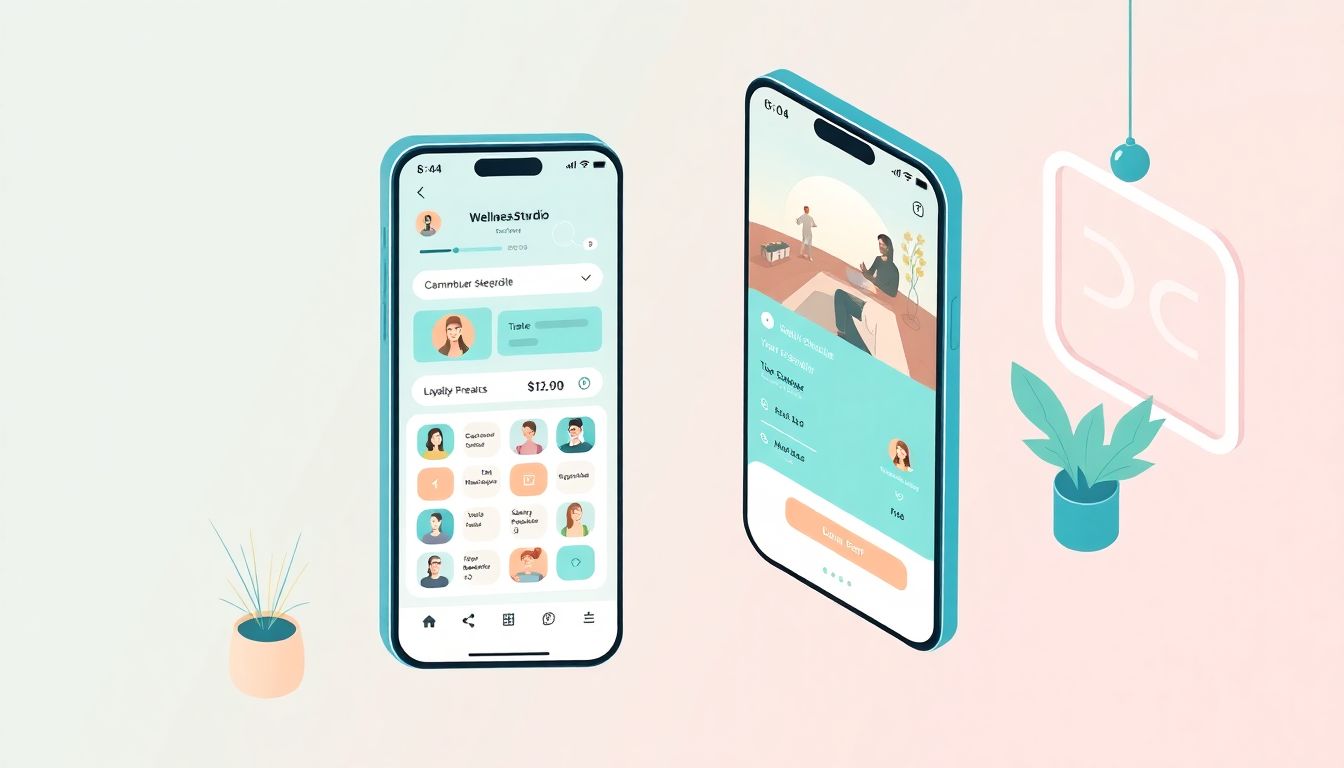
Class and session booking, client accounts, memberships, a loyalty-points programme and an AI booking assistant — self-hosted, no platform cut, and you keep the client list.
Wellness studios lose margin and their client list to booking marketplaces; VBWD gives them bookings, memberships and loyalty on a platform they own outright.
Your studio runs on relationships. Someone books a first yoga class, comes back for a workshop, buys a ten-pass, brings a friend, becomes a regular. That whole arc lives in your booking app, your inbox, a spreadsheet, and your head. And when you use a marketplace to get discovered, the platform sits in the middle of every one of those touchpoints, takes a cut, and quietly owns the client relationship you built.
This piece is about a different setup: running bookings, memberships, messaging, and a loyalty programme on software you host yourself. The tool is VBWD, a source-available, self-hosted client-management platform. It is warmer to your margins and stricter about who owns the data. Here is what it does for a wellness business and where it stops.
The problem: you rent your own client list
Most studios stitch together three or four services. A booking app for the calendar. A separate mailing tool. A payment processor. Maybe a loyalty punch-card app on top. Each one holds a slice of your client data, and none of them are really yours.
The booking marketplaces are the sharpest version of this. They bring you visibility, then charge a per-booking fee or a monthly rent, and the client’s account, reviews, and rebooking habit live on their platform, not yours. If you leave, the relationship often does not come with you. You are renting access to people who came to see you.
There is also a quieter cost: client data. Health notes, injury history, therapy context, contact details. That information sits on servers in jurisdictions you did not choose, under privacy terms you did not write.
What VBWD gives a wellness studio
VBWD is an agnostic core with a set of plugins you switch on for the functions you need. You do not have to run all of it. Here is the part that matters for a spa, studio, or practice.
Bookings and self-scheduling
The booking function handles the calendar work: classes with capacity, one-to-one sessions, staff or room availability, and a self-booking flow so clients reserve their own slots without messaging you. A pilates studio can publish a weekly class grid; a massage therapist can expose only the openings they want filled. Clients book, get confirmations, and manage their own reservations from an account on your site.
Because it is your install, the booking page carries your brand, your terms, and your prices, with no marketplace badge and no per-booking fee skimmed off the top.
Client accounts and portals
Every client gets an account on your platform. They see their upcoming sessions, past visits, active memberships or passes, invoices, and messages in one place. For the studio, that account is the single record of a client’s history, and it lives in your database, not a vendor’s.
This is the core of the ownership argument: the client list, with everyone’s booking history and preferences, is a table in your PostgreSQL database that you can back up, export, and query however you like.
A secure messenger for client communication
Wellness conversations are personal. A therapy client cancelling a session, a spa guest asking about a treatment before a birthday, a coaching client checking in between calls. VBWD includes a built-in messenger so those exchanges happen inside your platform instead of scattered across personal WhatsApp threads and email.
Keeping messages on your own install matters when the content is health-adjacent. You decide retention, you decide who on your team can read what, and nothing rides through a third-party chat product.
An AI chatbot grounded in your own content
VBWD can run a retrieval-augmented (RAG) chatbot that answers from your studio’s own material, your pricing, your class descriptions, your FAQ, your policies, rather than making things up from the open internet. A visitor at 11pm can ask “do you have a prenatal yoga class on Saturdays and how much is a five-pack?” and get an answer drawn from your actual content, plus a nudge into the booking flow.
Technically, the bot rides a search seam that deliberately blocks the private slices of your data (it will not read a client’s therapy notes or invoices), and it talks to language models through a connection manager so you choose the provider. It is a front-desk assistant for the questions you answer twenty times a week, not a window into confidential records. You can see the full set of switch-on functions on the plugins page.
Memberships and class passes
The subscription function covers recurring wellness revenue: monthly memberships, unlimited-class plans, ten-session passes, treatment bundles. VBWD handles the recurring billing, generates invoices with tax, and supports multiple currencies, which helps if you run retreats or serve clients across borders. Billing details and how the money side is structured are laid out on the billing page.
Memberships tie back into bookings and accounts, so a member’s pass balance and renewal date sit in the same client record as their session history.
A loyalty programme built on tokens you own
VBWD has a token, or credit, system, and for a wellness business the natural use is loyalty. You define how clients earn credits (points for each visit, a bonus for referring a friend, a reward for hitting a streak) and what they redeem them for (a free class, a treatment upgrade, a discount, a small perk).
Because you configure the rules, the programme fits your studio rather than a generic punch-card template. The same token mechanism can also meter usage-based extras, for example AI or premium content, but for most studios it is simply a loyalty ledger you control end to end.
The ownership and privacy angle
The through-line across all of this is that there is no platform in the middle. No per-transaction cut on bookings or memberships. No marketplace that owns your reviews and rebooking habit. The client list, the message history, the loyalty balances, they are rows in a database you run.
VBWD is self-hosted, which means you can keep it on EU infrastructure for data-residency reasons if that matters to your clients, and it is source-available under BSL 1.1: free to use commercially until your VBWD-attributable sales pass a defined threshold (6.7 BTC per year), and the licence converts to Apache-2.0 over time. It is not public-domain, but it is software you can read, adapt, and self-host without asking permission for normal use.
Under the hood it is a fairly standard stack, Python/Flask, PostgreSQL, Redis, a Vue 3/TypeScript frontend, all in Docker, and one backend serves both your website and a native mobile app. The technical detail lives in the documentation.
The honest limits
Self-hosting means you operate it. Uptime, backups, and updates are on you or whoever you pay to run the box. If your studio does not want to touch servers, budget for a technical partner, because a booking system that is down on a Monday morning is a real problem.
The AI chatbot can be wrong. It is grounded in your content, which reduces invented answers, but you should treat it as a helpful front desk, not an authority on medical or therapeutic questions, and keep a human path for anything sensitive.
The loyalty tokens are a credit system you configure, not a regulated financial instrument. They are studio points, not money, and you should describe them to clients that way.
Takeaway
If your studio is small and you just need a calendar, a marketplace app is faster to start. But if the client relationship is the business, and in wellness it usually is, then owning the bookings, the accounts, the messages, the memberships, and the loyalty programme is worth the operational effort. VBWD is one way to run all of that on infrastructure you control, without a platform taking a slice of every visit. Start with the feature overview and turn on only the functions your practice actually needs.
Learn more about VBWD
VBWD is a self-hosted, source-available platform for building subscription products, marketplaces, and AI-powered apps. Explore it further:
- 🌐 Website and documentation: vbwd.cc — see the plugins, architecture, and developer docs.
- 💻 Source code and plugins on GitHub: github.com/VBWD-platform
- 🎥 Watch VBWD in action: demo video 1 and demo video 2
- 💼 Follow the project on LinkedIn: linkedin.com/company/vbwd