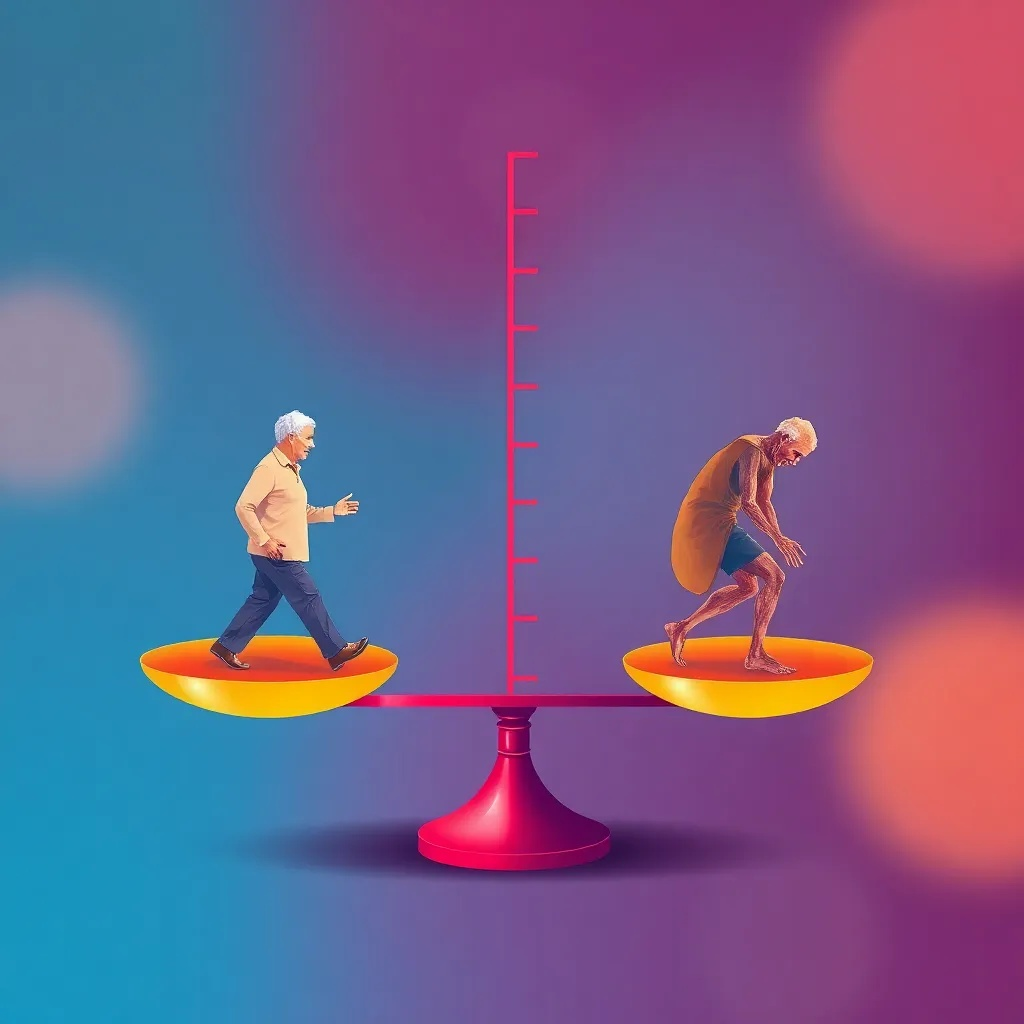
A March 2025 study shows mild acidosis increases frailty risk by 40% in seniors with normal kidney function, pointing to dietary interventions and alkali supplementation.
A March 2025 study found low serum bicarbonate predicts frailty in older adults, independent of kidney function.
Introduction
The aging population faces a growing burden of frailty, a syndrome characterized by decreased physiological reserve and increased vulnerability to stressors. While chronic inflammation and metabolic dysregulation are known contributors, emerging evidence points to a silent culprit: mild metabolic acidosis. A pivotal study published in March 2025 in the Journal of Cachexia, Sarcopenia and Muscle has revealed that older adults with serum bicarbonate levels below 24 mmol/L face a 40% higher risk of developing frailty over three years, even with normal kidney function. This finding reframes acidosis not merely as a consequence of aging but as a modifiable risk factor that could be targeted through diet and supplements.
The Link Between Acidosis and Frailty
Frailty affects an estimated 10-15% of community-dwelling older adults, with prevalence rising sharply after age 80. Traditionally, assessments focus on weight loss, exhaustion, weakness, slowness, and low activity. However, the role of acid-base balance has been largely overlooked. The 2025 study, led by researchers at the University of California, San Francisco, analyzed data from 1,200 participants aged 65 and above with estimated glomerular filtration rates >60 mL/min/1.73 m². After adjusting for age, sex, comorbidities, and medications, those with bicarbonate levels in the lowest quartile (<24 mmol/L) had a hazard ratio of 1.40 for incident frailty (95% CI 1.12-1.75). “This association was robust and independent of baseline kidney function, suggesting that even subclinical acidosis contributes to functional decline,” the authors wrote.
Supporting this, a 2024 analysis of National Health and Nutrition Examination Survey (NHANES) data found that higher dietary acid load, measured by the potential renal acid load (PRAL) score, was associated with a 25% increased incidence of frailty over a 6-year follow-up. Processed foods high in animal protein and low in fruits and vegetables were the primary drivers, highlighting the dietary dimension of this phenomenon.
Mechanistic Pathways: How Acidosis Accelerates Muscle Wasting
The mechanistic basis for the acidosis-frailty link is increasingly clear. A February 2025 study in Nature Metabolism demonstrated that low-grade acidosis reduces mitochondrial complex I activity by 30% in skeletal muscle, leading to impaired ATP production and activation of the ubiquitin-proteasome pathway of protein degradation. “This mitochondrial dysfunction is a key trigger for sarcopenia, the age-related loss of muscle mass and strength that underlies frailty,” explained Dr. Emily Chen, lead author of the study from the Buck Institute for Research on Aging. In animal models, acidotic conditions also promote inflammation through upregulation of nuclear factor-kappa B (NF-κB), creating a catabolic cascade that accelerates functional decline.
Additional research has identified acidosis-induced suppression of insulin-like growth factor 1 (IGF-1) signaling and increased glucocorticoid production, both of which further contribute to muscle atrophy. These findings provide a coherent biological framework linking even mild pH perturbations to the hallmarks of frailty.
Dietary Interventions and Alkali Supplementation
Given the modifiable nature of acid-base balance, attention has turned to interventions that can buffer metabolic acid load. A 2024 randomized controlled trial from Tufts University enrolled 120 prefrail adults aged 65-85 with serum bicarbonate between 20-24 mmol/L. Participants received either a daily supplement of 0.5 g/kg sodium bicarbonate or a placebo, along with dietary counseling to increase intake of potassium-rich fruits and vegetables. After 6 months, the intervention group showed significant improvements in grip strength (mean increase 2.1 kg, p<0.01) and gait speed (0.08 m/s improvement, p<0.05) compared to controls. “Alkali supplementation effectively reversed mild acidosis and translated into measurable functional gains,” reported Dr. Sarah Thompson, the trial’s principal investigator.
Dietary approaches alone also show promise. A 2024 analysis of the Nurses’ Health Study and Health Professionals Follow-Up Study found that participants with the highest intake of potassium-rich foods (e.g., spinach, bananas, avocados) had a 20% lower risk of developing frailty over 12 years. Foods that produce alkaline metabolites, such as fruits and vegetables, can counteract the acid load from typical Western diets high in meat and grains. The Dietary Approaches to Stop Hypertension (DASH) diet, rich in potassium, magnesium, and fiber, has been proposed as a practical model for reducing net acid excretion.
However, sodium bicarbonate supplementation requires caution due to potential sodium load, especially in older adults with hypertension or heart failure. Potassium bicarbonate or potassium citrate may be safer alternatives, though taste and tolerability remain challenges.
Clinical Implications: Should Bicarbonate Screening Become Routine?
The findings raise an important question: should serum bicarbonate measurement be incorporated into standard geriatric assessments? Currently, bicarbonate is part of basic metabolic panels but is often interpreted only in the context of renal function or acid-base disorders. “Our data suggest that even values within the so-called normal range—particularly the lower end—carry prognostic significance for frailty,” noted Dr. James Patel, a geriatrician at Johns Hopkins University who was not involved in the study. He advocates for considering bicarbonate levels below 24 mmol/L as a red flag in otherwise healthy older adults, warranting dietary intervention or supplementation.
Cost-effectiveness analyses are pending, but the low cost of bicarbonate measurement compared to other frailty biomarkers (e.g., IL-6, TNF-α) makes it an attractive screening tool. If confirmed in prospective trials, this could shift clinical practice toward earlier identification and mitigation of a previously overlooked risk factor.
—
The concept of acid-base balance as a modifiable risk factor for frailty builds on decades of research linking dietary acid load to bone health and kidney stones. The “acid-ash hypothesis” popularized in the early 20th century has evolved into a mechanistic understanding of how chronic low-grade acidosis affects multiple organ systems. Notably, the progression from studying acidosis in chronic kidney disease to the general aging population mirrors a broader trend in geriatric research: recognizing that metabolic imbalances, even within normal limits, can accelerate biological aging.
Comparable to the rise of anti-inflammatory diets and the interest in mitochondrial health, the focus on alkalizing interventions is gaining traction. Past trends like the alkaline diet have seen cycles of popularity, but current evidence moves beyond anecdote, providing robust mechanistic data from mitochondrial studies and large-scale epidemiological analyses. Serum bicarbonate may become a simple, inexpensive biomarker for preclinical frailty, aligning with preventive gerontology’s shift toward early metabolic markers. As the global population ages, interventions that buffer acid load—whether through diet or supplements—represent a low-risk, potentially high-impact strategy to maintain independence and quality of life.
