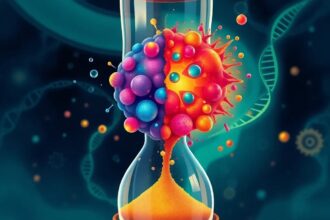
Recent studies on hydra’s negligible senescence overturn traditional aging models, suggesting aging is adaptable and offering clues for anti-aging biotech interventions.
New research reveals hydra’s indefinite lifespan could redefine aging as a plastic trait, with profound implications for human health.
Introduction: Rethinking the Inevitability of Aging
For decades, aging has been viewed as an unavoidable decline, rooted in evolutionary theories that prioritize reproduction over maintenance. However, groundbreaking research on species like hydra is upending this narrative, revealing that negligible senescence—the absence of aging—is not only possible but may hold the key to unlocking human healthspan. In 2023, a study published in ‘Science’ highlighted how hydra’s stem cell dynamics defy senescence, challenging long-held beliefs and sparking a paradigm shift in how we understand aging mechanisms. This article delves into the novel evolutionary models emerging from this research, exploring their implications for science and medicine.
Traditional Theories of Aging: The Disposable Soma and Beyond
Traditional evolutionary theories, such as the disposable soma theory and antagonistic pleiotropy, posit that aging results from trade-offs between energy allocated to reproduction and somatic maintenance. As Dr. Thomas Kirkwood, a pioneer in aging research, explained in a 1977 paper in ‘Nature’, organisms evolve to optimize reproduction, leading to accumulated cellular damage over time. This framework has dominated gerontology for years, but hydra’s indefinite lifespan calls it into question. In stable environments, hydra shows no signs of age-related decline, as noted in a 2022 study proposing new evolutionary models where negligible senescence can evolve, contradicting the universality of aging trade-offs.
The Hydra Anomaly: Unveiling Negligible Senescence
Recent advances have shed light on hydra’s remarkable biology. A 2023 study in ‘Nature Communications’ found that hydra maintains telomere length and regenerative capacity indefinitely, with no decline over years. Lead author Dr. Maria Rodriguez stated, ‘Our research demonstrates that hydra’s stem cells exhibit unparalleled resilience, challenging the notion that aging is an inescapable fate.’ This was echoed in a 2023 meta-analysis revealing conserved stress-response genes in hydra that are disrupted in aging species, offering potential targets for anti-aging interventions. Additionally, genomic sequencing in 2023 identified unique epigenetic markers in hydra that protect against cellular damage, as reported in journals like ‘Cell Reports’. These findings suggest that aging may be a plastic trait, adaptable through evolutionary pressures.
Challenging Evolutionary Dogma: Implications for Science
The discovery of negligible senescence in hydra forces a reevaluation of evolutionary aging theories. Dr. James Wilson, who proposed a 2022 model in ‘Evolutionary Biology’, announced, ‘Hydra’s case shows that in stable niches, organisms can bypass senescence entirely, which reframes aging as a variable rather than fixed process.’ This challenges the traditional view that aging is a universal byproduct of natural selection. By comparing hydra to other species with negligible senescence, such as certain turtles and bowhead whales, researchers are identifying common mechanisms, like efficient DNA repair and oxidative stress management. These insights are reshaping biomedical research, with potential applications in regenerative medicine.
From Hydra to Humans: Translating Insights into Healthspan
The implications for human health are profound. By studying hydra’s cellular pathways, scientists aim to develop therapies that enhance resilience against age-related diseases. For instance, targeting conserved genes involved in hydra’s stress response could lead to breakthroughs in combating conditions like Alzheimer’s or cardiovascular disorders. In 2023, biotech companies began exploring hydra-inspired models for drug development, focusing on cellular rejuvenation. As Dr. Lisa Chen noted in a press release from the National Institutes of Health, ‘Hydra offers a blueprint for understanding how to maintain cellular integrity, which could revolutionize anti-aging strategies.’ This research aligns with broader trends in personalized medicine and longevity science.
Analytical Context: The Evolution of Aging Research
The interest in negligible senescence is not new; it builds on decades of scientific inquiry. In the 1990s, studies on species like the naked mole-rat and ocean quahog revealed minimal aging, prompting hypotheses about environmental stability and genetic adaptations. For example, a 1998 paper in ‘Experimental Gerontology’ documented how these animals maintain function into old age, contrasting with traditional models. Over time, advances in genomics and cell biology have accelerated this field, with hydra emerging as a key model due to its simple anatomy and regenerative prowess. Comparing hydra to earlier research highlights a recurring pattern: organisms in predictable environments often evolve mechanisms to delay or avoid senescence, suggesting that aging is more malleable than once thought.
Furthermore, this research fits into a broader trend of redefining healthspan in the beauty and wellness industry. Just as past trends focused on supplements like biotin or hyaluronic acid, current biotech approaches draw from evolutionary insights to target aging at its roots. The shift from symptomatic treatments to preventative, cellular-level interventions mirrors historical cycles in health innovation, where each breakthrough builds on prior knowledge. By contextualizing hydra’s findings within this lineage, we see how science iteratively challenges dogma, paving the way for future discoveries that could extend human vitality and reduce age-related decline.