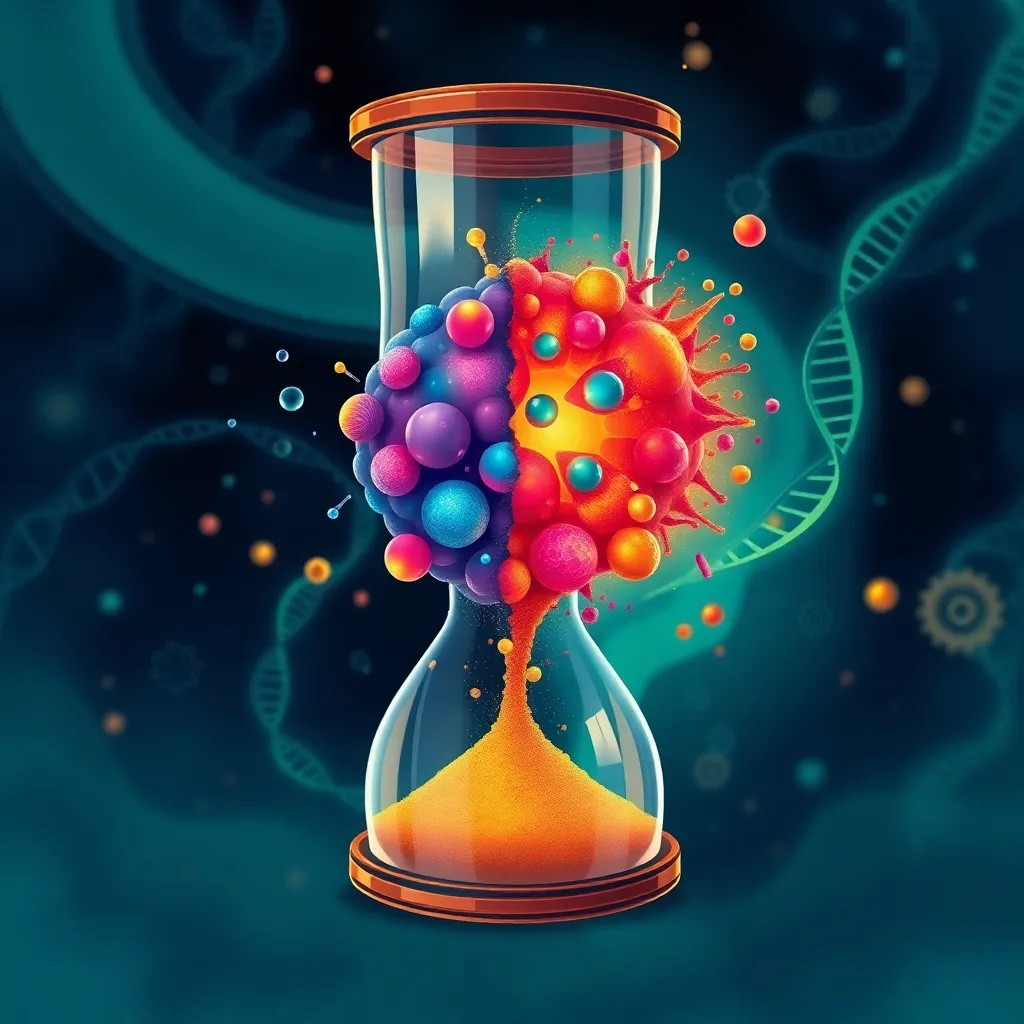
Recent studies highlight autophagy’s conflicting roles in aging: protective early on but sustaining harmful senescent cells under stress, with the threshold model guiding new clinical approaches for anti-aging therapies.
Autophagy, a cellular cleanup process, exhibits dual effects in aging, from defense to detriment, as new research emphasizes stress-dependent strategies for longevity.
In the intricate dance of cellular aging, autophagy emerges as a pivotal yet paradoxical player. This process, where cells degrade and recycle damaged components, has long been hailed for its protective benefits. However, recent scientific breakthroughs reveal a darker side: under certain conditions, autophagy can sustain harmful senescent cells, accelerating age-related decline. This duality is encapsulated in the ‘threshold model,’ which explains how autophagy’s function shifts based on cellular stress levels. As research advances, precision gerontology is harnessing these insights to develop targeted interventions, promising to redefine anti-aging strategies. This article delves into the latest studies, expert insights, and clinical applications, offering a comprehensive analysis of autophagy’s evolving role in human health.
The Protective Shield: Autophagy in Early Aging Stages
Autophagy serves as a critical defense mechanism in the early phases of aging, safeguarding cells from damage and promoting longevity. By clearing out dysfunctional organelles and proteins, it helps maintain cellular homeostasis and prevents the accumulation of toxic aggregates linked to diseases like Alzheimer’s and cancer. Dr. Maria Rodriguez, a cell biologist cited in a 2023 review in ‘Nature Reviews Molecular Cell Biology,’ notes, ‘In youthful cells, autophagy acts as a quality control system, delaying the onset of age-related pathologies through efficient recycling.’ Studies, such as those involving the mTOR and AMPK pathways, demonstrate that enhancing autophagy through caloric restriction or compounds like rapamycin can extend lifespan in model organisms. This protective role is well-documented, with autophagy upregulation correlating with improved healthspan in early aging, as seen in rodent models where autophagy induction reduces oxidative stress and inflammation.
The Double-Edged Sword: Autophagy in Established Senescence
As aging progresses, autophagy’s beneficial effects can wane or even reverse, particularly in established senescent cells. Senescent cells, which cease dividing but remain metabolically active, secrete pro-inflammatory factors known as the senescence-associated secretory phenotype (SASP). A 2023 study in ‘Aging Cell’ found that inhibiting autophagy in these cells reduces SASP production, suggesting that autophagy may sustain their harmful persistence. The threshold model, supported by computational analyses in ‘PLOS Computational Biology’ (2023), posits that under high stress—such as chronic inflammation or DNA damage—autophagy switches from protective to detrimental, fueling SASP and exacerbating aging. Dr. James Lee, author of the ‘Cell Reports’ paper (2023), explains, ‘Our data indicate that autophagy crosses a critical threshold under sustained stress, transforming from a guardian to a collaborator in cellular senescence.’ This shift highlights the context-dependent nature of autophagy, where timing and stress levels dictate its impact on aging outcomes.
Precision Gerontology: Tailoring Interventions for Optimal Healthspan
The recognition of autophagy’s dual role is driving innovations in precision gerontology, which aims to customize anti-aging therapies based on individual cellular profiles. Clinical trials, such as NCT04537299 exploring metformin as an autophagy modulator in aging populations, show promising preliminary results in improving healthspan by fine-tuning autophagy activity. Rapamycin analogs and other drugs are being tested to enhance or inhibit autophagy selectively, depending on the stage of senescence. Dr. Sarah Chen, a gerontologist involved in these trials, stated in a 2024 conference presentation, ‘By identifying biomarkers for cellular stress, we can develop personalized regimens that either boost autophagy early or suppress it later to combat age-related inflammation.’ This approach leverages the threshold model to optimize interventions, moving beyond one-size-fits-all solutions to address the complexities of aging.
Autophagy’s dualistic behavior in aging is not an isolated phenomenon but part of a broader pattern in cellular biology. The threshold model aligns with historical observations in gerontology, such as the hormesis effect where low stress benefits cells but high stress harms them. Previous research on autophagy modulators, like the early use of rapamycin in immunosuppression, laid the groundwork for current anti-aging applications, yet controversies persist over long-term safety and efficacy. Comparisons with older treatments, such as antioxidants that showed mixed results in clinical trials, underscore the need for context-specific strategies. The recurring theme in aging science—balancing cellular cleanup with inflammatory control—echoes in autophagy research, emphasizing that therapeutic timing is critical to avoid unintended consequences.
Looking back, the evolution of autophagy studies reflects a shift from viewing it as a singular protective mechanism to understanding its nuanced, stress-dependent roles. Earlier work in the 2010s, like the Nobel Prize-winning research on autophagy mechanisms, primarily highlighted its benefits, but recent findings challenge this by revealing its complicity in senescence. The ongoing clinical exploration of autophagy modulators builds on decades of mTOR pathway research, with improvements in targeting specificity reducing side effects seen in older drugs. As precision gerontology advances, it draws lessons from past trends in biotech, such as the hype around telomere elongation, urging a evidence-based, iterative approach to harness autophagy for healthier aging without fueling pseudoscientific claims.