
A pilot study reveals BPC-157’s potential to accelerate healing in muscle and tendon injuries with a strong safety profile and 75% faster recovery than placebo. Recent research highlights BPC-15...

Exploring how diet, supplements, and economic factors impact breast cancer patients on endocrine therapy, focusing on omega-3, vitamin D, and soy isoflavones. Recent studies highlight the critical rol...

Recent studies reveal that NLCs loaded with curcumin and EGCG significantly enhance skin elasticity and reduce oxidative stress, offering superior anti-aging benefits. New research demonstrates that n...

Exploring the dual nature of BPC-157 as a promising healing peptide facing regulatory challenges in sports medicine, with insights from recent studies and experts. The peptide BPC-157 shows remarkable...

Recent studies show herbal cubosomes significantly improve arthritis treatment by enhancing bioavailability of anti-inflammatory compounds like curcumin and boswellia, with promising clinical trial re...
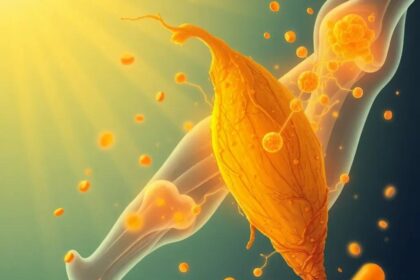
Recent studies show curcumin, the active compound in turmeric, effectively reduces arthritis inflammation with fewer side effects than conventional NSAIDs. New research highlights curcumin’s pot...

A recent PLoS One study reveals that a 12-week time-restricted eating protocol improves mitochondrial function and reduces polyQ aggregation in Huntington’s disease patients. Groundbreaking rese...

Emerging research reveals how fasting and timed eating may enhance brain cell function and slow neurodegenerative disease progression through autophagy and mitochondrial efficiency. New studies demons...
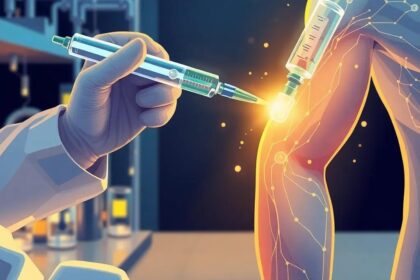
A recent pilot study highlights the safety of intravenous BPC-157 in humans, reinforcing its potential for treating musculoskeletal injuries and accelerating tissue repair. New research validates the ...

New research suggests time-restricted eating may improve mitochondrial function and reduce protein aggregates in early-stage Huntington’s disease patients. Emerging evidence indicates TRE may offer ...