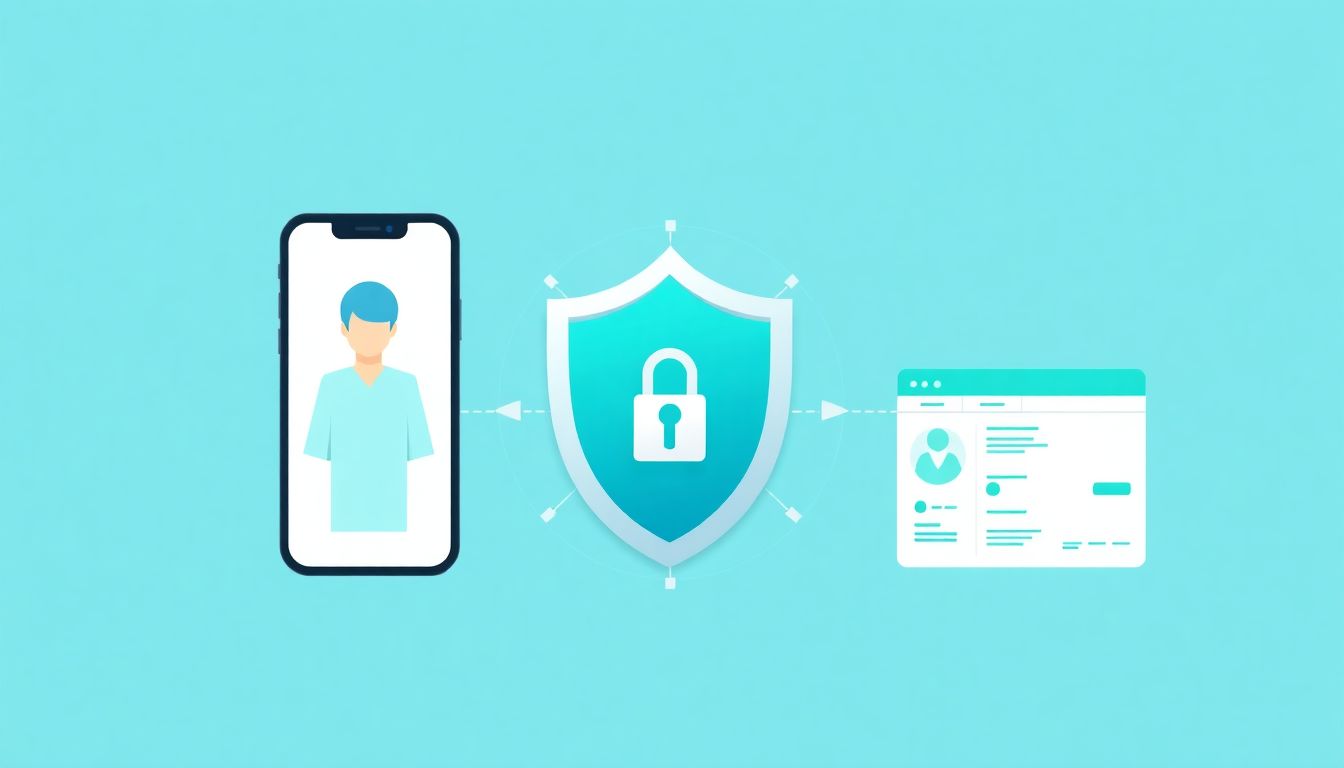
Every clinic app, patient portal, and pharma tool needs the same skeleton — secure backend, AI layer, web, mobile, payments — rebuilt each time under the hardest constraints in software: privacy, data residency, compliance. A full-stack framework that ships it pre-built, self-hosted and data-owned, lets health teams spend their time on the medicine, not the plumbing.
The reason good digital-health ideas never ship isn’t clinical insight. It’s that secure, compliant, multi-platform software is expensive and slow.
Digital health has a build problem. Every clinic app, patient portal, wellness product, and pharma support tool needs roughly the same skeleton — a secure backend, an AI layer, a web app, iOS and Android, and a way to handle payments and access — and health teams rebuild it from scratch every time, usually while wrestling the hardest constraints in software: privacy, data residency, and compliance. A full-stack framework that ships that skeleton pre-built is worth health innovators’ attention, and VBWD is a notably complete one — with the boundary stated up front: it’s infrastructure, not a medical device, and it doesn’t supply clinical judgement, validation, or regulatory approval.
What “all in the box” means for a health app
VBWD is a constructor for commercial applications, and for health builders the appeal is that “full-stack” is literal:
- A real backend — Python/Flask over PostgreSQL and Redis, with an event system.
- A web frontend — Vue 3, with a patient-facing app and a full admin backoffice.
- iOS and Android — native clients on the same backend, which matters when patients live on their phones.
- An AI layer — a central model-connection manager, retrieval-grounded assistants that answer only from your vetted content, and an agent-callable interface.
- A commercial and access engine — subscriptions, billing, invoicing, access controls, and payments.
The word that matters is one: one backend serving the patient’s phone, the clinician’s browser, and the admin’s dashboard, with one access model deciding who can see what — instead of three subtly different systems and three places for patient data to leak.
The properties health builders actually need
What makes it fit health specifically isn’t a medical feature — it’s the substrate. Because it’s self-hosted and source-available, patient data lives in a database the organisation owns, in a jurisdiction it chooses — the precondition for most health-data compliance, and for patient trust. Its messaging layer is end-to-end-encryptable, with no admin content inspector, so a secure clinician-patient channel is a real option rather than a consumer-app compromise. Its assistants ground answers in your own approved content rather than the open internet. And its search layer is engineered so patient records can’t be surfaced by a misconfigured query. Explore the architecture, the plugins, and the docs to see how these compose.
The same kit across health verticals
Because the core is neutral and each vertical is a plugin, one construction kit builds very different health products: a chronic-disease self-management program with secure check-ins and a vetted-content assistant; a mental-health practice’s encrypted between-session channel with session billing; a pharma patient-support program the sponsor owns end to end; a compliant teledermatology-and-pharmacy storefront; a patient-owned rare-disease registry and community. Different disease areas, different approaches — the same underlying platform, with the domain logic as the part the team actually builds.
The boundary, because it’s health
In healthcare the caveats are the point, not the fine print. A framework can give you a secure, owned, multi-platform foundation for a health application; it cannot give you the clinical validation, the regulatory approval, the compliance program, or the medical judgement that any patient-facing product requires. VBWD provides the infrastructure — the secure backend, the encrypted channel, the grounded assistant, the mobile clients, the billing — and every piece of the actual medicine, and its governance, still has to be built and validated properly on top. It is emphatically not a medical device or a clinical decision system, and no amount of good plumbing changes that.
Why it matters for health innovators
The reason so many good digital-health ideas never ship isn’t a shortage of clinical insight — it’s that building secure, compliant, multi-platform software is expensive and slow, and doing it wrong with patient data is dangerous. A framework that hands you an owned, self-hosted, privacy-respecting, web-plus-mobile foundation — free for commercial use below a defined revenue threshold (see pricing) — lets a health team spend its scarce time on the clinical product and its governance rather than on rebuilding the skeleton. For an industry where the plumbing is unusually hard and the stakes are unusually high, that’s exactly where the leverage is.
General information for healthcare and technology decision-makers, not medical, legal, or regulatory advice. Any patient-facing deployment requires clinical validation, governance, and compliance review appropriate to the jurisdiction. VBWD is infrastructure, not a medical device or clinical system.