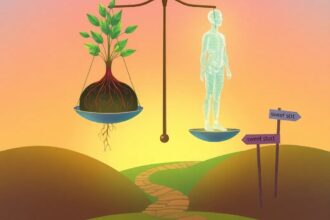
China’s landmark competency-based longevity medicine program integrates traditional Chinese medicine with AI, aiming to transform elder care and preventive health.
China has initiated a pioneering national program training physicians in longevity science, blending ancient wisdom with cutting-edge AI.
Introduction: A New Era in Healthcare
In June 2024, China’s National Health Commission and Chinese Academy of Sciences announced the launch of the country’s first national competency-based program in longevity medicine. This initiative aims to train 10,000 physicians by 2030 in the science of aging, leveraging biomarkers, AI-assisted diagnostics, and preventive care. The program represents a paradigm shift from reactive disease treatment to proactive healthspan management, positioning China as a global leader in aging-related healthcare innovation.
Program Details: What Physicians Will Learn
The curriculum is built around four pillars: aging biology, biomarker interpretation, AI diagnostics, and preventive intervention. Physicians will learn to assess biological age using advanced tools such as epigenetic clocks and inflammatory markers. They will also be trained in personalized lifestyle modifications, including nutrition, exercise, and stress management. According to Dr. Li Wei, director of the Longevity Medicine Program at the Chinese Academy of Sciences, ‘This is not about extending life at any cost, but about extending the years of healthy living.’ The program emphasizes a competency-based approach, ensuring that graduates can independently design and monitor longevity plans for patients.
Integration of Traditional Chinese Medicine and Modern Geroscience
A unique feature of the program is its integration of traditional Chinese medicine (TCM) with modern geroscience. TCM concepts such as ‘qi’ (vital energy), ‘yin-yang’ balance, and herbal remedies are being studied alongside cutting-edge molecular pathways. For example, the program includes modules on how TCM herbs like ginseng and astragalus may influence longevity genes. Dr. Chen Yu, a TCM specialist involved in curriculum development, noted: ‘The synergy between TCM and modern biomarkers could unlock new, holistic approaches to aging.’ This fusion reflects China’s broader strategy to modernize TCM while respecting its ancient roots.
The Role of AI and Biomarkers
AI diagnostics are central to the program. Trainees will use machine learning algorithms to analyze patient data, predict aging trajectories, and recommend interventions. The program leverages China’s vast health data infrastructure, including electronic health records and genomic databases. AI tools can detect early signs of age-related diseases such as cardiovascular disorders, diabetes, and neurodegeneration. The Chinese Academy of Sciences has developed a proprietary AI platform called ‘LongevityAI,’ which processes biomarker panels to generate personalized longevity scores. This technology is expected to be a key component of the training.
Global Context: Similar Initiatives in Japan and Singapore
China’s program is part of a broader trend in Asia to address aging populations. Japan, with over 29% of its population aged 65+, has launched AI-driven diagnostics for geriatric care. Singapore’s ‘Healthier SG’ initiative emphasizes preventive care and integrates traditional remedies. However, China’s program is unique in its scale and its explicit fusion of TCM and geroscience. Dr. Sarah Johnson, a gerontologist at the University of Tokyo, commented: ‘China’s approach could serve as a template for other countries seeking to combine traditional and modern medicine in aging care.’
Challenges and Future Outlook
Despite its promise, the program faces hurdles. Integrating TCM into evidence-based medicine requires rigorous clinical trials. Additionally, training 10,000 physicians by 2030 demands significant educational resources. However, with China’s aging population projected to exceed 300 million over 60 by 2025, the need for such a workforce is urgent. The government has allocated substantial funding, and early cohorts are expected to begin clinical rotations in 2025.
Analytical Context: The Evolution of Longevity Medicine
The interest in longevity medicine has been growing since the early 2000s, when studies first identified key aging pathways like mTOR and sirtuins. In the West, initiatives such as the Buck Institute for Research on Aging and the American Federation for Aging Research have focused on basic science. However, translation to clinical practice has been slow. China’s move to create a national competency-based program is reminiscent of the early 20th-century public health campaigns that eradicated infectious diseases. It signals a shift from lab discoveries to scalable, real-world applications.
Historically, integrating traditional medicine with modern science is not new. In the 1970s, China’s barefoot doctor program integrated Western and Chinese medicine to great effect. Today, the longevity program echoes that model but on a more technologically advanced level. Comparable trends in the beauty and wellness industry, such as the rise of NAD+ boosters and senolytic drugs, underscore a growing consumer demand for longevity solutions. By training physicians systematically, China ensures that these interventions are medically supervised rather than driven by unregulated supplements. This approach may influence regulatory frameworks globally, particularly in aging societies like Europe and Japan.