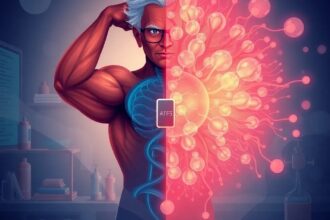
For a rare genetic condition, the registry is upstream of hope: no registry, no data; no data, no trial; no trial, no therapy. But families burned by institutions won’t hand their genetic data to a vendor they don’t control. A community-owned, self-hosted registry flips the ownership — and the trust.
The tragedy of rare disease is often a tragedy of fragmentation.
There are around 7,000 known rare diseases, and for most of them the single biggest obstacle to a cure isn’t the science — it’s that the patients are scattered, uncounted, and invisible. A condition affecting a few thousand people worldwide has no natural place to gather, no registry, no dataset a researcher can study. The knowledge exists, distributed across isolated families who have never met. The tragedy of rare disease is often a tragedy of fragmentation.
Why registries decide everything
For a rare genetic condition, a patient registry is the foundation everything else is built on. It’s how you learn the natural history of a disease nobody has studied, how you find enough patients to run a trial, how you give a drug company a reason to invest in a treatment for a small population. No registry, no data; no data, no trial; no trial, no therapy. The registry is upstream of hope.
Yet building one is brutally hard for the patient advocacy groups who care most. Commercial registry software is expensive and often means handing the community’s data to a vendor. Academic registries live and die with a grant. And the deepest problem is trust: rare-disease families, who have frequently been failed by institutions, are asked to hand their genetic and medical data to a platform they don’t control, for research they can’t see. Many, understandably, decline — and the fragmentation persists.
A different approach: the community owns the registry
Flip the ownership. Imagine a patient advocacy organisation running its own registry and community on infrastructure it controls. A self-hosted, source-available platform like VBWD makes that structurally possible — with the necessary caveat that it is infrastructure, not research and not medicine: it provides the platform, not the science, the ethics approval, or the clinical validation.
What it does provide fits the need with unusual precision. Self-hosting means the community’s genetic and medical data lives on infrastructure the patient organisation owns — the single most important fact for winning the trust of families who’ve learned to be wary. A secure community and messaging layer lets scattered patients find each other, which for rare disease is itself therapeutic and a recruitment channel. Access controls govern precisely who can see what. And a dataset layer means that when the community chooses to share data with a legitimate researcher, it can do so on its own terms — governed, consented, and revocable — rather than surrendering it wholesale. The plugins and architecture show how the data and community pieces compose; the platform is source-available and free to run below a defined revenue threshold, which matters when the operator is a small advocacy group rather than a funded company.
Patient-owned data as the unlock
The quiet revolution here is consent that patients actually control. In the standard model, a patient signs their data away once and loses sight of it. In a community-owned registry, the organisation and its members hold the data, decide which research to support, and can share a governed dataset with a pharma partner or academic group as a deliberate, revocable act. That reframes the relationship: patients stop being subjects to be harvested and become stewards of an asset that might fund their own cure. For populations repeatedly failed by institutions, ownership is what makes participation feel safe enough to happen at all.
The boundary
Precision matters even in an optimistic piece. A registry platform is not a clinical trial, an ethics committee, or a guarantee of research quality — those require institutional review, informed consent frameworks, data-protection compliance, and scientific rigour that no software supplies. Owning the infrastructure removes the trust and cost barriers to gathering the data; the responsible science still has to be done properly on top of it, and rare-disease data is especially sensitive precisely because small populations are easier to re-identify.
Why it matters
For rare disease, the bottleneck is almost always that the patients can’t be found and their data can’t be pooled — and that’s a fragmentation and trust problem as much as a scientific one. Self-hosted, source-available infrastructure lets the people with the most at stake own the registry, hold the data, find each other, and choose how their information advances research. It won’t discover a therapy. But it can build the trusted, community-owned foundation without which the therapy never gets studied at all — and for 7,000 diseases waiting to be counted, that foundation is the thing standing between invisibility and a chance.
General information for patient organisations, researchers, and technology decision-makers, not medical, legal, or research-governance advice. Patient registries and data sharing require ethics approval, informed consent, and data-protection compliance appropriate to the jurisdiction. VBWD is infrastructure, not a research platform, clinical system, or medical device.
Explore VBWD
VBWD is a self-hosted, source-available platform for building secure, data-owned applications — used here as infrastructure, never as a medical device. Learn more:
- 🌐 Platform and docs: vbwd.cc — the plugins, the architecture, the developer docs, and pricing.
- 💻 Source on GitHub: github.com/VBWD-platform
- 🎥 See it running: demo video · 💼 LinkedIn
Free for commercial use while VBWD-attributable sales stay under the value of 6.7 BTC a year.