First-in-human trial shows Cyclarity’s UDP-003 can safely bind and excrete 7-ketocholesterol, potentially reversing atherosclerosis.
Cyclarity Therapeutics’ UDP-003 achieves first safe removal of toxic oxysterol 7KC, targeting root cause of arterial plaque.
In a landmark development for cardiovascular medicine, Cyclarity Therapeutics has announced the first-ever successful removal of 7-ketocholesterol (7KC) from the human body using its novel drug UDP-003. Phase 1 trial results, presented at the European Society of Cardiology Congress 2024, showed that a single dose of UDP-003 reduced plasma 7KC levels by up to 84% without serious adverse events. This breakthrough moves the field closer to reversing atherosclerosis rather than merely managing its symptoms.
The Problem with Standard Cholesterol Management
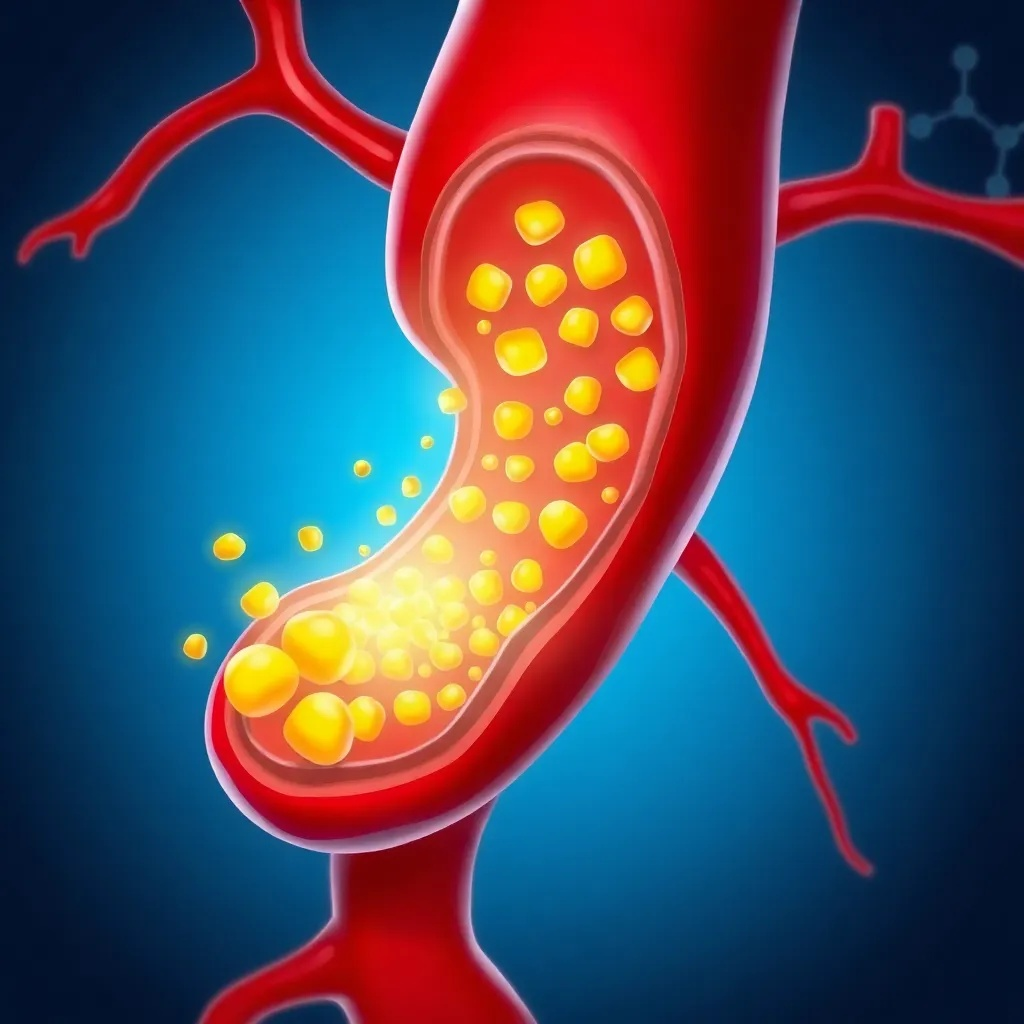
For decades, statins and PCSK9 inhibitors have been the cornerstone of cardiovascular disease prevention, effectively lowering LDL cholesterol and reducing heart attack risk. However, these drugs do not remove oxidised cholesterol derivatives like 7KC, which accumulate in arterial walls and drive inflammation. Independent research has linked 7KC to inflammasome activation and endothelial dysfunction, confirming its pathogenic role in plaque formation and residual cardiovascular risk. Millions of patients on statins still experience heart attacks, a phenomenon known as residual risk that UDP-003 aims to eliminate.
UDP-003: Mechanism of Action
UDP-003 is a cyclodextrin-based polymer that selectively binds 7KC in the gastrointestinal tract, preventing its reabsorption into the bloodstream and enhancing its excretion via bile. Unlike small-molecule drugs that require systemic absorption, UDP-003 remains in the gut lumen, minimising systemic side effects. The Phase 1 trial involved 60 healthy volunteers who received single ascending doses. Results demonstrated a dose-dependent reduction in plasma 7KC, peaking at 84% reduction at the highest dose. No serious adverse events were reported; the most common side effects were mild gastrointestinal discomfort. This safety profile paves the way for chronic dosing in patients with established atherosclerosis.
Historic Phase 1 Trial Results
The trial data, presented at ESC Congress 2024, exceeded expectations. Not only did UDP-003 safely lower 7KC, but it also showed a favourable pharmacokinetic profile consistent with once-daily oral dosing. Cyclarity announced that the U.S. Food and Drug Administration cleared the company to proceed with a Phase 2a trial in patients with coronary artery disease in September 2024. The upcoming trial will assess plaque regression using intravascular ultrasound, providing direct evidence of UDP-003’s ability to reverse atherosclerotic burden. If successful, this would represent the first medication to achieve true plaque regression in humans.
Implications for Cardiovascular Treatment
UDP-003 could revolutionise the treatment of atherosclerosis by targeting the root cause – oxidised cholesterol accumulation – rather than just lowering LDL levels. Current standard of care (statins, PCSK9 inhibitors) does not remove oxysterols, leaving residual cardiovascular risk. By excreting 7KC directly, UDP-003 addresses the inflammatory component of plaque. Furthermore, the drug may be combined with statins for additive effects, potentially eliminating atherosclerotic plaque entirely over time. The cardiology community is watching closely, as this is the first therapy to safely bind and remove a known plaque component from the body.
Next Steps: Phase 2 and Beyond
Cyclarity plans to start the Phase 2a trial in late 2024, targeting patients with measurable coronary plaque. The primary endpoint will be change in plaque volume over 12 months. Secondary endpoints include biomarkers of inflammation and 7KC levels. If positive, a Phase 3 program could begin as early as 2026. Analysts estimate that if UDP-003 achieves plaque regression, it could become a blockbuster drug with a market size exceeding $30 billion, given the high prevalence of cardiovascular disease.
The interest in targeting oxidised cholesterol has been building since the early 2000s, when studies first linked 7KC to foam cell formation and atherosclerosis. However, pharmaceutical companies historically focused on LDL lowering, as oxysterols were considered difficult to target safely. The success of UDP-003 builds on decades of cyclodextrin research, originally developed for cholesterol removal in cell cultures. In the context of cardiovascular trends, this approach mirrors the shift from symptom management to disease reversal seen in hepatitis C and certain cancers. Just as direct-acting antivirals cured hepatitis C by targeting the virus itself, UDP-003 aims to cure atherosclerosis by removing its core pathogenic agent. If Phase 2 results confirm plaque regression, we may witness a paradigm shift comparable to the introduction of statins in the 1980s, but with the added promise of true disease reversal.