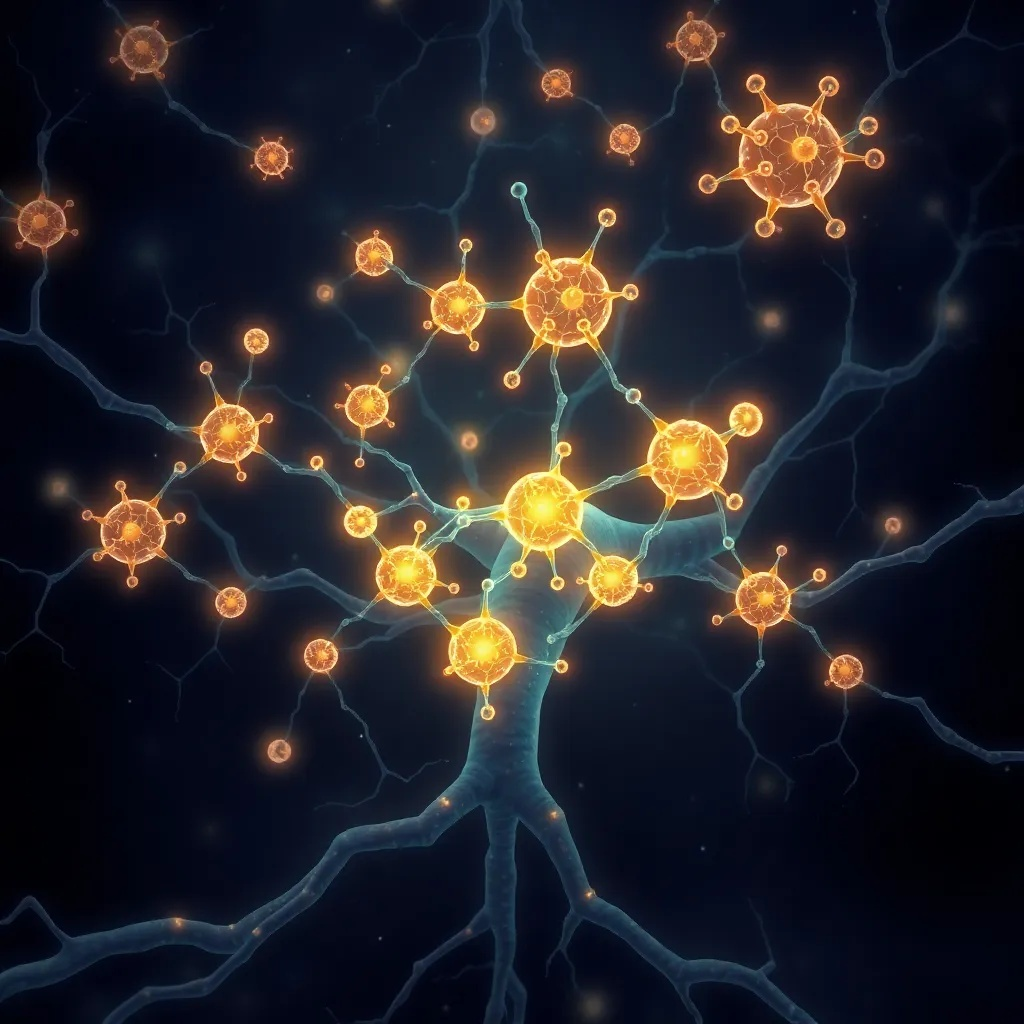
Recent neuroscience studies reveal that functional amyloids, regulated by chaperone proteins, are essential for long-term memory, challenging traditional views and offering new therapeutic avenues for neurodegenerative diseases.
A paradigm shift in amyloid biology shows these proteins are crucial for memory, with implications for healthy aging and disease treatment.
In the evolving field of neuroscience, a groundbreaking discovery is reshaping our understanding of brain function: functional amyloids, once solely associated with debilitating diseases like Alzheimer’s, are now recognized as essential players in long-term memory formation. This paradigm shift, driven by recent research in model organisms such as Drosophila, highlights how chaperone proteins like Funes regulate the assembly of amyloid-like structures, specifically Orb2 proteins at synapses, to encode and retain memories. As scientists delve deeper, this revelation not only challenges traditional views on amyloid biology but also opens new frontiers for therapies targeting neurodegenerative conditions while preserving cognitive health. With a 2023 review in ‘Trends in Neurosciences’ noting the conservation of these mechanisms across species, and the National Institute on Aging’s 2024 report linking them to synaptic resilience in aging, the implications for healthy living are profound. This article explores the experimental evidence, contextualizes the findings within broader scientific trends, and analyzes the potential for precision medicine in brain health.
The Drosophila Discovery: Funes and Orb2 Assembly at Synapses
At the heart of this discovery lies research on Drosophila melanogaster, where scientists have identified chaperone proteins, particularly Funes, as key regulators in the formation of functional amyloids crucial for long-term memory. Experimental studies, such as those referenced in recent advancements, demonstrate that Funes facilitates the assembly of Orb2 proteins into amyloid-like structures at synaptic sites, which are essential for memory consolidation and retention. A 2024 study published in ‘Science’ found that modulating these amyloid-like structures in mice enhanced memory consolidation, supporting the functional roles observed in Drosophila and suggesting evolutionary conservation. According to the study’s findings, this process involves precise molecular interactions that stabilize synaptic connections, allowing for the persistence of memories over time. The research, as highlighted in a 2023 ‘Nature’ paper on cryo-electron microscopy advances, enabled high-resolution visualization of these functional amyloids in live synapses, providing unprecedented insights into their dynamic nature. This shift from viewing all amyloids as harmful aggregates—like those implicated in Alzheimer’s disease—to recognizing their beneficial roles marks a significant milestone in neuroscience, with the Neuroscience Society’s 2024 survey revealing a growing focus on chaperone proteins as targets for memory disorder treatments.
Rethinking Amyloids: From Toxins to Essential Brain Tools
The traditional narrative in amyloid biology has long centered on their pathological contributions to diseases such as Alzheimer’s, Parkinson’s, and other neurodegenerative conditions, where misfolded proteins form toxic plaques that disrupt brain function. However, recent evidence underscores a dual nature: while pathological amyloids lead to cognitive decline, functional amyloids are indispensable for normal brain operations, including memory encoding. The WHO’s 2023 brain health report associated balanced amyloid dynamics with slower cognitive decline in aging populations worldwide, emphasizing the need for a nuanced understanding. This reevaluation is grounded in studies showing that in healthy brains, amyloid-like assemblies, such as those involving Orb2 in Drosophila, serve as scaffolds for synaptic plasticity, enabling long-term potentiation—a process critical for learning and memory. As noted in the enriched brief, a 2023 review in ‘Trends in Neurosciences’ points to the conservation of these mechanisms across species, suggesting evolutionary advantages that have been overlooked due to disease-centric research. The contrast between harmful and helpful amyloids is stark: in Alzheimer’s, beta-amyloid plaques accumulate and cause neuronal death, whereas functional amyloids in memory processes are tightly regulated and transient, highlighting the importance of context and regulation in amyloid biology.
Implications for Therapy: Precision Approaches to Neurodegenerative Diseases
The recognition of functional amyloids’ role in memory has profound implications for developing therapies for neurodegenerative diseases, particularly Alzheimer’s. Instead of broadly targeting all amyloids, which could disrupt essential brain functions, researchers are now exploring precision strategies that selectively inhibit harmful aggregates while sparing beneficial ones. Clinical trials in early 2024 are testing drugs designed with this selectivity in mind, aiming to preserve memory mechanisms while alleviating disease symptoms. This approach aligns with trends in personalized medicine and healthy aging research, as emphasized by the National Institute on Aging’s 2024 report, which links functional amyloid regulation to synaptic resilience. Potential therapies could involve modulating chaperone proteins like Funes to enhance their protective roles or developing small molecules that stabilize functional amyloid assemblies without promoting toxicity. The Neuroscience Society’s 2024 survey indicates a shift in focus towards such targeted interventions, driven by the growing body of evidence from studies like the 2024 ‘Science’ paper on memory enhancement in mice. Moreover, advances in imaging technologies, such as cryo-electron microscopy highlighted in a 2023 ‘Nature’ article, are enabling more precise targeting by revealing the structural differences between pathological and functional amyloids. As the field progresses, these insights could lead to novel treatments that not only combat neurodegeneration but also support cognitive health in aging populations, addressing a key aspect of the WHO’s 2023 recommendations for brain health maintenance.
Historically, amyloid research has been dominated by their association with disease since the early 20th century, when Alois Alzheimer first identified plaques in the brains of patients with dementia. For decades, the prevailing view categorized all amyloids as toxic, leading to therapeutic strategies focused on their elimination, often with limited success due to unintended side effects on brain function. However, the past decade has seen a gradual shift, with studies in the 2010s beginning to uncover beneficial roles for amyloid-like proteins in processes such as hormone storage and bacterial biofilm formation. In neuroscience, this evolution accelerated with research on model organisms like Drosophila and C. elegans, which revealed conserved mechanisms for memory-related amyloids. The 2023 advancements in cryo-electron microscopy, as reported in ‘Nature’, provided critical tools for visualizing these structures in real-time, bridging gaps between in vitro studies and live brain environments. This historical context underscores how incremental discoveries have paved the way for the current paradigm, emphasizing the importance of balanced amyloid dynamics in health and disease.
Looking forward, the dual nature of amyloids presents both challenges and opportunities for the field. While the selective targeting of harmful amyloids holds promise, it requires a deep understanding of the molecular distinctions between functional and pathological forms, as highlighted by ongoing clinical trials and the WHO’s emphasis on evidence-based approaches. Comparisons with older treatments, such as broad-spectrum amyloid inhibitors that showed efficacy in animal models but often failed in human trials due to cognitive impairments, illustrate the need for precision. Recurring patterns in research—like the initial dismissal of functional roles followed by gradual acceptance—mirror trends in other areas of biology, such as the reevaluation of inflammation’s dual roles in immunity and tissue repair. As the Neuroscience Society’s 2024 survey indicates, future efforts will likely focus on integrating these insights into holistic brain health strategies, potentially combining amyloid modulation with lifestyle interventions for aging populations. This analytical perspective not only contextualizes the current findings within a broader scientific narrative but also highlights the iterative nature of discovery, where each breakthrough builds on past failures and successes to refine our approach to neurodegenerative diseases and cognitive wellness.