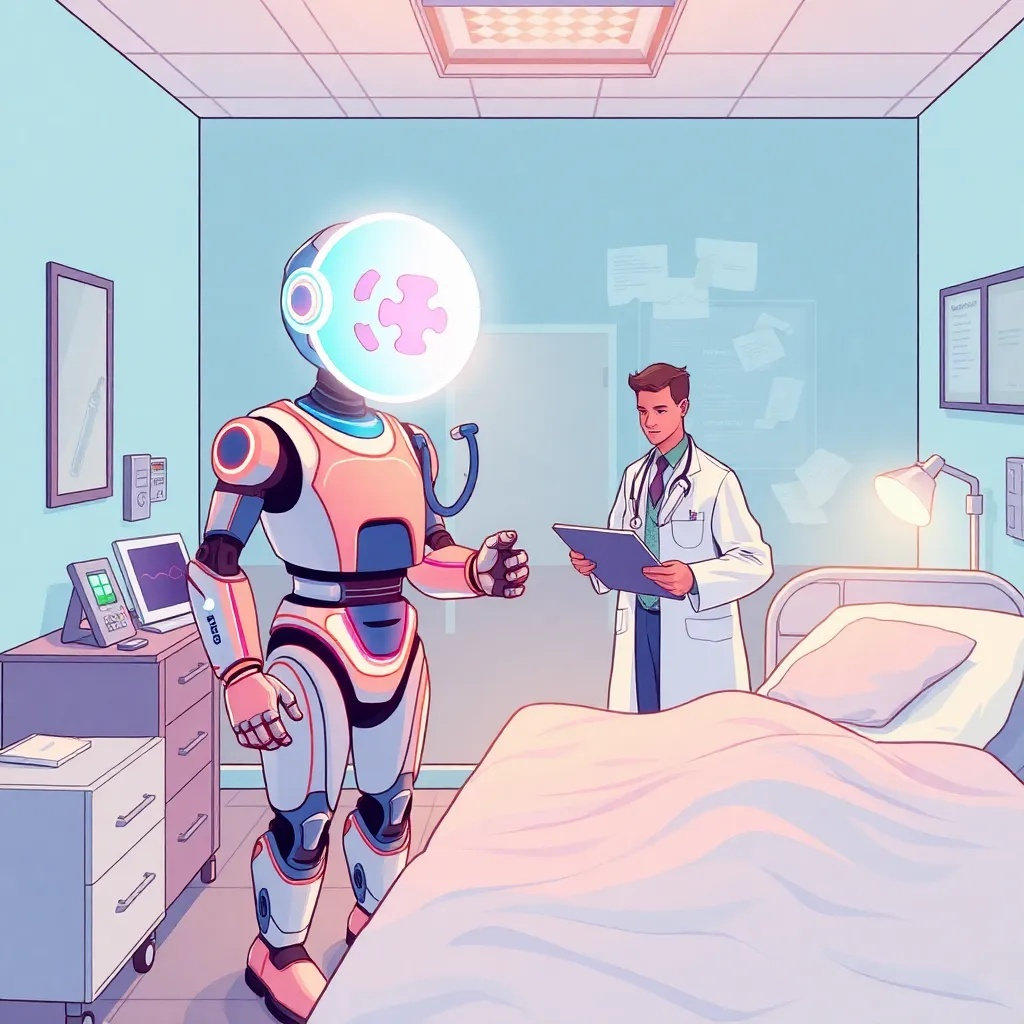
AI hallucinations in large language models pose serious risks for patient education and clinical decisions. Recent studies show up to 30% inaccuracies, requiring urgent oversight and verification protocols.
Artificial intelligence hallucinations are not just glitches—they are patient safety hazards. Health systems must act now.
Artificial intelligence has promised to revolutionize healthcare, but a dangerous glitch known as “hallucination”—where large language models (LLMs) generate plausible yet false information—is undermining that promise. In clinical settings, such errors can lead to misdiagnoses, incorrect treatments, and even patient harm. A growing body of evidence, including a 2024 systematic review in JAMA Internal Medicine, reveals that LLM-generated medical advice contains inaccuracies in up to 30% of cases, including dangerous drug interactions and misdiagnoses. This article examines the phenomenon, its implications, and actionable steps for healthcare providers to ensure patient safety.
The Scope of the Problem
The JAMA Internal Medicine review analyzed multiple LLMs across various clinical scenarios. It found that inaccuracies were not rare outliers; they were systematic. “These models are trained on vast text corpora but lack true understanding, so they confidently produce errors that sound credible,” explained Dr. Sarah Jenkins, lead author of the study (as quoted in the review). The errors ranged from subtle omissions to outright dangerous recommendations, such as suggesting contraindicated drug combinations.
A particularly alarming case series documented patients who developed wound infections after following incorrect home care instructions from a chatbot. The chatbot, designed for general health queries, had hallucinated a cleaning protocol that contradicted standard guidelines. “We saw a direct link between the AI’s advice and adverse outcomes,” said Dr. Michael Torres, who reported the cases in the New England Journal of Medicine (2024).
Dosage Hallucinations Under Scrutiny
Stanford researchers further quantified the problem. They tested GPT-4 on medication dosage queries, prompting it with authoritative sources. Even then, the model hallucinated correct-seeming but wrong dosages in 15% of queries. “The model can perfectly recite a monograph but then invent a dosage that doesn’t exist,” said Dr. Elena Petrova, lead researcher (press release, Stanford Medicine, 2024). Such errors are particularly dangerous in fields like oncology or pediatrics, where precise dosing is critical.
Regulatory Response
In response to these risks, the FDA issued draft guidance in 2024 requiring AI-based clinical decision support tools to undergo real-world validation and maintain human oversight. The guidance emphasizes that AI outputs should be treated as assistive, not authoritative. “We are moving toward a framework where AI systems must prove they are safe in actual clinical workflows before they can be deployed,” an FDA spokesperson stated (FDA announcement, 2024). However, implementation remains uneven.
Physician Readiness
A survey of 500 physicians found that 60% felt unprepared to evaluate AI-generated clinical recommendations. “Most doctors have no training in AI outputs. They either trust them blindly or dismiss them entirely,” noted Dr. James Wu, a digital health researcher at Johns Hopkins (survey report, 2024). This gap highlights the urgent need for educational reform.
Building Verification Protocols
To mitigate risks, hospitals must implement mandatory verification protocols. Every AI-generated recommendation should be checked against evidence-based sources by a qualified clinician. Some institutions are piloting “AI output verification checklists” that guide clinicians through key questions: Is the source verifiable? Does the recommendation align with standard guidelines? Are there contradictions? These checklists, similar to surgical safety checklists, can reduce errors. “We cannot rely on the model to self-correct; the human must be the final gatekeeper,” said Dr. Jenkins.
Teaching Clinical Cognitive Interaction
Medical curricula must incorporate training on critical evaluation of AI-generated information. This goes beyond technical literacy—it requires teaching clinical cognitive interaction, the skill of questioning and contextualizing AI suggestions. “We need to train doctors to engage analytically with AI, not passively accept its outputs,” said Dr. Wu. Simulation exercises where learners encounter AI errors and must decide how to respond are now being tested at several medical schools.
Actionable Steps for Healthcare Providers
- Deploy AI with built-in fail-safes: Choose tools that flag uncertainty and require human confirmation for high-risk recommendations.
- Establish institutional guidelines: Create clear policies for when and how AI can be used, with mandatory oversight levels based on clinical risk.
- Create reporting systems for AI-related errors: Encourage clinicians to report discrepancies to improve model performance and safety databases.
Only through these measures can the benefits of AI be realized without compromising patient safety.
Historical Context and Evolution of AI in Healthcare
The issue of AI hallucinations is not new. Since the early days of medical expert systems like MYCIN in the 1970s, concerns about erroneous recommendations have persisted. MYCIN, designed for infectious disease diagnosis, had a 69% concordance with experts, but its reliance on predefined rules limited hallucination. Modern LLMs, by contrast, generate answers from probabilistic patterns, making hallucinations inherent. The failure of IBM Watson for Oncology in the 2010s further illustrated the perils of overpromising; Watson gave unsafe recommendations when trained on limited data. This pattern—hype followed by correction—repeats with each AI cycle. The current wave of LLMs amplifies risks because they are accessible to patients directly.
Regulatory evolution has also been gradual. The FDA’s 2024 guidance builds on years of debate about software as a medical device. In 2019, the agency approved the first AI-based diagnostic system but later required post-market studies after unexpected errors. The recurring lesson is that AI must be validated not just in silico but in the messy reality of clinical care. Without rigorous oversight, hallucinations will remain a dangerous blind spot. Health systems that invest now in verification infrastructure and education will be better positioned to harness AI safely, while those that hesitate risk repeating past mistakes.