Philips earned FDA 510(k) clearance for a reusable SpO2 clip sensor with 1.6% ARMS accuracy — double the required standard. But the number that matters is skin-tone variance under 0.5%, answering a documented failure that made pulse oximeters overestimate oxygen in darker-skinned patients.
Buried in the specification sheet of a routine FDA clearance is a number that matters more than the clearance itself: accuracy varies by less than 0.5% across skin tones. To understand why, you have to know what pulse oximeters have been getting wrong.
Philips has received FDA 510(k) clearance for a next-generation reusable SpO₂ clip sensor, and buried in the specification sheet is a number that matters more than the clearance itself: accuracy varies by less than 0.5% across skin tones.
To understand why that single figure is the story, you have to know what pulse oximeters have been getting wrong.
The problem this device is answering
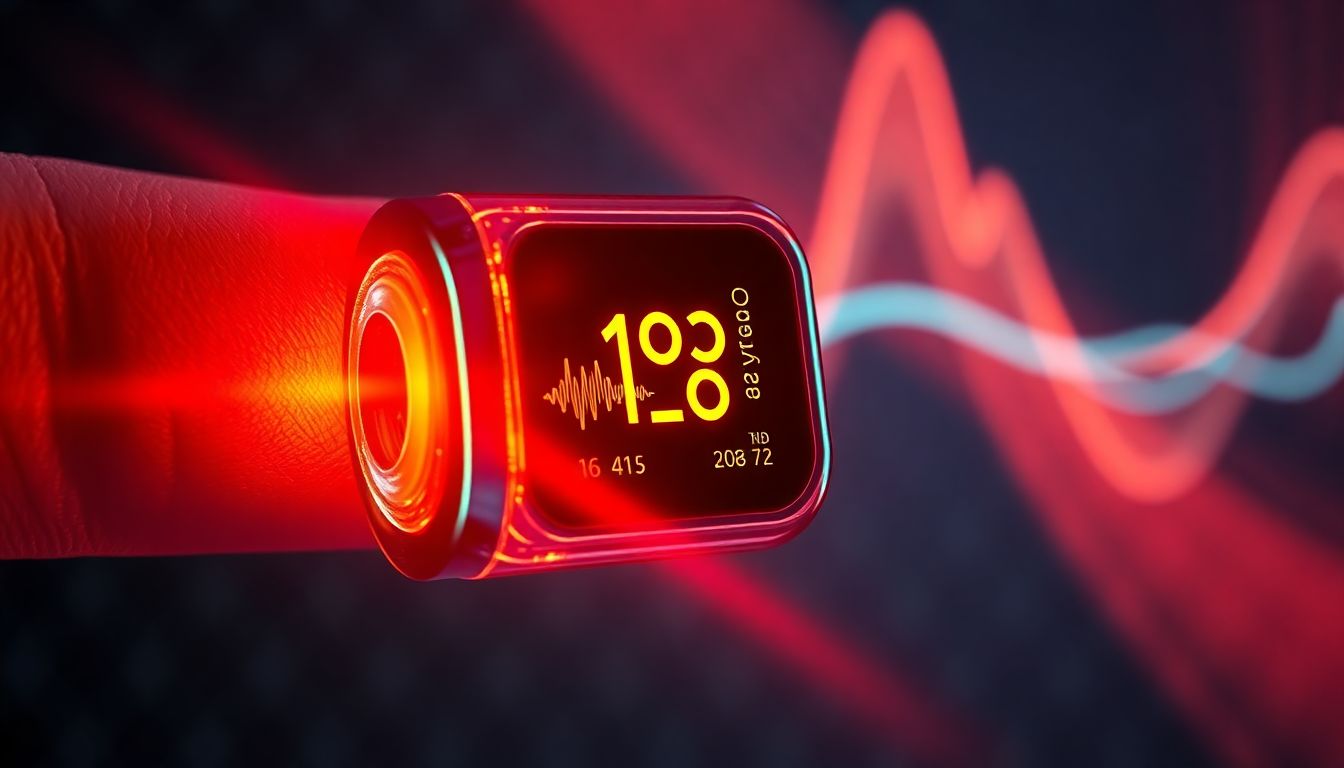
A pulse oximeter is the clip placed on a fingertip that reads blood oxygen saturation. It works by shining light through tissue and measuring how much is absorbed. That method has a known weakness: melanin also absorbs light. For years, research has documented that conventional pulse oximeters tend to overestimate oxygen saturation in people with darker skin — reporting a patient as adequately oxygenated when they are not.
This is not an abstract measurement quibble. Oxygen saturation determines who gets escalated to higher levels of care, who receives supplemental oxygen, and who gets a bed. A reading that is falsely reassuring means a patient who needs intervention doesn’t get flagged for it. During the COVID-19 pandemic, when oxygen saturation was the single most-used triage number in medicine, this became a widely discussed source of unequal care.
So a sensor validated to vary by under 0.5% across skin tones is addressing a documented, consequential failure — not marketing a refinement.
What the clearance covers
The FDA 510(k) pathway clears a device on the basis that it is substantially equivalent to an already-marketed one, supported by testing. In this case, Philips reports validation aligned with IEC and ISO standards across an 85% to 100% SpO₂ range.
The headline accuracy figure is an ARMS — accuracy root mean square — of 1.6%. The relevant ISO and FDA threshold is 3%, so the device is validated at roughly double the required accuracy. Philips attributes the improvement to internal optical upgrades that raise signal-to-noise quality.
“Providing clinicians with reliable data to deliver better care to more people is at the heart of everything we do,” said Sachin Chaudhari, Category Leader for Clinical Measurements and Specialty Monitoring at Philips. “This FDA clearance reflects our ongoing investment in advancing sensor technology and rigorous validation practices.”
Reading the numbers carefully
Two caveats belong next to those figures, not because the result is unimpressive but because precision matters in exactly this area.
First, the 85–100% validation range covers the clinically ordinary band but not the severely hypoxic one. Historically, the skin-tone discrepancy in pulse oximetry has been worst at low saturation — precisely when a patient is sickest and an accurate reading matters most. A device validated from 85% upward is a genuine improvement in the range where most monitoring happens, but it does not by itself demonstrate performance in the range where the historical failures were most dangerous.
Second, “less than 0.5% variance across skin tones” is a manufacturer-reported validation result. How skin tone was classified and how many participants sat in each category are the details that determine how much weight the claim carries, and they aren’t in the announcement. Independent, real-world evaluation is what converts a bench-validated claim into a clinical one.
None of that makes the number unimportant. It makes it a strong starting position that deserves confirmation.
The reusable angle
The sensor is explicitly a reusable clip rather than a disposable, which Philips frames as a sustainability advantage through reduced waste.
Hospitals generate an enormous volume of single-use plastic, and pulse oximeter sensors are a small but constant contributor. A reusable design that maintains accuracy across many cycles reduces both waste and per-use cost — which is the more persuasive argument to a procurement department than sustainability alone.
It does introduce the trade-off every reusable clinical device carries: reprocessing between patients, and performance that must hold up over a service life rather than out of a sterile packet. That’s a solved problem in principle, but it puts the burden on validated cleaning protocols and on accuracy that doesn’t drift with use.
Why this is worth noticing
Medical device clearances are routine and mostly unremarkable. This one is worth attention because it represents a specific, measurable response to a documented equity failure in a device used on virtually every hospitalised patient in the world.
The wider lesson is about how such failures get fixed. The skin-tone problem in pulse oximetry was not discovered by regulators or manufacturers; it was surfaced by researchers analysing patient outcomes, then amplified by a pandemic that made the stakes visible. Standards and products followed. That is a slow, indirect correction mechanism, and the interval between “documented in the literature” and “engineered out of the product” was measured in years.
A sensor that reads a patient’s oxygen accurately regardless of their skin colour should be the unremarkable baseline. That it is a headline feature in 2026 says something about how long the baseline took to arrive — and is a reason to look closely at which other everyday clinical measurements have never been checked for the same kind of systematic bias.
Reporting on a manufacturer’s FDA 510(k) clearance announcement, as covered on 22 July 2026. Accuracy figures are manufacturer-reported validation results and have not been independently verified here. FDA 510(k) clearance indicates substantial equivalence to an existing device, not a finding of clinical superiority. Not medical advice.