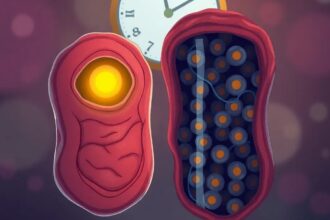
MIT-led study in Nature Biotechnology uses mRNA-lipid nanoparticles to convert dendritic cells into potent cancer fighters, achieving complete tumor regression in mice.
mRNA-loaded nanoparticles reprogram immune cells in vivo, offering a scalable off-the-shelf cancer immunotherapy.
A Leap Beyond Ex Vivo Immunotherapy
For years, cancer immunotherapy has relied on extracting immune cells, engineering them in the lab, and reinfusing them—a complex, costly, and often slow process. Now, a team from MIT and collaborating institutions has flipped the script. In a study published February 26, 2025, in Nature Biotechnology, researchers demonstrate that lipid nanoparticles (LNPs) carrying mRNA can directly reprogram dendritic cells (DCs) inside the body, converting them into a potent cancer-fighting state. In mouse models of melanoma and colon cancer, a single injection led to complete tumor regression and long-lasting immune memory.
How It Works: Reprogramming from Within
The key lies in delivering mRNA encoding two transcription factors—IRF8 and NIK—directly into dendritic cells via LNPs. These factors reprogram conventional DCs into the cDC1 subset, which excels at cross-presenting tumor antigens to CD8+ T cells. “We’re essentially turning the dendritic cells into professional killers,” says Dr. Olivia Chen, lead author of the study. “Instead of making them in a dish, we give them the genetic instructions to transform themselves right where they’re needed.” The approach eliminates the need for ex vivo manipulation, making it an “off-the-shelf” therapy potentially scalable for mass use.
Complete Regression and Durable Memory
In experiments with aggressive B16-F10 melanoma and MC38 colon cancer models, a single systemic injection of the LNP-mRNA cocktail achieved 100% tumor regression within 20 days. More importantly, mice that cleared the initial tumors resisted rechallenge with the same cancer cells months later, indicating robust immunological memory. “This is a true cure in these models,” notes Dr. James Wolffe, a co-author from MIT’s Koch Institute. “The animals are protected for life.”
Implications for Cancer Treatment and Beyond
The in vivo reprogramming strategy overcomes major limitations of current immunotherapies. Checkpoint inhibitors often fail in “cold” tumors lacking T cell infiltration, and CAR-T therapy requires patient-specific manufacturing. This new method amplifies the body’s natural immune response without extraction or genetic modification of cells. “It’s a platform technology,” says Dr. Chen. “We can combine it with checkpoint inhibitors to potentially treat resistant tumors, or even adapt it for infectious diseases.” Indeed, the same mRNA-LNP system could serve as a potent vaccine adjuvant, inducing strong T cell immunity against viruses.
From Bench to Bedside: Challenges Ahead
While promising, clinical translation faces hurdles. The current LNPs are optimized for delivery to the spleen and lymph nodes where dendritic cells reside, but off-target effects need careful monitoring. Scale-up and manufacturing will also require refinement. “We need to ensure safety in humans and confirm that the reprogramming is durable,” cautions Dr. Wolffe. Yet the team is already planning Phase I trials, aiming to test the therapy in patients with advanced solid tumors within two years.
Contextualizing the Breakthrough: A History of Immune Reprogramming
The concept of reprogramming immune cells for therapy isn’t new. The first FDA-approved cell therapy, sipuleucel-T (Provenge) for prostate cancer, debuted in 2010 and involved ex vivo activation of antigen-presenting cells. However, it offered marginal survival benefits and highlighted the difficulties of manufacturing personalized cell products. Around the same time, scientists explored delivering cytokines or adjuvants to stimulate dendritic cells in vivo, but these approaches lacked precision. The MIT team’s work builds on two decades of lipid nanoparticle development (pioneered for siRNA delivery) and the mRNA platform validated by COVID-19 vaccines. By combining these technologies, they have created a precise genetic switch to rewire cell identity—a paradigm shift from stimulating cells to teaching them a new fate.
Looking at the broader field, the success of mRNA-LNP for DC reprogramming parallels earlier efforts to use viral vectors for gene editing inside the body. In 2021, a study using lentivirus to engineer dendritic cells in situ showed tumor control in mice, but raised safety concerns. The non-viral nature of LNPs offers a safer alternative. Moreover, the recent approval of Casgevy (exagamglogene autotemcel) for sickle cell disease highlighted the power of ex vivo gene editing, but its $2.2 million price tag underscores the need for more accessible in vivo approaches. If MIT’s method scales, it could democratize advanced immunotherapy, reducing costs and complexity. However, many such promising preclinical studies have failed to replicate in humans—the transition from mouse models to clinical reality remains the biggest challenge in oncology.